ARTS / CULTURE & LEISURE
Keep digging: From mines to manuscripts, Chen Nianxi turns life’s struggles into poetry
Keep digging
Editor's Note:
In an age of information overload, reading remains a necessary channel to invigorate the mind, provide inspiration and cultivate virtue. Whether it is childhood enlightenment or the pursuits of adulthood, everyone's reading journey carries unique emotions and life experiences. The Global Times has specially launched the "100 Avid Readers" series, inviting guests from various fields to share their connections with books, stories of growth and sparks of thought.
In this installment, we meet Chen Nianxi. For him, reading is a window to life, offering a glimpse of a different kind of light.
It is a life that appears simple and unremarkable. Yet over the years, Chen has become a recognizable voice in China's literary circles. For many readers, his first poetry collection, Blast Chronicle, is what first caught their attention.
"I pass middle age five kilometers underground / I blast the rock layer again and again / Using this to piece together my life," reads a verse from a poem in the book.
He recalled the moment of the poem's creation: He was working at a silver mine in Central China's Henan Province when his brother called to tell him their mother had been diagnosed with late-stage esophageal cancer. Unable to sleep later that night, Chen wrote the poem in the early morning in 2013.
Since 2019, Chen has produced a growing body of work, including nonfiction and poetry, much of it drawn from his years in the mines and his rural hometown. Over time, his identity has shifted from miner to writer.
For Chen, reading is a way to learn from others - to draw on their methods and experiences. But writing, he said, depends above all on firsthand experience and an awareness of life itself. "Reading provides the spark, helping to ignite and shape those experiences," Chen told the Global Times. "Both are essential, like firewood and flame."
From mines to literature
Born in 1970, Chen's love of reading began in childhood. He started writing poetry at age 20. By 29, in 1999, he was working in one of the most dangerous jobs imaginable: mine blasting. He spent 16 years of his life deep underground, drilling and setting explosives to break apart rock, and analyzing fractured layers to gauge both potential yield and hazards.
"I've pulled gold, silver, tin, iron, nickel, copper from the earth," he wrote.
During his time in the mines, fellow miners coped in different ways: Some drank heavily after shifts, others played cards into the night. Some, like Chen, read. They devoured martial arts novels, legendary tales, and serious literature - limited only by the sparse resources in the mine.
In that environment, reading was a window on life, said Chen.
"The characters and stories in those books carried you into another world, offering a sense of escape and a glimpse of a different kind of light."
Mining left little time for writing, but whenever he could, Chen captured life's details and fleeting emotional moments in verse. At times, inspiration struck so suddenly that he would scribble poems on empty explosive boxes beneath his bedding.
In 2019, his first poetry collection, Blast Chronicle, was published. Featuring poems written between 2013 and 2017, the works trace his journey from the turbulence of life in the mines to his later experiences working in Beijing's Picun village.
Life fuels art
For Chen, writing had always been a side pursuit; earning a living came first. However, repeated occupational illnesses - cervical spine problems, miner's lung, and hearing loss - forced him to leave the mines in 2015.
"If it weren't for those illnesses, I'd probably still be working with my colleagues in a mine in West Asia," he said, referring to a three-year contract that could have earned him roughly 900,000 yuan ($130,493). With his livelihood now tied to the written word, Chen has accepted a new path.
His literary subjects remain familiar: the hardships of his hometown, memories of hunger, the stories of his fellow miners, and the love of his parents. His writing style is unchanged - rugged, resilient, and deeply rooted in the soil of his past.
Chen defines his work as non-fiction, writing about people and events he knows intimately. "Nonfiction can be expansive, offering a freedom of expression that feels limitless," he said.
Nowadays, his primary source of income comes from the royalties from his books. Beyond royalties, he also buys back copies of his own books from various platforms, signs and stamps them with a short personal note, and mails them to readers across the country, earning only a small margin on each sale.
In this way, Chen has built connections with readers far beyond his village. He also sells mushrooms from his hometown through his social media accounts, with orders reaching as far as Canada and Australia.
The demands of daily tasks leave his time fragmented. He might write a few lines, only to be interrupted by a flood of messages on his phone. He is candid about being in a "writing bottleneck."
In his view, readers can quickly lose interest in poems about the same subject matter, while true creative breakthroughs remain difficult to achieve.
He has already submitted one manuscript and is preparing two more so far in 2026. Chen still reads books to explore experiences beyond his own.
Books, he said, capture the concentrated experiences, emotions, and even lifetimes of others.
"Reading is the most direct way to reach them," Chen noted.
In an age of information overload, reading remains a necessary channel to invigorate the mind, provide inspiration and cultivate virtue. Whether it is childhood enlightenment or the pursuits of adulthood, everyone's reading journey carries unique emotions and life experiences. The Global Times has specially launched the "100 Avid Readers" series, inviting guests from various fields to share their connections with books, stories of growth and sparks of thought.
In this installment, we meet Chen Nianxi. For him, reading is a window to life, offering a glimpse of a different kind of light.
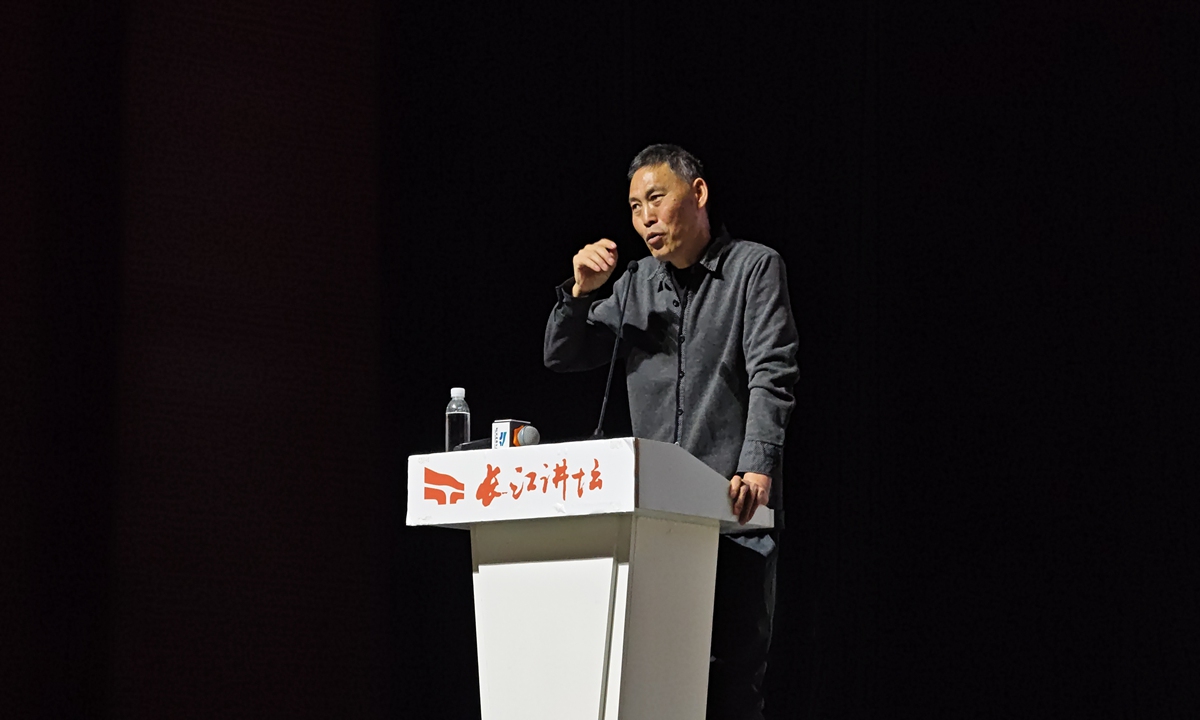
Chen Nianxi gives a speech at the Yangtze Forum hosted by the Hubei Provincial Library in Wuhan, Central China's Hubei Province, on March 14, 2025. Photo: IC
In Xiahe village, nestled in the mountains of Shangluo in Northwest China's Shaanxi Province, Chen Nianxi finds his life very peaceful. The 56-year-old writes at home and, in winter, sells mushrooms, collecting, sorting and packing them for customers who find him through social media - a routine that continues until spring.It is a life that appears simple and unremarkable. Yet over the years, Chen has become a recognizable voice in China's literary circles. For many readers, his first poetry collection, Blast Chronicle, is what first caught their attention.
"I pass middle age five kilometers underground / I blast the rock layer again and again / Using this to piece together my life," reads a verse from a poem in the book.
He recalled the moment of the poem's creation: He was working at a silver mine in Central China's Henan Province when his brother called to tell him their mother had been diagnosed with late-stage esophageal cancer. Unable to sleep later that night, Chen wrote the poem in the early morning in 2013.
Since 2019, Chen has produced a growing body of work, including nonfiction and poetry, much of it drawn from his years in the mines and his rural hometown. Over time, his identity has shifted from miner to writer.
For Chen, reading is a way to learn from others - to draw on their methods and experiences. But writing, he said, depends above all on firsthand experience and an awareness of life itself. "Reading provides the spark, helping to ignite and shape those experiences," Chen told the Global Times. "Both are essential, like firewood and flame."
From mines to literature
Born in 1970, Chen's love of reading began in childhood. He started writing poetry at age 20. By 29, in 1999, he was working in one of the most dangerous jobs imaginable: mine blasting. He spent 16 years of his life deep underground, drilling and setting explosives to break apart rock, and analyzing fractured layers to gauge both potential yield and hazards.
"I've pulled gold, silver, tin, iron, nickel, copper from the earth," he wrote.
During his time in the mines, fellow miners coped in different ways: Some drank heavily after shifts, others played cards into the night. Some, like Chen, read. They devoured martial arts novels, legendary tales, and serious literature - limited only by the sparse resources in the mine.
In that environment, reading was a window on life, said Chen.
"The characters and stories in those books carried you into another world, offering a sense of escape and a glimpse of a different kind of light."
Mining left little time for writing, but whenever he could, Chen captured life's details and fleeting emotional moments in verse. At times, inspiration struck so suddenly that he would scribble poems on empty explosive boxes beneath his bedding.
In 2019, his first poetry collection, Blast Chronicle, was published. Featuring poems written between 2013 and 2017, the works trace his journey from the turbulence of life in the mines to his later experiences working in Beijing's Picun village.
Life fuels art
For Chen, writing had always been a side pursuit; earning a living came first. However, repeated occupational illnesses - cervical spine problems, miner's lung, and hearing loss - forced him to leave the mines in 2015.
"If it weren't for those illnesses, I'd probably still be working with my colleagues in a mine in West Asia," he said, referring to a three-year contract that could have earned him roughly 900,000 yuan ($130,493). With his livelihood now tied to the written word, Chen has accepted a new path.
His literary subjects remain familiar: the hardships of his hometown, memories of hunger, the stories of his fellow miners, and the love of his parents. His writing style is unchanged - rugged, resilient, and deeply rooted in the soil of his past.
Chen defines his work as non-fiction, writing about people and events he knows intimately. "Nonfiction can be expansive, offering a freedom of expression that feels limitless," he said.
Nowadays, his primary source of income comes from the royalties from his books. Beyond royalties, he also buys back copies of his own books from various platforms, signs and stamps them with a short personal note, and mails them to readers across the country, earning only a small margin on each sale.
In this way, Chen has built connections with readers far beyond his village. He also sells mushrooms from his hometown through his social media accounts, with orders reaching as far as Canada and Australia.
The demands of daily tasks leave his time fragmented. He might write a few lines, only to be interrupted by a flood of messages on his phone. He is candid about being in a "writing bottleneck."
In his view, readers can quickly lose interest in poems about the same subject matter, while true creative breakthroughs remain difficult to achieve.
He has already submitted one manuscript and is preparing two more so far in 2026. Chen still reads books to explore experiences beyond his own.
Books, he said, capture the concentrated experiences, emotions, and even lifetimes of others.
"Reading is the most direct way to reach them," Chen noted.
RELATED ARTICLES