Editor's Note:
This year's Government Work Report, for the first time, mentioned the need to "support the development of public clouds." "Without public clouds, there can be no intelligent agents; without intelligent agents, the 'AI Plus' initiative will be greatly compromised," Liu Shangxi (Liu), Vice President of the China Society of Macroeconomics, said in a recent exclusive interview with the Global Times (GT). Liu noted that China boasts a mega-scale market, the most comprehensive industrial system and the richest application scenarios, all of which provide unique advantages for the growth of the digital economy. He said that the development of the digital economy and artificial intelligence (AI), from model training to inference, relies heavily on public clouds. He described public clouds as the "railways and highways" in the digital era, serving as a new type of infrastructure.
Public cloud — digital era's railways, highways
GT: This year's Government Work Report emphasized the need to "continuously promote the upgrading of key industries" and "increase support for the digital and intelligent transformation of small and medium-sized enterprises (SMEs)." Many private enterprises, especially SMEs, are hesitant to undergo digital transformation. In this context, how should traditional industries plan for the next five years based on the spirit of the Two Sessions?
Liu: The overarching direction for the transformation and upgrading of traditional industries is digitalization and intelligence. At present, one of the key issues is that the adoption rate of cloud services among SMEs in China remains relatively low, for example, lower than in Europe and the US.
Digital transformation requires digital technology. Large enterprises can develop their own private clouds, but SMEs lack the resources to build their own data centers and systems. The better approach for them is to use public clouds. Public clouds are like the railways and highways in the digital era and represent a new type of infrastructure. Whether it's training or inference, the development of the digital economy and AI is inseparable from public clouds.
To use an analogy, adopting cloud services is like building roads. If a product is only sold around the factory, the market remains fragmented. Only when products can be transported across the world via highways, railways and airplanes, can a truly expansive market be realized. In the increasingly digital era, "going to the cloud" means enterprises accessing public clouds and purchasing comprehensive services from cloud service providers. This determines a company's capabilities in the digital space and its potential market reach. Without cloud adoption, costs will be higher, and efficiency will be lower. This is why this year's government work report proposed supporting the development of public clouds.
GT: Many companies are concerned about data security after moving to the cloud. How can this issue be addressed?
Liu: In the current international competitive landscape, the US leads in public cloud market share and R&D investment. However, we have noticed that many Chinese enterprises are cautious about data security when considering cloud adoption. They tend to adopt a "physical isolation" approach, building separate private clouds, which results in high operational costs. Overreliance on private clouds leads to a fragmented cloud market.
True security must be ensured through technology, and we need to address security concerns through technological advancements. Ultimately, without public clouds, there can be no intelligent agents; without intelligent agents, the "AI Plus" initiative will stagnate, making it difficult to build the so-called smart economy. Security is not about "tight control" but about "strengthening." Public clouds are the infrastructure in the digital era. The more vehicles use the roads, the more they can be expanded. Security risks evolve dynamically rather than remaining static.
Creating a smart 'brain' to benefit all sectors
GT: China has the advantage of a mega-scale market and rich application scenarios. Can this become a unique opportunity for the development of the digital economy?
Liu: The abundance of application scenarios is indeed a huge advantage for us. China has a mega-scale market, the most comprehensive industrial system, and the richest application scenarios, all of which provide unique advantages for the growth of the digital economy.
The industrial economy allows for catch-up, but the digital economy is much harder to catch up with. Unlike the industrial economy, where a country can buy equipment, learn technologies, and achieve catch-up through introduction, absorption, and re-innovation, the digital economy is defined by ecosystem competition. If you miss the opportunity to build an ecosystem, you may fall behind permanently.
This year's Government Work Report explicitly proposed China "create a new form of smart economy" and "build an upgraded version of '5G + Industrial Internet'." Many of China's technology companies have demonstrated strong innovation capabilities in AI, launching products with international competitiveness.
However, our market potential has not been fully unleashed yet. If public clouds can truly become a new type of infrastructure shared by society as a whole, costs will be reduced for all, efficiency will improve, and the advantages of our mega-scale market can be truly transformed into a source of growing international competitiveness.
GT: How should we understand the concept of 'creating a new form of smart economy'? How is it different from the digital economy?
Liu: The Government Work Report mentioned both "digital economy" and "Digital China," as well as the concept of "creating a new form of smart economy." The digital economy is a broad concept that encompasses various digital technologies, including big data, cloud computing, computing power, and algorithms. The smart economy, on the other hand, focuses primarily on algorithms. Of course, it relies heavily on big data and computing power, but its core lies in enabling machines to possess the ability to think and even make autonomous decisions.
As far as I know, "creating a new form of smart economy" means to develop an intelligent "brain," and embed it into all fields and aspects of the society. For example, AI agents which have become quite popular recently, are like electronic assistants that can help people think and work. If you embed this "brain" into humanoid robots, they will not only perform acrobatics and martial arts but also function as scientists or soldiers. If this "brain" is embedded into drones, they will gain the ability to make autonomous decisions and execute tasks. If embedded into robotic arms on production lines, they will no longer be tools that simply execute fixed programs but will be able to determine how to work based on real-time conditions.
The core of "creating a new form of smart economy" is the "brain." It relies on public clouds, computing power, and data, but what it ultimately presents is an intelligent agent capable of thinking, making decisions, and assisting with tasks, or a humanoid robot that can perceive the physical world. Once the "brain" is developed, embedding it into any domain will transform that domain into a part of the smart economy.
Business model innovation is of great importance
GT: The phenomenon of "raising lobsters" (deploying and configuring the open-source intelligent agent OpenClaw) has recently sparked a wave of enthusiasm in many places. However, relevant authorities promptly issued risk warnings. How should we view and respond to this?
Liu: In response to the trend, Chinese companies have moved exceptionally quickly. Alibaba, Baidu, and others have rapidly launched their own intelligent agent products. As I said earlier, this is essentially an intelligent agent serving as an electronic secretary for users.
My stance is that we must encourage innovation while also heeding potential risks, but we cannot slow down the pace of innovation due to fear of risks. Development is the ultimate guarantee of security. However, one issue worth noting is that the biggest challenge now is not technology but the development of public clouds. No matter how advanced the technology is, if public clouds fail to develop and form a robust ecosystem, AI will not be able to penetrate all industries.
GT: Some foreign media attribute the AI gap between China and the US to "capital scale," arguing that China's funding pool is not as deep as the US. What is your take on this? What are the differences in AI development models between the two countries?
Liu: At this point, discussing the size of the AI gap between China and the US is not meaningful. What matters is not the static size of the gap but competitive dynamics. For example, in the field of generative AI, the technological gap between China and the US is only a matter of weeks in terms of research and development. Therefore, we should not focus solely on the numerical gap. The key is to develop the ability to open up new frontiers through ingenuous innovation.
If technological innovation is not converted into business-model innovation, it will not become real productivity to drive industrial transformation. From technology to industry, a viable business model is essential to bridge the gap. Companies must rely on sustained capital investment to develop their ability to generate revenue. The stronger a company's ability to generate revenue, the more capital will chase after it.
OpenAI was incredibly popular a few years ago, but its user base has dropped recently due to the lack of a solid business model. Digital transformation is measured in weeks; without continuous investment, it quickly falls behind.
The advantage of Chinese AI models lies in their low costs, but the number of paying users is relatively small. Many Chinese AI companies generate revenue primarily from overseas paying users. What does this indicate? It suggests that there is still significant potential for developing business models in China. So, my view is that we cannot rely solely on capital markets to sustain development; companies must generate revenue independently. Technological innovation is important, but business model innovation is equally important.
This year's Government Work Report, for the first time, mentioned the need to "support the development of public clouds." "Without public clouds, there can be no intelligent agents; without intelligent agents, the 'AI Plus' initiative will be greatly compromised," Liu Shangxi (Liu), Vice President of the China Society of Macroeconomics, said in a recent exclusive interview with the Global Times (GT). Liu noted that China boasts a mega-scale market, the most comprehensive industrial system and the richest application scenarios, all of which provide unique advantages for the growth of the digital economy. He said that the development of the digital economy and artificial intelligence (AI), from model training to inference, relies heavily on public clouds. He described public clouds as the "railways and highways" in the digital era, serving as a new type of infrastructure.
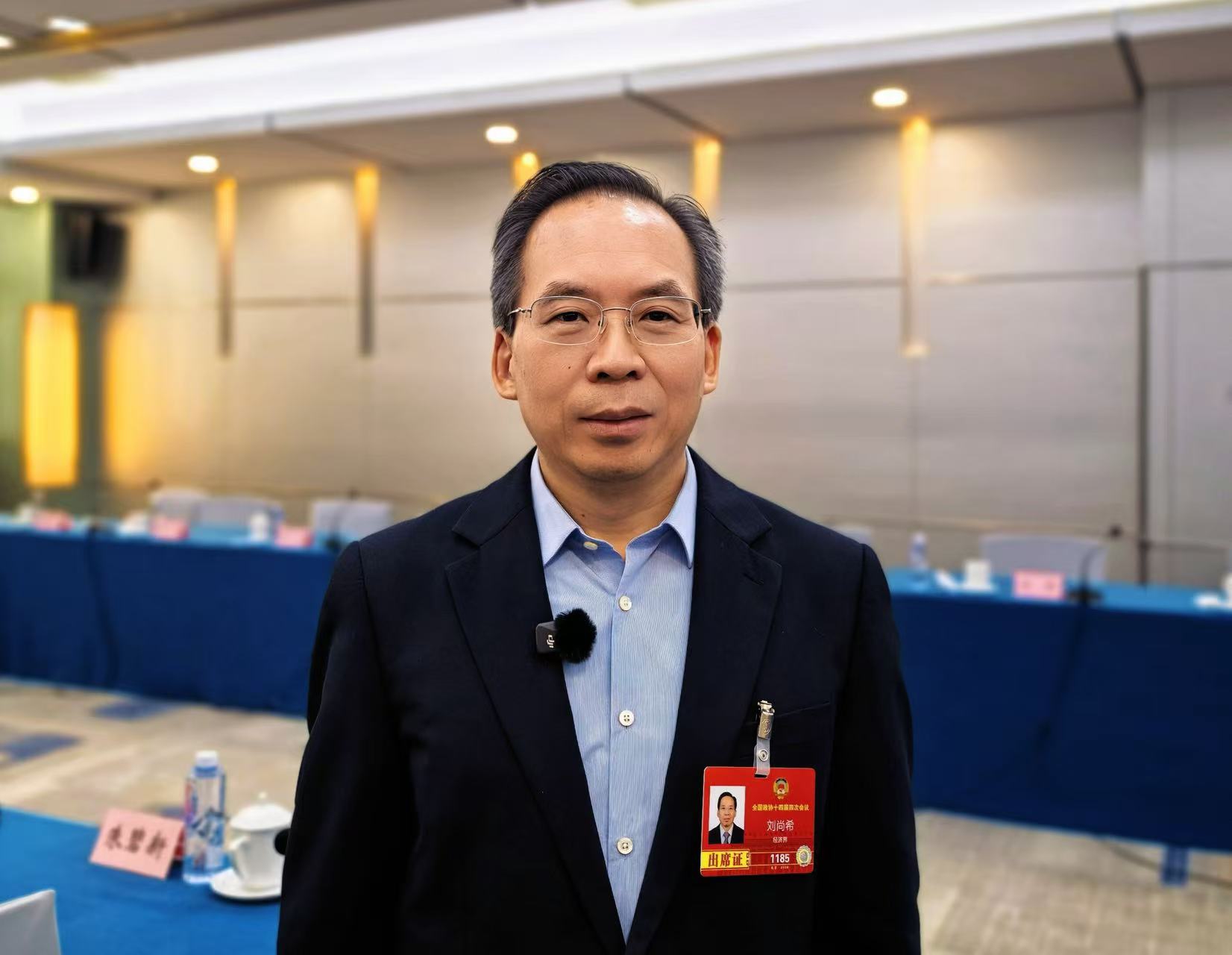
Liu Shangxi Photo: Courtesy of Liu
Public cloud — digital era's railways, highways
GT: This year's Government Work Report emphasized the need to "continuously promote the upgrading of key industries" and "increase support for the digital and intelligent transformation of small and medium-sized enterprises (SMEs)." Many private enterprises, especially SMEs, are hesitant to undergo digital transformation. In this context, how should traditional industries plan for the next five years based on the spirit of the Two Sessions?
Liu: The overarching direction for the transformation and upgrading of traditional industries is digitalization and intelligence. At present, one of the key issues is that the adoption rate of cloud services among SMEs in China remains relatively low, for example, lower than in Europe and the US.
Digital transformation requires digital technology. Large enterprises can develop their own private clouds, but SMEs lack the resources to build their own data centers and systems. The better approach for them is to use public clouds. Public clouds are like the railways and highways in the digital era and represent a new type of infrastructure. Whether it's training or inference, the development of the digital economy and AI is inseparable from public clouds.
To use an analogy, adopting cloud services is like building roads. If a product is only sold around the factory, the market remains fragmented. Only when products can be transported across the world via highways, railways and airplanes, can a truly expansive market be realized. In the increasingly digital era, "going to the cloud" means enterprises accessing public clouds and purchasing comprehensive services from cloud service providers. This determines a company's capabilities in the digital space and its potential market reach. Without cloud adoption, costs will be higher, and efficiency will be lower. This is why this year's government work report proposed supporting the development of public clouds.
GT: Many companies are concerned about data security after moving to the cloud. How can this issue be addressed?
Liu: In the current international competitive landscape, the US leads in public cloud market share and R&D investment. However, we have noticed that many Chinese enterprises are cautious about data security when considering cloud adoption. They tend to adopt a "physical isolation" approach, building separate private clouds, which results in high operational costs. Overreliance on private clouds leads to a fragmented cloud market.
True security must be ensured through technology, and we need to address security concerns through technological advancements. Ultimately, without public clouds, there can be no intelligent agents; without intelligent agents, the "AI Plus" initiative will stagnate, making it difficult to build the so-called smart economy. Security is not about "tight control" but about "strengthening." Public clouds are the infrastructure in the digital era. The more vehicles use the roads, the more they can be expanded. Security risks evolve dynamically rather than remaining static.
Creating a smart 'brain' to benefit all sectors
GT: China has the advantage of a mega-scale market and rich application scenarios. Can this become a unique opportunity for the development of the digital economy?
Liu: The abundance of application scenarios is indeed a huge advantage for us. China has a mega-scale market, the most comprehensive industrial system, and the richest application scenarios, all of which provide unique advantages for the growth of the digital economy.
The industrial economy allows for catch-up, but the digital economy is much harder to catch up with. Unlike the industrial economy, where a country can buy equipment, learn technologies, and achieve catch-up through introduction, absorption, and re-innovation, the digital economy is defined by ecosystem competition. If you miss the opportunity to build an ecosystem, you may fall behind permanently.
This year's Government Work Report explicitly proposed China "create a new form of smart economy" and "build an upgraded version of '5G + Industrial Internet'." Many of China's technology companies have demonstrated strong innovation capabilities in AI, launching products with international competitiveness.
However, our market potential has not been fully unleashed yet. If public clouds can truly become a new type of infrastructure shared by society as a whole, costs will be reduced for all, efficiency will improve, and the advantages of our mega-scale market can be truly transformed into a source of growing international competitiveness.
GT: How should we understand the concept of 'creating a new form of smart economy'? How is it different from the digital economy?
Liu: The Government Work Report mentioned both "digital economy" and "Digital China," as well as the concept of "creating a new form of smart economy." The digital economy is a broad concept that encompasses various digital technologies, including big data, cloud computing, computing power, and algorithms. The smart economy, on the other hand, focuses primarily on algorithms. Of course, it relies heavily on big data and computing power, but its core lies in enabling machines to possess the ability to think and even make autonomous decisions.
As far as I know, "creating a new form of smart economy" means to develop an intelligent "brain," and embed it into all fields and aspects of the society. For example, AI agents which have become quite popular recently, are like electronic assistants that can help people think and work. If you embed this "brain" into humanoid robots, they will not only perform acrobatics and martial arts but also function as scientists or soldiers. If this "brain" is embedded into drones, they will gain the ability to make autonomous decisions and execute tasks. If embedded into robotic arms on production lines, they will no longer be tools that simply execute fixed programs but will be able to determine how to work based on real-time conditions.
The core of "creating a new form of smart economy" is the "brain." It relies on public clouds, computing power, and data, but what it ultimately presents is an intelligent agent capable of thinking, making decisions, and assisting with tasks, or a humanoid robot that can perceive the physical world. Once the "brain" is developed, embedding it into any domain will transform that domain into a part of the smart economy.
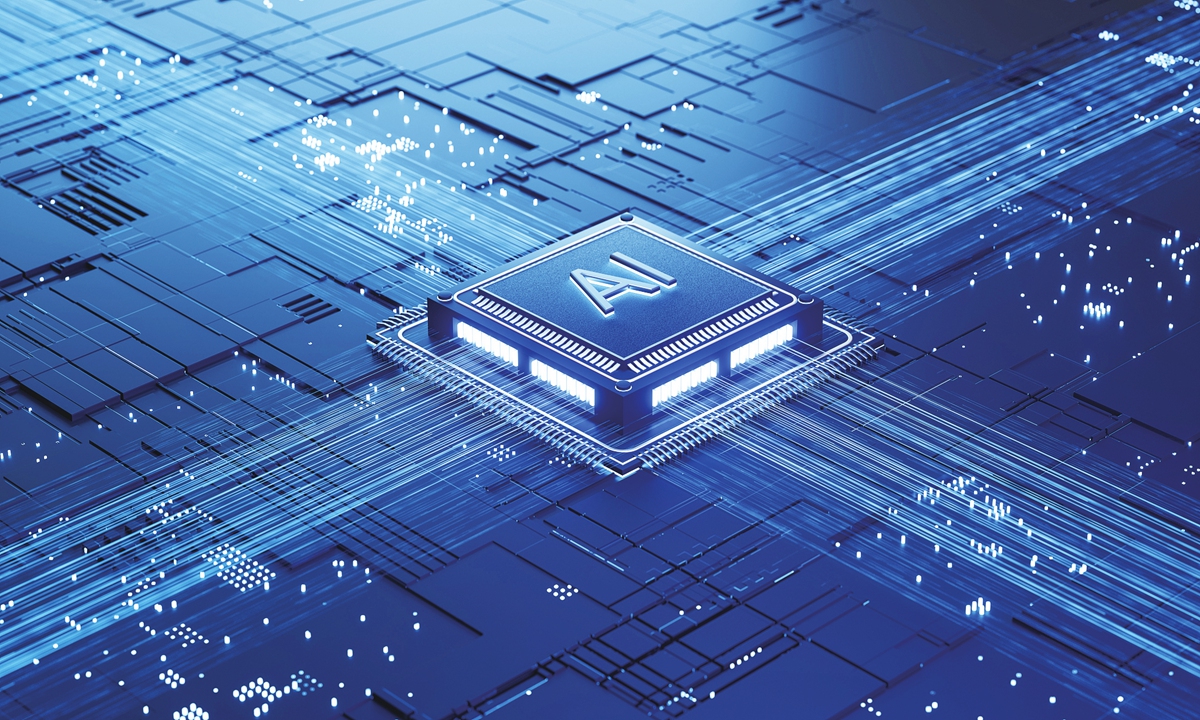
Artificial intelligence Photo: VCG
Business model innovation is of great importance
GT: The phenomenon of "raising lobsters" (deploying and configuring the open-source intelligent agent OpenClaw) has recently sparked a wave of enthusiasm in many places. However, relevant authorities promptly issued risk warnings. How should we view and respond to this?
Liu: In response to the trend, Chinese companies have moved exceptionally quickly. Alibaba, Baidu, and others have rapidly launched their own intelligent agent products. As I said earlier, this is essentially an intelligent agent serving as an electronic secretary for users.
My stance is that we must encourage innovation while also heeding potential risks, but we cannot slow down the pace of innovation due to fear of risks. Development is the ultimate guarantee of security. However, one issue worth noting is that the biggest challenge now is not technology but the development of public clouds. No matter how advanced the technology is, if public clouds fail to develop and form a robust ecosystem, AI will not be able to penetrate all industries.
GT: Some foreign media attribute the AI gap between China and the US to "capital scale," arguing that China's funding pool is not as deep as the US. What is your take on this? What are the differences in AI development models between the two countries?
Liu: At this point, discussing the size of the AI gap between China and the US is not meaningful. What matters is not the static size of the gap but competitive dynamics. For example, in the field of generative AI, the technological gap between China and the US is only a matter of weeks in terms of research and development. Therefore, we should not focus solely on the numerical gap. The key is to develop the ability to open up new frontiers through ingenuous innovation.
If technological innovation is not converted into business-model innovation, it will not become real productivity to drive industrial transformation. From technology to industry, a viable business model is essential to bridge the gap. Companies must rely on sustained capital investment to develop their ability to generate revenue. The stronger a company's ability to generate revenue, the more capital will chase after it.
OpenAI was incredibly popular a few years ago, but its user base has dropped recently due to the lack of a solid business model. Digital transformation is measured in weeks; without continuous investment, it quickly falls behind.
The advantage of Chinese AI models lies in their low costs, but the number of paying users is relatively small. Many Chinese AI companies generate revenue primarily from overseas paying users. What does this indicate? It suggests that there is still significant potential for developing business models in China. So, my view is that we cannot rely solely on capital markets to sustain development; companies must generate revenue independently. Technological innovation is important, but business model innovation is equally important.
RELATED ARTICLES