Stimulate endogenous dynamism of China’s ultra-large market to propel economic growth

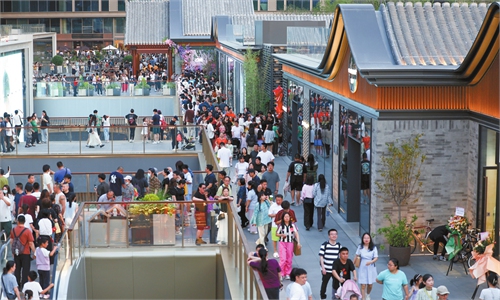
Shenzhen, South China's Guangdong Province Photo: VCG
Expanding domestic demand remains a central pillar of China's economic agenda in 2026, yet the strategic approach has undergone a significant shift. Moving beyond a reliance on direct policy-driven stimulus, the current focus centers on stimulating the endogenous dynamism of China's ultra-large market. The goal is to transition domestic demand from being "policy-driven" to "market-led," ensuring that consumption serves as a lasting force for long-term economic growth.
If the issuance of ultra-long special treasury bonds of 300 billion yuan ($43.52 billion) to support consumer goods trade-in programs in 2025 marked a conceptual pivot toward "investing in people," the consumption policies of 2026 represent a comprehensive "quality upgrade" built upon that foundation.
Policies such as implementing programs to enhance the quality of service consumption for the benefit of the people, accelerating the cultivation of new growth drivers in consumption, and building the "Shop in China" brand signal that while the policy focus remains on addressing consumption bottlenecks by ensuring people "dare to consume, are able to consume, and are willing to consume in accessible venues," the core strategy for this year has shifted toward establishing long-term mechanisms rather than relying on short-term fixes.
"Being able to consume" hinges on increasing incomes. The policies continue to focus on employment by supporting the development of the gig economy and flexible labor markets, and stabilizing jobs at small and medium-sized enterprises, and ensuring that personal income grows in sync with economic expansion, with a particular emphasis on boosting the earnings of low-income groups.
"Daring to consume" relies on strengthening the social safety net. This involves increasing fiscal subsidies for medical insurance and public health services, improving elderly and childcare services, and easing the pressures of education, healthcare, and housing. The goal is to ensure that residents not only have money in their pockets but also feel secure enough to spend it, rather than hoarding savings to cover potential future risks.
"Being willing to consume" depends on improving supply. This means fostering emerging sectors such as digital, green, and cultural tourism consumption, while regulating market order to create a trustworthy environment. By doing so, residents will have more choices and enhanced experiences.
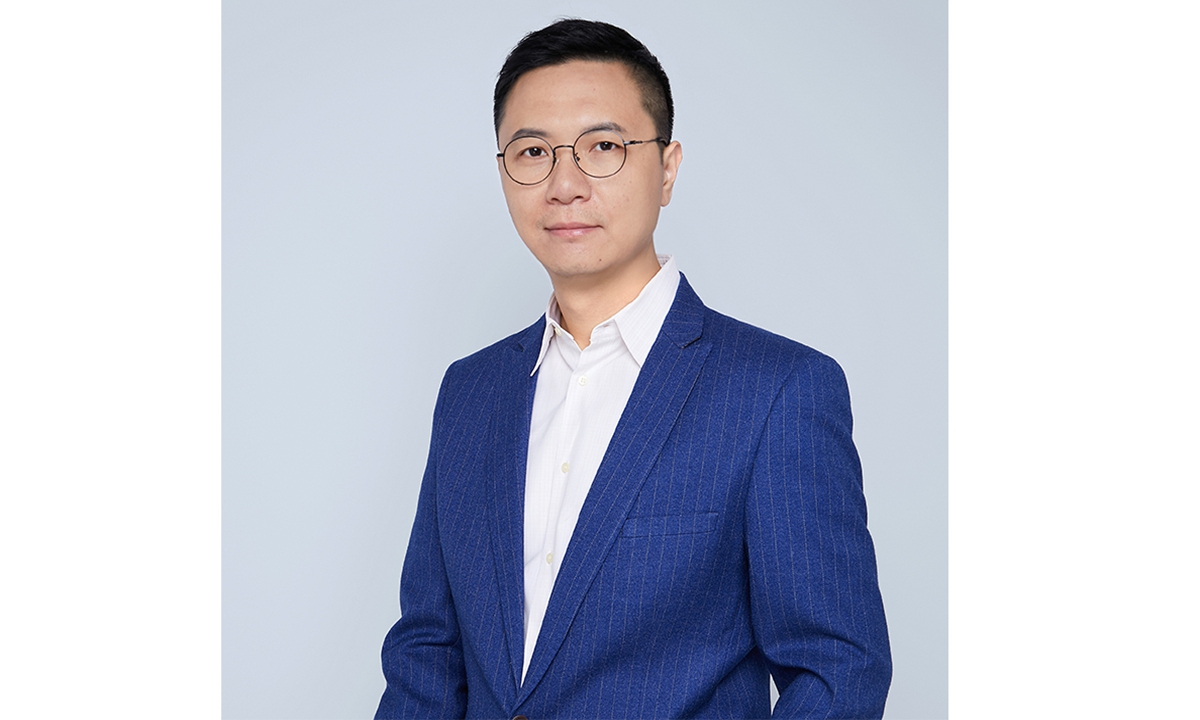
Tian Xuan Photo: Courtesy of Tian Xuan
A key feature of this year's domestic demand agenda is the integration of consumption and investment, moving away from treating them as isolated pillars. Instead, the focus is on fostering a virtuous cycle between the two, particularly through investment in key sectors that act as a catalyst for consumption.
Investment in key areas serves as a vital link between consumption and investment. By integrating the material support provided by investment in physical assets with the livelihood-centered orientation of investing in people, it achieves a synergy between stabilizing short-term growth and strengthening long-term momentum.
Regarding market-led effective investment, the focus is placed on fostering new quality productive forces. Strategic emphasis is given to emerging pillar industries such as integrated circuits, aerospace, biomedicine, and the low-altitude economy, as well as future industries including next-generation energy and quantum technology. Meanwhile, increasing investment in new infrastructure will solidify the underlying foundation for new business models like digital and smart consumption. By refining the supply system, these efforts will stimulate new consumer demand and cultivate new growth points, positioning investment as a booster for consumption upgrading.
For instance, the upgrading of consumption infrastructure - transforming traditional commercial outlets into integrated, scenario-based, and experiential spaces - not only drives immediate investment but also enriches consumption scenarios and enhances the consumer experience, ultimately achieving the mutual empowerment of investment and consumption.
In terms of government investment in people's livelihoods, government agencies remain committed to the people-centered development philosophy, with the aim of reasonably increasing the proportion of public service expenditures within total fiscal spending, while enhancing investment in fields including education, healthcare, elderly care, childcare, and subsidized housing so as to address weak links and guarantee the bottom line of basic livelihoods.
Funds earmarked for this year, including the central budgetary investment and ultra-long-term special treasury bonds, will be primarily directed toward livelihood sectors. Through measures such as raising the per capita government subsidy for resident medical insurance, increasing the minimum basic pension for urban and rural residents, and expanding the supply of school seats, the authorities aim to catalyze a positive transformation.
Such investment does more than just directly drive the development of related industries, create jobs, and boost household incomes; it refines consumption carriers and optimizes the consumption environment to promote the expansion and upgrading of consumption. This ultimately creates a virtuous cycle among livelihood investment, income growth, consumption enhancement, and effective investment.
The virtuous cycle between consumption and investment is, in essence, a dynamic equilibrium where demand pulls supply and supply creates demand. The direction of upgrading consumer demand provides a clear orientation for market-led effective investment, preventing blind investment and overcapacity while ensuring that investment is more targeted and efficient.
Meanwhile, investment in key areas continues to refine consumption infrastructure, enrich the supply of goods and services, and bolster consumption capacity. This, in turn, will further expand the space for consumption, stimulates consumer vitality, and promotes the structural optimization and upgrading of consumption.
The article is compiled based on an interview with Tian Xuan, professor at Peking University. bizopinion@globaltimes.com.cn
RELATED ARTICLES