Foreign businesses explore fast booming opportunities in AI sector at major tech forum
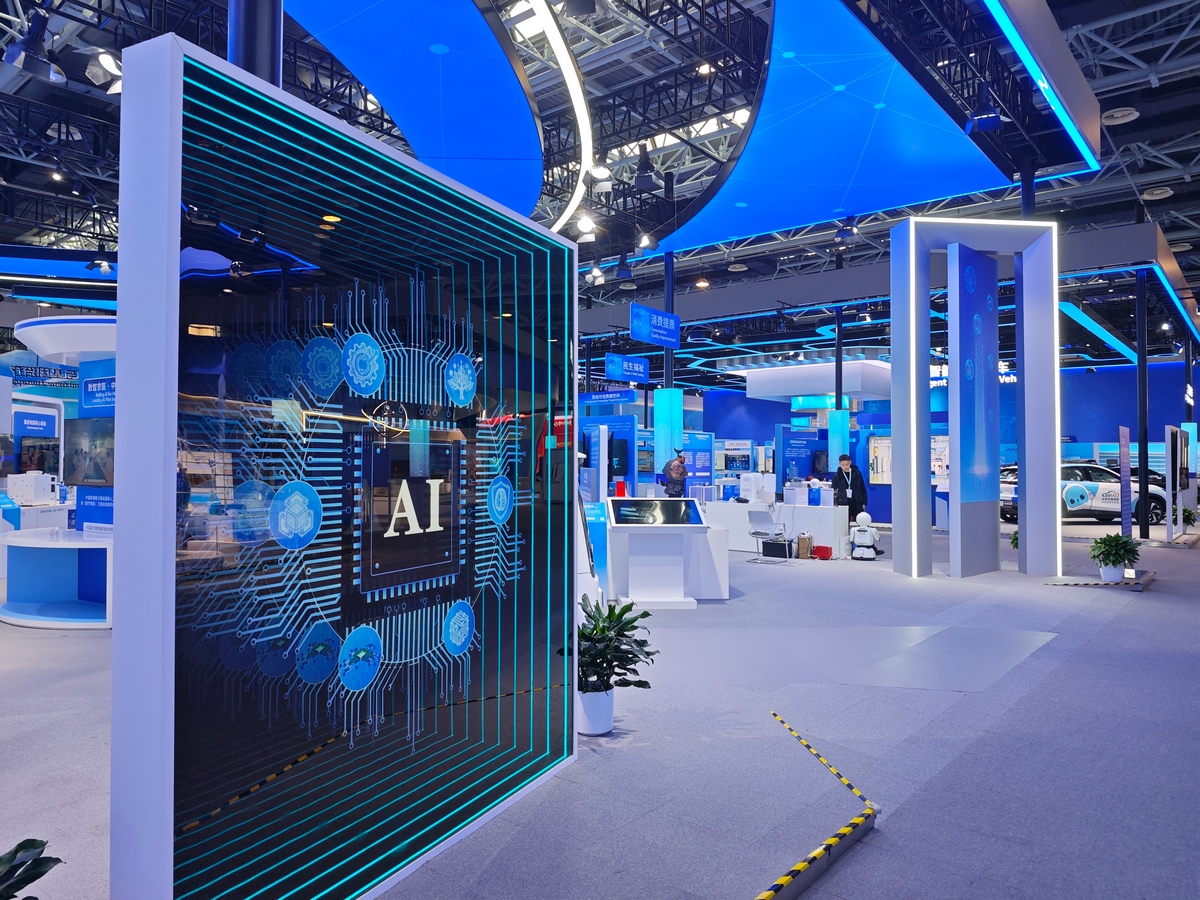
ZGC Forum Photo: Yin Yeping/GT
From AR glasses capable of translating more than 100 languages to intelligent robots serving food and beverages without human involvement, attendees from around the world have been drawn to the range of cutting-edge artificial intelligence technologies on display at the ongoing Zhongguancun (ZGC) Forum in Beijing, which entered its third day on Friday.
Speaking with the Global Times at the event, which runs from Wednesday to Sunday, industry representatives from China and abroad said their shared goal is to tap into the booming opportunities as China's rapidly advancing AI sector moves swiftly from development into real-world applications.
Joseph Roy, a US businessperson and co-founder of Beijing Qifeiqimeng Technology Company, is attending the ZGC Forum for the second time and said he is excited to be part of the event. He told the Global Times that the forum offers a compelling window into China's technological progress, pointing to AI and robotics as key directions for the future.
Roy is particularly interested in AI tools here, noting that they have already had a significant impact on his work in the education sector. He recently began using Feishu, a AI tool developed by Chinese technology giant ByteDance, and said he has been impressed by how effectively it helps him organize and analyze data. Roy is now starting to develop AI integrated education products with Chinese partners.
Sharing a similar mindset for cooperative opportunities, Fiona Bradley, director of Research Services and the Corporate Library at the University of New South Wales, attended the ZGC Forum, exploring how advanced technologies like AI can empower traditional libraries.
"Libraries have always been places where people can access trusted knowledge and resources, and we're bringing that into the open science era, with AI as an enabler... We're focused on providing access to knowledge, data, and other platforms to help researchers do their work," Bradley said.
"We are particularly interested in AI applications in agriculture, urban development, and capacity building. These are areas where cooperation can deliver real benefits... We are here to learn, to build partnerships, and to serve as a bridge between China and our home countries," said Joseph Olivier Mendo'o, director of the International Exchange Department at the China-Africa Business Council at the forum.
Mohammadali Farjoo, an Australian business representative, told the Global Times on Friday that what stood out to him was not just the cutting-edge technologies presented at the forum, but the strong commitments and the strategic alignment of resources in China to enhance technology transfer and commercialization.
As an industry insider focusing on technology transfer, commercialization, and innovation management, Farjoo emphasized that the purpose of commercialization and technology transfer extends beyond fundraising and financial gain. The real value lies in how these innovations can benefit society, and that's how he sees the forum.
The comments from foreign business representatives reflected what was on display at the forum. Among all the AI applications, a 60 cm tall robot drew particular attention from attendees. It is not a toy, but a "teaching assistant" capable of interacting with primary school students, helping with lessons, providing entertainment, and even offering psychological support when needed.
Wu Wenqiang, a manager at Beijing AiBingo Technology Co, the robot's producer, told the Global Times on Friday that the AI powered assistant is designed to provide children with equal access to educational opportunities. The robots are already in use in more than 16,000 schools across China, and the company has started introducing them to schools in the Middle East as part of its global expansion, said Wu.
China's AI-related sector is booming rapidly and has huge potential. According to an official with the National Development and Reform Commission, the corresponding industries will be valued at more than 10 trillion yuan ($1.45 trillion) by the end of the 15th Five-Year Plan period (2026-2030), the Xinhua News Agency reported.
RELATED ARTICLES