Videos of AI-recreated organ donors touch attendees at commemoration event, showing unique digital tributes in China
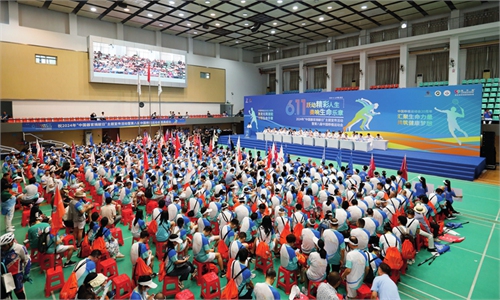
The 2026 National Organ Donation Commemoration and Public Awareness Event was held in Jinan, East China's Shandong Province on March 28 to 29, 2026. Photo: Courtesy of the China Organ Donation Administration Center.
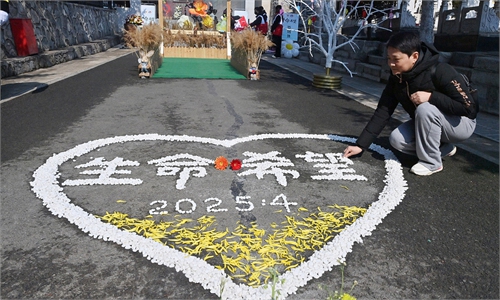
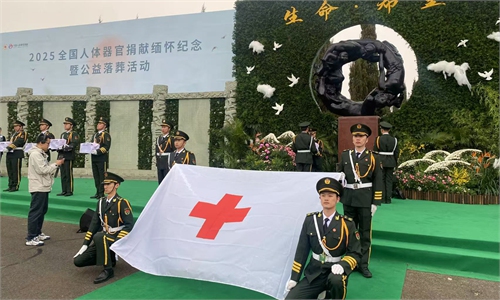
As Qingming Festival (Tomb-Sweeping Day) approaches and people mourn the deceased, the China Organ Donation Administration Center held a collective commemorative event for organ donors on Sunday, where AI-generated digital human footage of the donors touched the event participants.
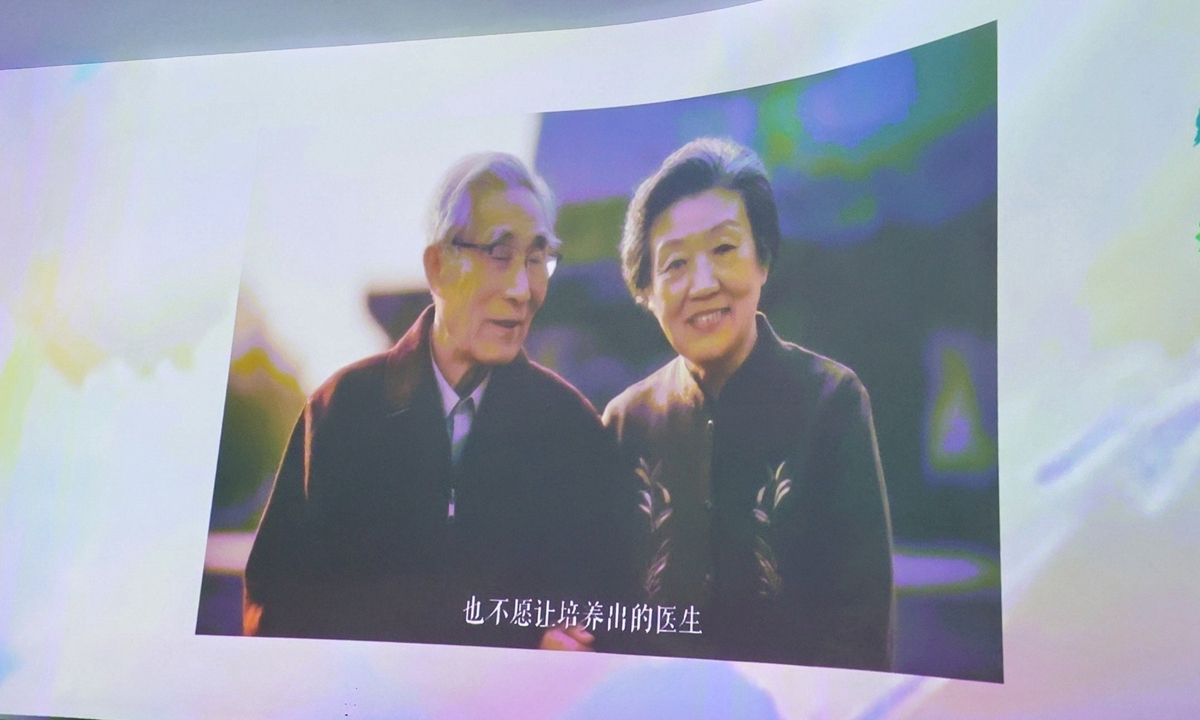
The 2026 National Organ Donation Commemoration and Public Awareness Event was held in Jinan, East China's Shandong Province on Sunday, where an AI-generated video based on photos and audio recordings of a donor couple during their lifetime, explained vividly their motivation of donation and emphasized the significance of passing on life.
Wu Jiaxiang, who lived through the War of Resistance Against Japan and the founding of New China, devoted his career to transportation and water conservancy. He once served as a technical commissioner at the Agricultural Water Resources Bureau of the Ministry of Agriculture.
"Some people asked, while we were still alive and healthy, that why we registered for body donation so early. In fact, it is very simple. We just hope to do something for the country in the end. Children, when you see this video, please do not feel sad. We are fine, just like a drop of water returning to the river," the AI-recreated Wu said with a smile, alongside his wife Li Wenshi.
Li was a medic before her passing and worked in public health after the founding of the People's Republic of China. "We both made a last wish to dedicate our bodies to the medical education of our motherland," said the digital recreation of Li.
Wu Xiaojian, son of the couple, also captain of the Jinan Red Cross Body (Cornea) Donation Volunteer Service Team, said at the Sunday event that "My parents once said, they would rather medical students make tens of thousands of cuts on a donated body than have a doctor trained without sufficient practice make a wrong cut on a patient."
With 45 years of medical work experience, Wu Xiaojian deeply understands the importance of body and organ donation for medical education. "Basic courses like anatomy and physiology are the foundation for cultivating good doctors. If the foundation is not solid, it can lead to risks in clinical practice," Wu told reporters, adding that he has registered as a body (cornea) donation volunteer.
Using the latest AI methods, we bring to life the story of the oldest couple donors, to encourage more people to participate in donation while providing comfort to the families of the deceased, a staff member of the China Organ Donation Administration Center told the Global Times at the scene. "With the help of technology, we hope to help more people understand the unique role organ donation plays in the continuation of life," she said.
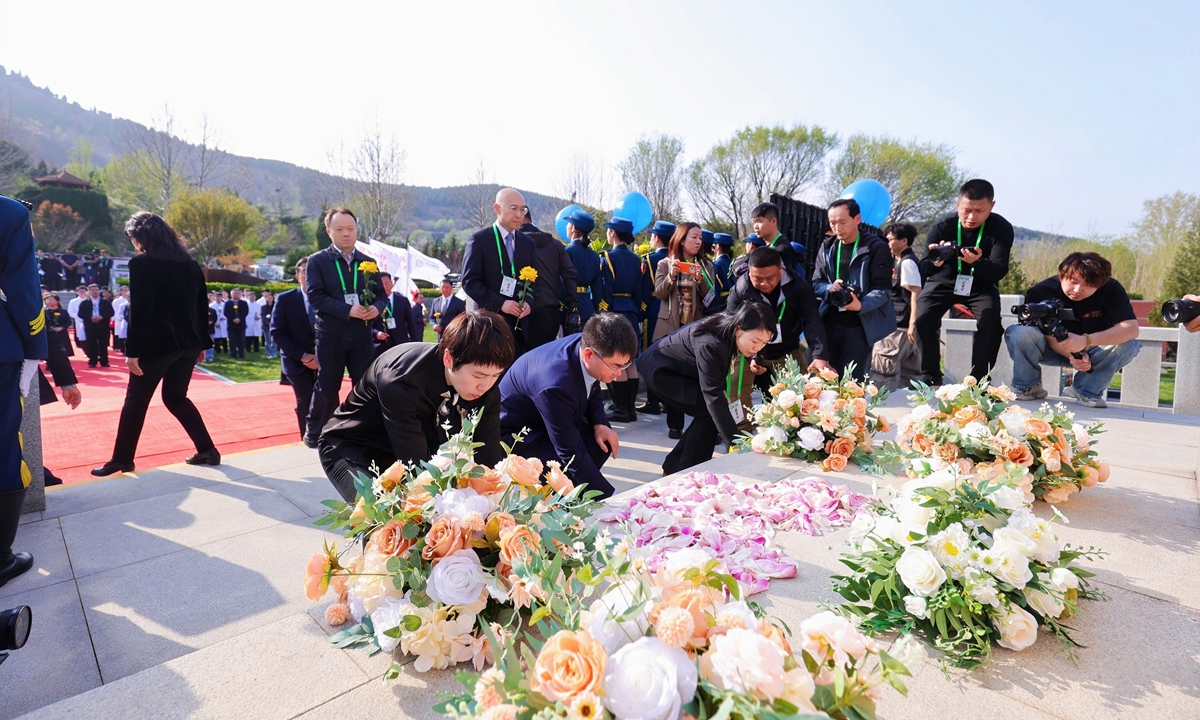
The 2026 National Organ Donation Commemoration and Public Awareness Event was held in Jinan, East China's Shandong Province on March 28 to 29, 2026. Photo: Courtesy of the China Organ Donation Administration Center.
The number of registered organ donation volunteers nationwide has exceeded 7.33 million, with over 65,000 cases of posthumous organ donations, more than 200,000 donated organs, over 120,000 donated corneas, and over 69,000 donated bodies. These donations have saved the lives of over 200,000 patients with organ failure and brought light to more than 100,000 people, the Global Times learned from the Center on Sunday.The Global Times also learned that Shandong Province recorded over 100,000 new organ donation registrations and more than 1,800 donations in 2024 and 2025 combined, ranking first in the country for both registration and donation numbers for two consecutive years.
As a Shandong native, story of doctor Zhang Junqiao also touched many at the event.
On June 15, 2025, Zhang, captain of the 27th batch of the China (Shandong) Medical Team aiding Tanzania, exhausted himself while rescuing a drowning person at a beach in Dar es Salaam and tragically drowned. Before going to Africa for aid, he signed an agreement on body donation.
Zhang Junqiao's heroic act exemplifies the deep China-Africa friendship and the extraordinary dedication, commitment, love and fighting spirit of Chinese medical teams, Chinese Foreign Ministry spokesperson Guo Jiakun said after the tragedy.
People can sometimes be fragile, but at other times, they are incredibly strong. As a doctor, saving one life at a time matters. "If one day you save a person, you will feel extremely happy," Zhang Junqiao, deputy chief anesthesiologist at the Affiliated Hospital of Shandong Second Medical University, once said.
RELATED ARTICLES