IN-DEPTH / IN-DEPTH
Archives Tell Truth: Truth of Nanjing Massacre and Japan’s heinous crimes in words and cameras of foreign eyewitnesses
The Unforgettable Witness
By and Liang Rui Published: Mar 31, 2026 10:36 PM

Editor's Note:
Eighty years have passed since the International Military Tribunal for the Far East ("Tokyo trials") in 1946. Yet, despite the verdicts of the Tribunal, many atrocities committed by Japan during its invasion of China from 1931 to 1945 are still being denied or downplayed by certain forces in Japan today. This invasion constitutes one of the darkest chapters in the history of human civilization. Certain forces within Japan have never ceased attempting to deny and whitewash this history of aggression, seeking to obscure and dilute responsibility for wartime crimes. In the face of these persistent challenges to historical truth, expressions of grief and indignation alone are far from sufficient. Only irrefutable original evidence can expose falsehoods and leave no room for denial.
The Global Times is launching a series titled "Archives Tell Truth," which draws upon local archival resources while cross-referencing international historical documents to systematically trace the evidence chain of Japan's crimes during its invasion of China, aiming to expose the hypocrisy of Japanese historical revisionism, and defend historical truth and human justice. This is the second installment in the series, which draws on the mutual corroboration of ironclad evidence from survivors' oral accounts and international witnesses' records, to reconstruct the true scenes of the Nanjing Massacre. It refutes the fallacious claims of Japanese right-wing forces with hard facts and alerts the world to remember history.
In the winter of 1937, the atrocities perpetrated by the Japanese army in Nanjing made the city an indelible witness to history.
On December 13, 1937, at No.5 Xinlukou in Nanjing, the Xia Shuqin family was preparing lunch, when suddenly Japanese soldiers burst in. They shot the landlord dead on the spot, then killed Xia's kneeling father who begged for mercy. In a brutal rampage, the soldiers gang-raped and murdered her mother and two underage sisters, killed her grandparents, and beat her one-year-old baby sister to death after dragging her out from under a table, as reported by CCTV News.
Although, 8-year-old Xia was hidden under a quilt by her grandfather, the soldiers found her and stabbed her three times. After she had regained consciousness in a pool of blood, she heard her surviving younger sister cry for their mother. The two girls survived over 10 days, among the corpses of their relatives, living on leftover fried rice and cistern water. Of the nine family members, seven were brutally killed, leaving the two young girls orphaned. They were later rescued by elderly volunteers from a local charity organization, said the CCTV report.
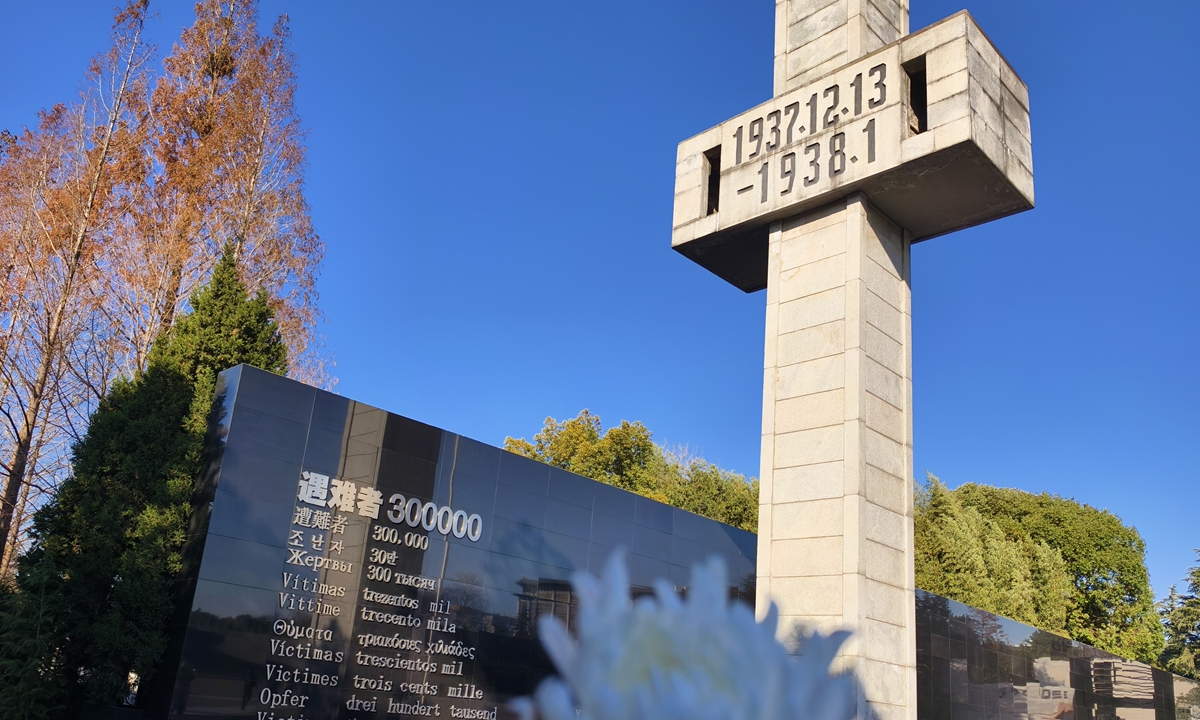
During the nearly six weeks of burning, killing, raping and looting carried out by the invading Japanese army against defenseless civilians in Nanjing, at least 300,000 people were killed, archives of the Memorial Hall of the Victims in Nanjing Massacre by Japanese Invaders show. Xia Shuqin is one of the few remaining survivors.
In 1994, Xia became the first survivor after the Chinese People's War of Resistance against Japanese Aggression to travel to Japan to denounce the atrocities of the Nanjing Massacre, speaking out in Tokyo, Osaka, Hiroshima and other cities. To her shock, she discovered that many ordinary Japanese people knew nothing about the horrific crimes committed by the Japanese army in Nanjing.
In 1998, Xia was slandered and branded a "fake witness" by Japanese right-wing writers for exposing the truth, so she took legal action straight away. She sued the writers in Nanjing in 2000 and won the case in 2006. She then traveled to Japan the same year to file a lawsuit against the defendant. After four hearings, she secured a complete victory in Japan in 2009, ending nearly a decade of litigation with truth prevailing - all with a pivotal piece of evidence from a foreigner, John Magee, whose records corroborated this harrowing memory.
"Xia remembers that when Magee, who was one of the founders of the safe zone international committee and refugee hospital in Nanjing, learned of her family's tragic ordeal, he reported it to the committee. Guided by Xia's uncle and accompanied by Dr Xu Chuanyin, secretary and interpreter of the committee, Magee evaded Japanese soldiers, slipped through alleyways to reach No.5 Xinlukou, and filmed the scene of the atrocities while interviewing the elderly people who had rescued her," Wu Mingxiu, a member of the legal team that represented Xia and accompanied her to Japan, told the Global Times.
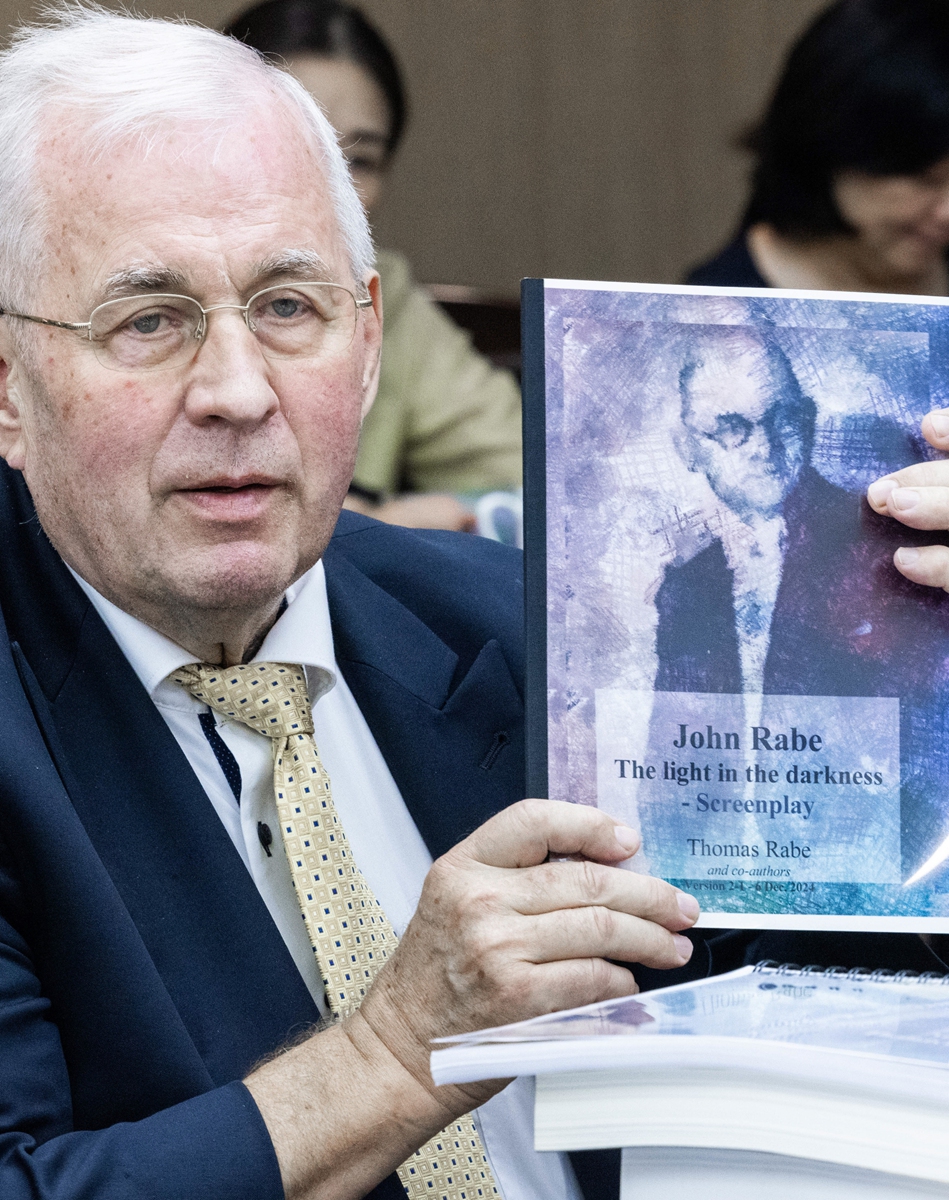
A German diarist also recorded Magee's on-site filming. John Rabe, then a Siemens representative in Nanjing, who also organized an international safety zone with the help of other foreigners, documented Japanese atrocities in the form of wartime diaries - more than 2,000 pages of text and over 80 photographs - which have become some of the most important and detailed historical records of the event during the Nanjing Massacre, according to CCTV News.
It is precisely these records by foreign eyewitnesses that expose the systematic war crimes committed by the Japanese invaders, reconstruct the true scenes of the Nanjing Massacre and other atrocities from a third-party perspective, and stand as crucial, irrefutable international evidence for the subsequent "Tokyo trials."
On August 15, 1945, Japan announced its unconditional surrender. In May 1946, the International Military Tribunal for the Far East tried 28 Japanese Class-A war criminals. Magee testified as a witness, providing a detailed account of the Japanese atrocities he personally witnessed in Nanjing, according to the official website of the Memorial Hall of the Victims in Nanjing Massacre by Japanese Invaders.
In the 1990s, Japanese right-wing forces denied the Nanjing Massacre and slandered Magee's footage, prompting a US memorial organization to search for the original reels. Shao Ziping, the memorial organization's president, found 13 original film reels at Magee's son David's home in July 1991 and an edited 37-minute version was later produced. The footage was later donated free of charge to the Nanjing Massacre Memorial Hall on December 13, 2019.
Experts have verified that the donated 37-minute version of the Magee footage records Japanese aircraft bombing Nanjing, the flight of Nanjing refugees and the atrocities committed by Japanese troops after they occupied the city. It includes images of medical staff at Gulou Hospital treating victims of Japanese violence, among other content, as the Xinhua News Agency reported.
Zhang Lianhong, professor at Nanjing Normal University and director of the university's Nanjing Massacre Research Center, told Xinhua that this film is one of the most comprehensive and richest versions discovered so far in depicting Japanese atrocities.
Harrowing truth documented in diary
In addition to the powerful visual testimony left by Magee, another key international figure, German businessman Rabe also documented the atrocities in meticulous detail through his diary, providing equally compelling first-hand evidence.
Rabe (1882 -1950) was best known for his efforts to halt the atrocities of the Japanese army during the Nanjing Massacre and, when those efforts fell short, for his work to protect and aid Chinese civilians. The Nanjing international safety zone, which he helped establish, sheltered some 200,000 Chinese people from slaughter, per a CCTV News report. As leader of the safety zone, Rabe kept a diary during the Japanese aggression and occupation of the city, in which he recorded numerous observations of Japanese atrocities.
For example, on December 13, 1937, he wrote: "It is not until we tour the city that we learn the extent of destruction. We come across corpses every 100 to 200 yards. The bodies of civilians that I examined had bullet holes in their backs. These people had presumably been fleeing and were shot from behind."
On December 17, 1937, he wrote: Last night up to 1,000 women and girls are said to have been raped, about 100 girls at Ginling Women's College alone. You hear nothing but rape. If husbands or brothers intervene, they're shot. What you hear and see on all sides is the brutality and bestiality of the Japanese soldiers.
In 2017, a descendant of Rabe donated the original diaries to the China's Central Archives.
Wang Hongmin, director of the Memory of the World project at the National Archives Administration, told the Global Times that Rabe's diary provides a very important supplement to existing historical records - it is a genuine account and an international third-party record that holds great value for Chinese historical materials.
"After the Nanjing Massacre archives were inscribed on the UNESCO Memory of the World Register, many people wanted to learn more about the historical facts. The inclusion of Rabe's diary in the Central Archives has offered historians crucial additional material for deeper research," said Wang.
Like Rabe and Magee, some foreigners present during Japanese aggression in Nanjing refused to stand idly by. They recorded the atrocities with their pens and cameras while also taking action to protect the innocent. Among them, the experiences of American missionary Minnie Vautrin at Ginling Women's College provide another powerful testimony to the Japanese army's sexual violence.
Vautrin served as dean of education at the Ginling college. During the fall of Nanjing, the college's refugee shelter for women and children housed more than 10,000 refugees. As the person in charge of the shelter - which became a primary target for Japanese sexual violence as written in Rabe's diary - her personal eyewitness diary remains one of the most convincing pieces of evidence exposing these crimes, according to CCTV News.
In her diary for December 19, 1937, Vautrin recorded a harrowing scene: "In room 538 upstairs, I found one standing at the door, and one inside already raping a poor girl. My letter from the [Japanese] Embassy and my presence sent them running out in a hurry."
The unspeakable atrocities left Vautrin with severe psychological trauma: diagnosed with depression in spring 1940, she blamed herself for the lives she failed to save and was plagued by suicidal thoughts when she returned to the US that May. She took her own life on May 14, 1941 - the first anniversary of her departure from Nanjing, per the Memorial Hall of the Victims in Nanjing Massacre by Japanese Invaders.
The American Board of Commissioners for Foreign Missions declared in her obituary: "Like a soldier who fell on the battlefield, Minnie Vautrin was also a casualty of war." Her suicide was primarily caused by severe depression, a major trigger of which was trauma from the Japanese army's atrocities in Nanjing.
Wu told the Global Times that Xia Shuqin felt warm solace during her Japanese lawsuits: 30-40 Japanese lawyers worked tirelessly across China and Japan on her case, with 10 in court and over 400 Japanese citizens forming a support group. After the first hearing, Japanese attendees knelt in court to repent for their ancestors' crimes, some weeping as they apologized to her. Without such ironclad evidence, Xia's ordeal would hardly have been believed.
"In plain yet profound ways, these stories and records remind us that even in the darkest of times, humanity's conscience can still shine through. May these shared memories forever safeguard peace and the common moral conscience of humankind," said Wu.
Eighty years have passed since the International Military Tribunal for the Far East ("Tokyo trials") in 1946. Yet, despite the verdicts of the Tribunal, many atrocities committed by Japan during its invasion of China from 1931 to 1945 are still being denied or downplayed by certain forces in Japan today. This invasion constitutes one of the darkest chapters in the history of human civilization. Certain forces within Japan have never ceased attempting to deny and whitewash this history of aggression, seeking to obscure and dilute responsibility for wartime crimes. In the face of these persistent challenges to historical truth, expressions of grief and indignation alone are far from sufficient. Only irrefutable original evidence can expose falsehoods and leave no room for denial.
The Global Times is launching a series titled "Archives Tell Truth," which draws upon local archival resources while cross-referencing international historical documents to systematically trace the evidence chain of Japan's crimes during its invasion of China, aiming to expose the hypocrisy of Japanese historical revisionism, and defend historical truth and human justice. This is the second installment in the series, which draws on the mutual corroboration of ironclad evidence from survivors' oral accounts and international witnesses' records, to reconstruct the true scenes of the Nanjing Massacre. It refutes the fallacious claims of Japanese right-wing forces with hard facts and alerts the world to remember history.
The Memorial Hall of the Victims in Nanjing Massacre by Japanese Invaders located in Nanjing, East China's Jiangsu Province
In the winter of 1937, the atrocities perpetrated by the Japanese army in Nanjing made the city an indelible witness to history.
On December 13, 1937, at No.5 Xinlukou in Nanjing, the Xia Shuqin family was preparing lunch, when suddenly Japanese soldiers burst in. They shot the landlord dead on the spot, then killed Xia's kneeling father who begged for mercy. In a brutal rampage, the soldiers gang-raped and murdered her mother and two underage sisters, killed her grandparents, and beat her one-year-old baby sister to death after dragging her out from under a table, as reported by CCTV News.
Although, 8-year-old Xia was hidden under a quilt by her grandfather, the soldiers found her and stabbed her three times. After she had regained consciousness in a pool of blood, she heard her surviving younger sister cry for their mother. The two girls survived over 10 days, among the corpses of their relatives, living on leftover fried rice and cistern water. Of the nine family members, seven were brutally killed, leaving the two young girls orphaned. They were later rescued by elderly volunteers from a local charity organization, said the CCTV report.
During the nearly six weeks of burning, killing, raping and looting carried out by the invading Japanese army against defenseless civilians in Nanjing, at least 300,000 people were killed, archives of the Memorial Hall of the Victims in Nanjing Massacre by Japanese Invaders show. Xia Shuqin is one of the few remaining survivors.
In 1994, Xia became the first survivor after the Chinese People's War of Resistance against Japanese Aggression to travel to Japan to denounce the atrocities of the Nanjing Massacre, speaking out in Tokyo, Osaka, Hiroshima and other cities. To her shock, she discovered that many ordinary Japanese people knew nothing about the horrific crimes committed by the Japanese army in Nanjing.
In 1998, Xia was slandered and branded a "fake witness" by Japanese right-wing writers for exposing the truth, so she took legal action straight away. She sued the writers in Nanjing in 2000 and won the case in 2006. She then traveled to Japan the same year to file a lawsuit against the defendant. After four hearings, she secured a complete victory in Japan in 2009, ending nearly a decade of litigation with truth prevailing - all with a pivotal piece of evidence from a foreigner, John Magee, whose records corroborated this harrowing memory.
"Xia remembers that when Magee, who was one of the founders of the safe zone international committee and refugee hospital in Nanjing, learned of her family's tragic ordeal, he reported it to the committee. Guided by Xia's uncle and accompanied by Dr Xu Chuanyin, secretary and interpreter of the committee, Magee evaded Japanese soldiers, slipped through alleyways to reach No.5 Xinlukou, and filmed the scene of the atrocities while interviewing the elderly people who had rescued her," Wu Mingxiu, a member of the legal team that represented Xia and accompanied her to Japan, told the Global Times.
A German diarist also recorded Magee's on-site filming. John Rabe, then a Siemens representative in Nanjing, who also organized an international safety zone with the help of other foreigners, documented Japanese atrocities in the form of wartime diaries - more than 2,000 pages of text and over 80 photographs - which have become some of the most important and detailed historical records of the event during the Nanjing Massacre, according to CCTV News.
It is precisely these records by foreign eyewitnesses that expose the systematic war crimes committed by the Japanese invaders, reconstruct the true scenes of the Nanjing Massacre and other atrocities from a third-party perspective, and stand as crucial, irrefutable international evidence for the subsequent "Tokyo trials."
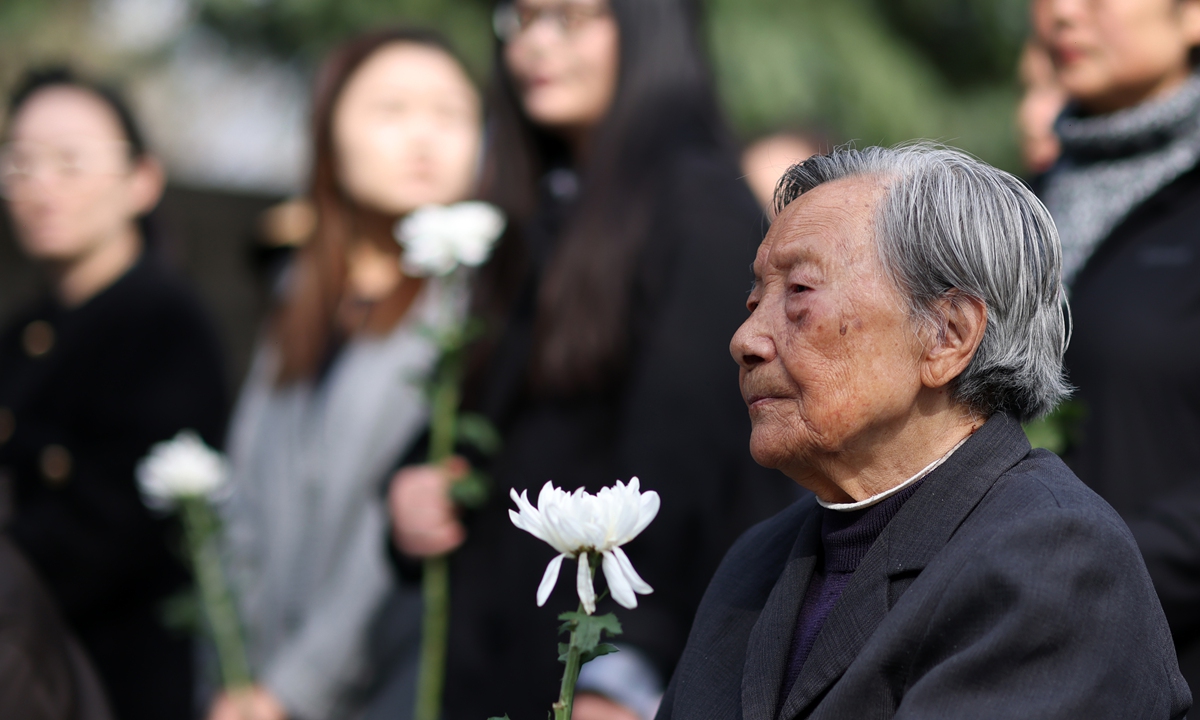
Xia Shuqin, a Nanjing Massacre survivor, pays tribute to the victims of the Nanjing Massacre in Nanjing on April 4, 2025. Photos on this page: VCG
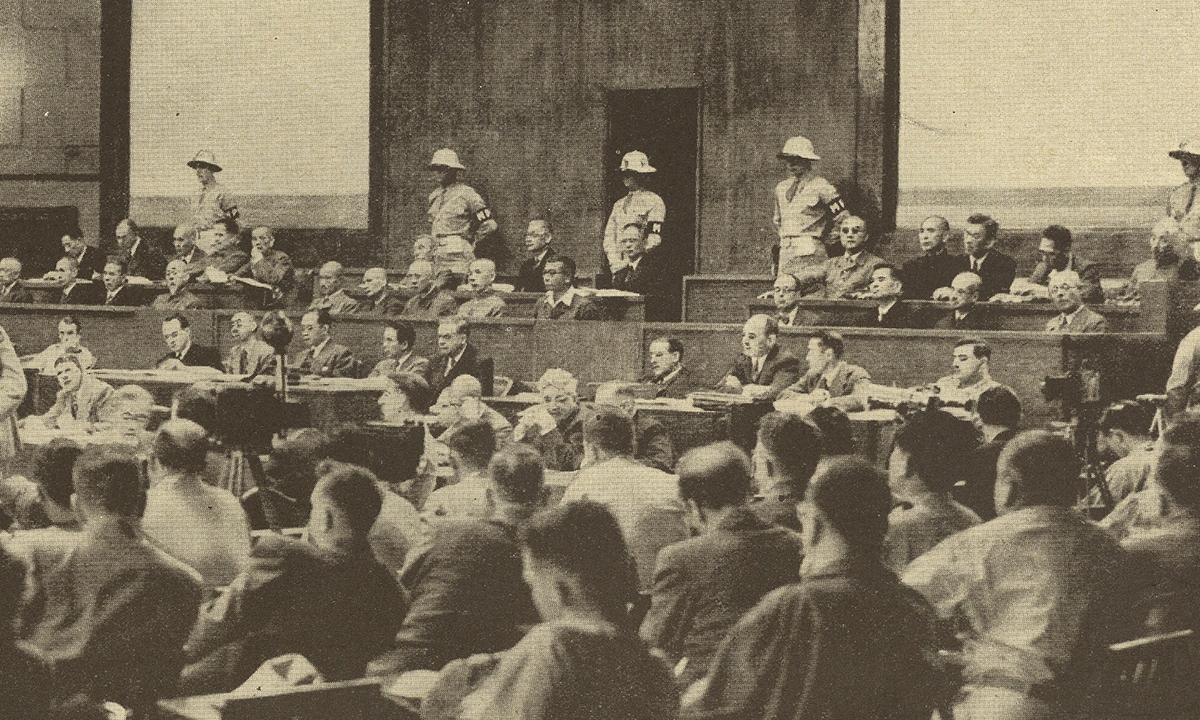
Ironclad evidenceOn August 15, 1945, Japan announced its unconditional surrender. In May 1946, the International Military Tribunal for the Far East tried 28 Japanese Class-A war criminals. Magee testified as a witness, providing a detailed account of the Japanese atrocities he personally witnessed in Nanjing, according to the official website of the Memorial Hall of the Victims in Nanjing Massacre by Japanese Invaders.
In the 1990s, Japanese right-wing forces denied the Nanjing Massacre and slandered Magee's footage, prompting a US memorial organization to search for the original reels. Shao Ziping, the memorial organization's president, found 13 original film reels at Magee's son David's home in July 1991 and an edited 37-minute version was later produced. The footage was later donated free of charge to the Nanjing Massacre Memorial Hall on December 13, 2019.
Experts have verified that the donated 37-minute version of the Magee footage records Japanese aircraft bombing Nanjing, the flight of Nanjing refugees and the atrocities committed by Japanese troops after they occupied the city. It includes images of medical staff at Gulou Hospital treating victims of Japanese violence, among other content, as the Xinhua News Agency reported.
Zhang Lianhong, professor at Nanjing Normal University and director of the university's Nanjing Massacre Research Center, told Xinhua that this film is one of the most comprehensive and richest versions discovered so far in depicting Japanese atrocities.
The historical picture of the International Military Tribunal for the Far East ("Tokyo trials")
Harrowing truth documented in diary
In addition to the powerful visual testimony left by Magee, another key international figure, German businessman Rabe also documented the atrocities in meticulous detail through his diary, providing equally compelling first-hand evidence.
Rabe (1882 -1950) was best known for his efforts to halt the atrocities of the Japanese army during the Nanjing Massacre and, when those efforts fell short, for his work to protect and aid Chinese civilians. The Nanjing international safety zone, which he helped establish, sheltered some 200,000 Chinese people from slaughter, per a CCTV News report. As leader of the safety zone, Rabe kept a diary during the Japanese aggression and occupation of the city, in which he recorded numerous observations of Japanese atrocities.
For example, on December 13, 1937, he wrote: "It is not until we tour the city that we learn the extent of destruction. We come across corpses every 100 to 200 yards. The bodies of civilians that I examined had bullet holes in their backs. These people had presumably been fleeing and were shot from behind."
On December 17, 1937, he wrote: Last night up to 1,000 women and girls are said to have been raped, about 100 girls at Ginling Women's College alone. You hear nothing but rape. If husbands or brothers intervene, they're shot. What you hear and see on all sides is the brutality and bestiality of the Japanese soldiers.
In 2017, a descendant of Rabe donated the original diaries to the China's Central Archives.
Wang Hongmin, director of the Memory of the World project at the National Archives Administration, told the Global Times that Rabe's diary provides a very important supplement to existing historical records - it is a genuine account and an international third-party record that holds great value for Chinese historical materials.
"After the Nanjing Massacre archives were inscribed on the UNESCO Memory of the World Register, many people wanted to learn more about the historical facts. The inclusion of Rabe's diary in the Central Archives has offered historians crucial additional material for deeper research," said Wang.
Thomas Rabe, grandson of John Rabe, presents a documentary series "John Rabe - The Light in the Darkness" on August 15, 2025 in Nanjing.
The irreparable woundLike Rabe and Magee, some foreigners present during Japanese aggression in Nanjing refused to stand idly by. They recorded the atrocities with their pens and cameras while also taking action to protect the innocent. Among them, the experiences of American missionary Minnie Vautrin at Ginling Women's College provide another powerful testimony to the Japanese army's sexual violence.
Vautrin served as dean of education at the Ginling college. During the fall of Nanjing, the college's refugee shelter for women and children housed more than 10,000 refugees. As the person in charge of the shelter - which became a primary target for Japanese sexual violence as written in Rabe's diary - her personal eyewitness diary remains one of the most convincing pieces of evidence exposing these crimes, according to CCTV News.
In her diary for December 19, 1937, Vautrin recorded a harrowing scene: "In room 538 upstairs, I found one standing at the door, and one inside already raping a poor girl. My letter from the [Japanese] Embassy and my presence sent them running out in a hurry."
The unspeakable atrocities left Vautrin with severe psychological trauma: diagnosed with depression in spring 1940, she blamed herself for the lives she failed to save and was plagued by suicidal thoughts when she returned to the US that May. She took her own life on May 14, 1941 - the first anniversary of her departure from Nanjing, per the Memorial Hall of the Victims in Nanjing Massacre by Japanese Invaders.
The American Board of Commissioners for Foreign Missions declared in her obituary: "Like a soldier who fell on the battlefield, Minnie Vautrin was also a casualty of war." Her suicide was primarily caused by severe depression, a major trigger of which was trauma from the Japanese army's atrocities in Nanjing.
Wu told the Global Times that Xia Shuqin felt warm solace during her Japanese lawsuits: 30-40 Japanese lawyers worked tirelessly across China and Japan on her case, with 10 in court and over 400 Japanese citizens forming a support group. After the first hearing, Japanese attendees knelt in court to repent for their ancestors' crimes, some weeping as they apologized to her. Without such ironclad evidence, Xia's ordeal would hardly have been believed.
"In plain yet profound ways, these stories and records remind us that even in the darkest of times, humanity's conscience can still shine through. May these shared memories forever safeguard peace and the common moral conscience of humankind," said Wu.
RELATED ARTICLES