Spring break overlapping with Qingming Festival holiday to boost China’s tourism market
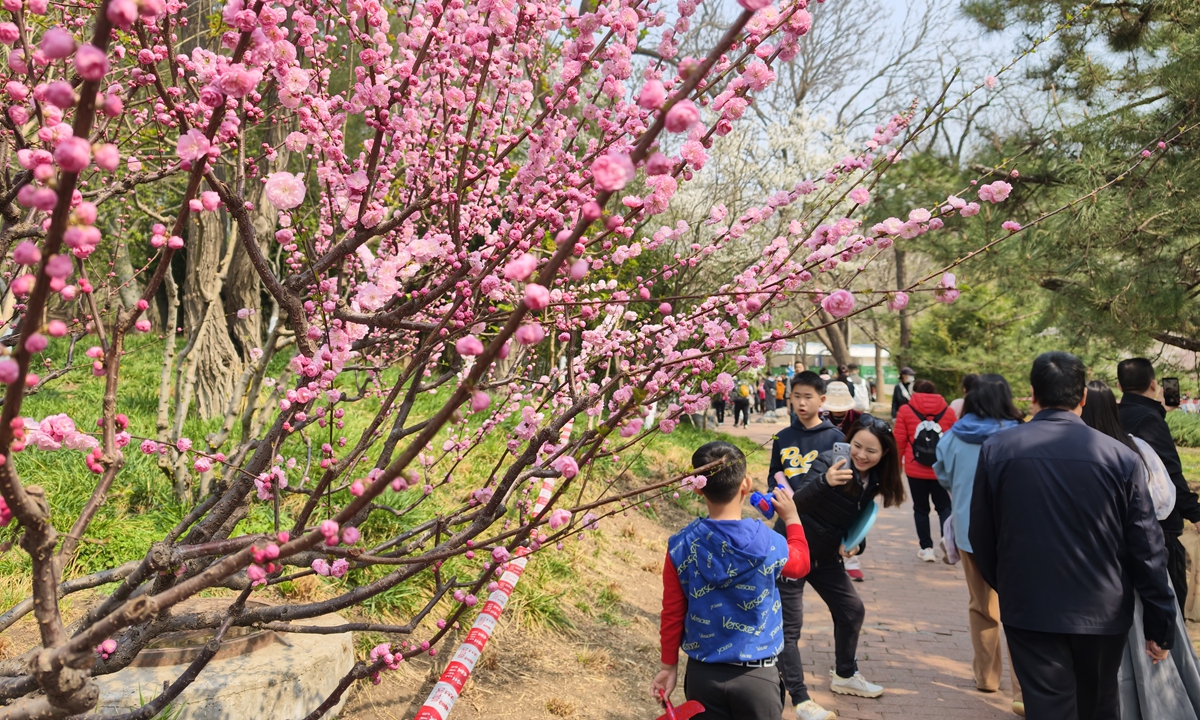
A visitor takes photo at Yuyuantan Park in Beijing on March 28, 2026. Photo: VCG
The recent rollout of pilot spring breaks in several Chinese regions, overlapping with the upcoming Qingming Festival holiday, is rapidly emerging as what analysts see as a new catalyst for domestic consumption, with travel platform data pointing to a strong stimulative effect on the tourism market.
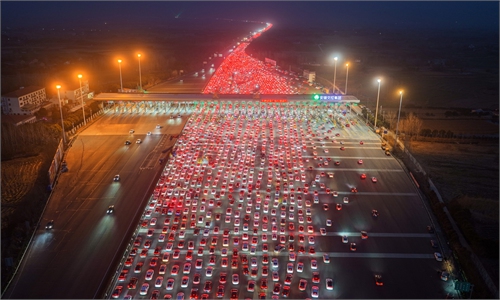
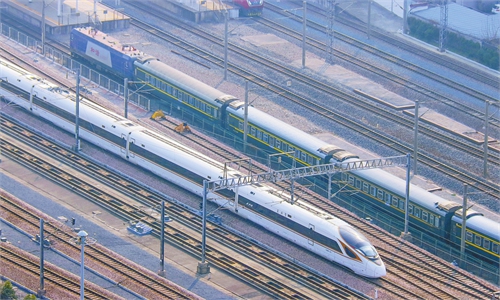
China Railway Shanghai Group said that the Yangtze River Delta railway network will run a combined spring break and Qingming holiday travel schedule from Tuesday through April 7, an eight-day period, with passenger trips expected to reach 28 million, state broadcaster CCTV reported on Tuesday.
The peak travel day is projected to fall on April 4, when passenger volume is expected to hit 4.3 million, potentially setting a new single-day record, according to the report.
This year, spring and autumn holidays were included in the Government Work Report, which called for their introduction for primary and secondary school students where conditions permit, alongside the implementation of staggered paid leave.
So far, provinces including East China's Jiangsu and Anhui and Southwest China's Sichuan have rolled out pilot plans, with many aligning spring breaks with the Qingming holiday, which falls from April 4 to 6, to form a six-day break.
Provinces such as East China's Shandong, Central China's Hunan and Southwest China's Guizhou have recently issued notices to establish such breaks for primary and secondary schools, while encouraging these holidays to be combined with weekends and statutory holidays to create longer vacation periods, CCTV reported on Tuesday.
The overlap of spring breaks with the Qingming holiday effectively creates an additional "golden week," which will significantly boost domestic cultural and tourism consumption, particularly travel-related spending, Jiang Yiyi, a tourism and sports expert at Beijing Sport University, told the Global Times on Tuesday.
Data sent to the Global Times on Tuesday by travel platform Qunar showed that from April 1 to 6, air passenger numbers to many popular destinations are expected to rise by about 30 percent year-on-year.
Data from another travel platform, Tongcheng, sent to the Global Times on Tuesday showed that the first peak in travel demand is expected on Wednesday and Thursday, with average airfares rising by more than 30 percent compared with the previous week.
Since mid-March, bookings for travel products have surged in cities such as Nanjing, Suzhou and Chengdu, with Nanjing posting the fastest growth at 148 percent year-on-year.
The combination of student spring breaks and staggered leave arrangements is expected to boost demand for family and parent-child travel. Qunar data showed that the number of passengers under 18 traveling by air is expected to more than double year-on-year, while visits by young travelers to scenic spots are projected to more than triple.
Jiang noted that as a key driver of domestic demand, tourism stimulates upstream and downstream sectors including transportation, accommodation and catering. "With growing interest in study tours and favorable spring weather, the overlap of the two holidays has led to a notable rise in long-distance travel, reflecting strong demand among families for experiential and cultural trips," she added.
Local governments have rolled out supportive measures such as free entry to scenic spots to attract visitors. According to a Xinhua News Agency report on Sunday, regions including Jiangsu, Zhejiang, Anhui and Sichuan have introduced "benefit packages" during the 2026 spring break, including free scenic site access, transport subsidies and study tour discounts.
These policies have already translated into tangible gains. Qunar data showed that in Mianyang, Sichuan, joint free-entry offers for children and parents have driven a 95 percent year-on-year increase in local hotel bookings.
RELATED ARTICLES