Nine-day Spring Festival holiday fuels consumption momentum, reveals structural upgrade
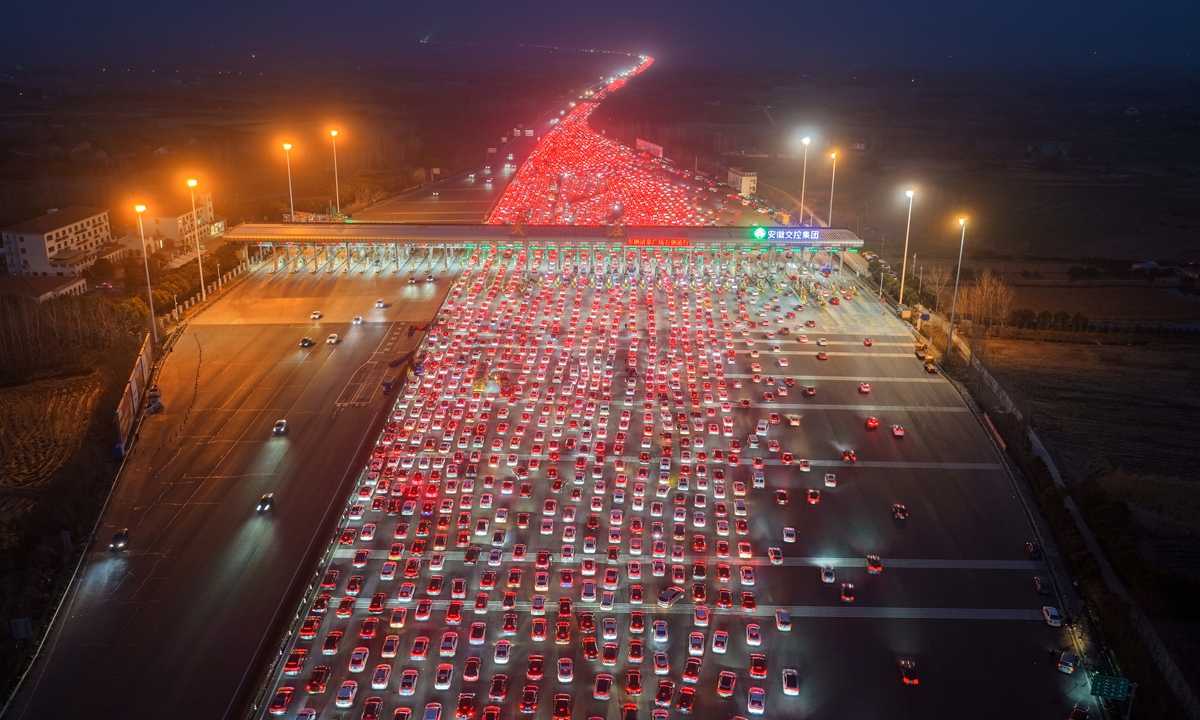
Vehicles bound for returning journeys from Spring Festival holiday line up as they pass a toll station on G40 highway in Chuzhou, East China's Anhui Province on February 22, 2026. Photo: VCG
China's Year of the Horse Spring Festival holiday, featuring a record-long nine days, concluded on Monday and unleashed a surge in tourism and consumer spending, with multiple key indicators reaching historic highs.
Beyond the numbers, this year's holiday has revealed something deeper: a transformation in how Chinese consumers spend and what that spending signals for the broader economy.
From record passenger flows to evolving travel behaviors and robust retail activity, the Spring Festival served not merely as a seasonal reunion, but as a barometer of China's consumption resilience and structural upgrading.
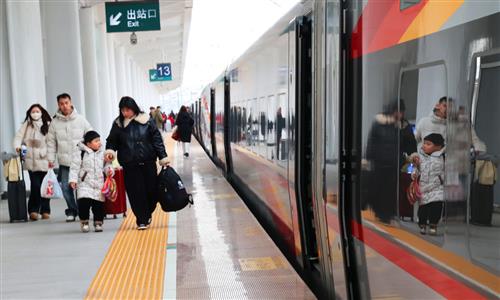
Data from the Ministry of Transport showed that in the first 20 days of the Spring Festival travel rush, cross-regional trips nationwide totaled 5.08 billion, averaging 250 million per day - a record high for the same period. Daily trips are expected to reach 376.63 million toward the end of the holiday, marking this year's peak travel volume.
Shifting spending patterns
The record-long break has prompted distinctive consumption behaviors.
Long-haul travel surged as extended leave allowed more cross-regional trips and deeper experiences. Data from China travel agency Mafengwo showed that journeys lasting more than five days accounted for 59.6 percent of total bookings, while family travelers made up 68 percent of the market. Three-generation trips represented 34 percent of bookings, underscoring the growing dominance of family-centered decision-making.
Li Changan, a professor at the Academy of China Open Economy Studies at the University of International Business and Economics, told the Global Times that the extended holiday was a key driver behind the rise in long-distance travel, as longer leave enabled reunion-oriented and quality-driven consumption. "The shift toward family-based travel will have lasting implications for tourism product design and consumption models," he noted.
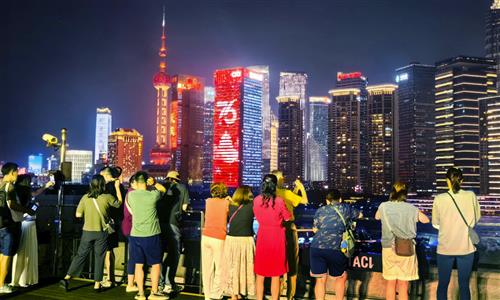
Cultural experience also moved to the forefront. As the second Spring Festival since its inscription on UNESCO's intangible cultural heritage list, travel increasingly shifted from "photo-op" visits to immersive heritage experiences. Hotel bookings in Shantou rose more than 80 percent year-on-year, while smaller cities such as Wuyishan and Yueyang recorded sharp increases in visitor arrivals, per the report by a Chinese travel agency Tongcheng sent to the Global Times.
Zhang Yi, CEO of the iiMedia Research Institute, told the Global Times that the rise of heritage tourism reflects deeper cultural content and immersive participation across age groups. He noted that many heritage-rich experiences are concentrated in smaller cities, helping redirect tourist flows toward third- and fourth-tier destinations and stimulating local economies.
Technology further reshaped spending behavior. AI-powered travel services surged during the holiday. Chinese travel agency Fliggy told the Global Times that AI-generated travel orders increased more than 800 percent compared with pre-holiday levels. Also, Tongcheng's report showed that 57.4 percent of Spring Festival-related queries handled by its AI assistant were about transportation tickets, 20 percent about attractions, and 12.9 percent about local customs.
Zhang added that AI is increasingly becoming a standard tool for holidaymakers. "From itinerary planning to ticket booking and follow-up services, AI has lowered barriers for independent travel and improved efficiency across the entire travel chain," he said, noting that deeper adoption will accelerate digital upgrading across the sector.
A structural upgrade
Beyond changing behaviors, the holiday highlighted a subtle yet structural shift in consumer upgrading, experts said.
Retail activity remained robust, supported by policy measures. The first batch of 62.5 billion yuan in consumer goods trade-in funds has been disbursed, while local governments allocated 2.05 billion yuan in vouchers and subsidies during the holiday, Vice-Commerce Minister Sheng Qiuping said ahead of the holiday.
Ministry of Commerce data showed that average daily sales at key retail and catering enterprises rose 8.6 percent year-on-year in the first four days of the break.
Li said the coordinated effect of policy support and festival demand amplified the multiplier effect of holiday consumption. "Holiday spending underscores the growing role of consumption as a stabilizer and key growth engine of China's economy," he said.
Spending also reflected a shift toward quality and asset-conscious consumption. Despite elevated gold prices, zodiac-themed jewelry and lightweight investment products such as one-gram "gold beans" remained popular, particularly among younger consumers balancing celebration with wealth preservation.
Zhang said small-denomination gold jewelry with festive themes has become popular as it offers both commemorative significance and value preservation. "Consumers are increasingly seeking a balance between celebration and financial security," he said.
Service consumption further reinforced that trend. China's 2026 box office revenue - including pre-sales - has surpassed 7 billion yuan ($970 million) as of Saturday, overtaking North America to become the world's top-grossing film market. The revenue has crossed 8 billion yuan as of Monday. Holiday ticket sales alone exceeded 4.4 billion yuan, accounting for more than half of this year's total box office, according to the Xinhua News Agency.
Rather than reflecting basic demand, strong box office performance suggests rising discretionary spending and growing appetite for experience-driven consumption, Zhang said.
Meanwhile, Hainan's duty-free market performed strongly during its first Spring Festival after full customs operations, with Sanya's four offshore duty-free stores recording 242 million yuan in single-day sales, up 214.5 percent year-on-year.
Li said the robust holiday spending underscores the growing role of consumption as a stabilizer and key growth engine of China's economy. The coordinated effect of policy support and the festival atmosphere has amplified the multiplier effect of holiday demand, strengthening domestic economic recovery.
Zhang added that the diversification of consumption reflects an upgrade toward quality-driven and experience-oriented spending. He noted that holiday consumption has increasingly become not only a short-term economic stimulus, but also a signal of structural transformation in China's domestic demand.
RELATED ARTICLES