ARTS / CULTURE & LEISURE
China’s top reading conference to launch in Nanchang in April
Passing on revolutionary traditions through literature
By Published: Apr 02, 2026 10:10 PM

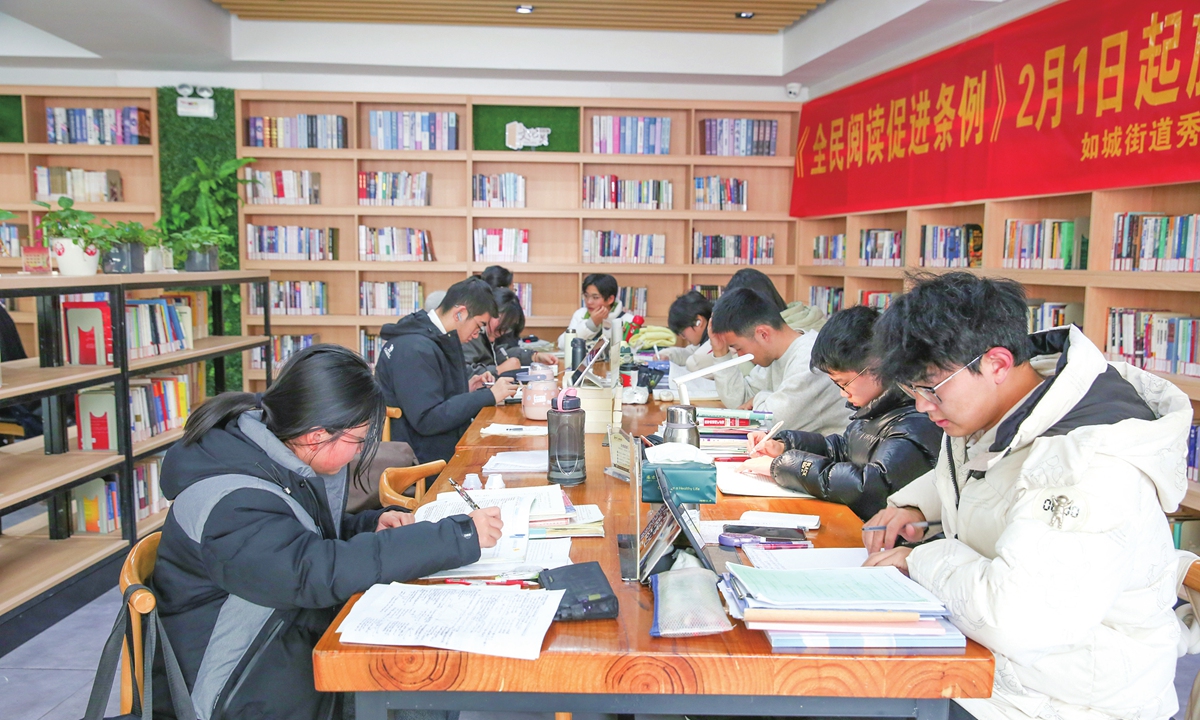
Reading enthusiasts enjoy books in a 24-hour bookstore in Rugao, East China's Jiangsu Province, on February 1, 2026. Photo: VCG
The fifth National Conference on Reading is set to take place in Nanchang, East China's Jiangxi Province, from April 20 to 22, marking a significant milestone in China's efforts to promote a nationwide reading culture, according to a document sent to the Global Times by the organizer on Thursday.
Themed "Promoting National Reading, Building a Literate Society," this year's event coincides with two historic firsts: the inaugural implementation of the National Reading Promotion Regulations and the debut of the State Council-approved "national reading week," the document noted.
Since its inception in 2022, the conference had been held in four cities across China, steadily growing into a flagship platform aimed at fostering public interest in reading and shaping social attitudes toward literature and learning.
This year's conference will kick off with the launch ceremony for the 2026 national reading week, followed by a main forum and a series of sub-forums covering a wide array of topics. These include reading initiatives in schools, family reading, rural literacy programs, urban reading spaces, library engagement, youth and elderly reading, digital publishing, and protections for reading rights. A variety of public-oriented activities will also be organized throughout the event.
A key feature of this year's gathering is its emphasis on the newly enacted National Reading Promotion Regulations, the first legislation of its kind in the country. The conference will incorporate the regulations into forums, exhibitions, and activities, inviting input from government bodies, social organizations and the public to explore how the rules can be effectively implemented.
Organizers have also tied the conference to two major national commemorations, namely the 105th anniversary of the founding of the Communist Party of China and the 90th anniversary of the victory of the Long March.
In light of these milestones, the conference will tap into Jiangxi's deep reservoir of revolutionary heritage, hosting a series of revolutionary-themed reading events. The goal, according to organizers, is to preserve and pass on revolutionary traditions through the power of reading.
"This year marks important national anniversaries, and Nanchang, as one of the cradles of the Chinese revolution, is rich in revolutionary culture," a conference organizer told the Global Times on Thursday. "Choosing Nanchang allows us to fully utilize local revolutionary resources and encourage reading materials that reflect socialist and revolutionary values."
The organizer added that Jiangxi is also home to a strong tradition of classical Chinese scholarship. Institutions such as the White Deer Grotto Academy, one of the most prestigious ancient academies in Chinese history, exemplify the region's long-standing commitment to education and scholarly pursuit. Jiangxi is also known as the birthplace of the "Jiangxi Poetry School," a significant literary movement in Chinese history.
"These traditional resources provide an important foundation for our national reading efforts," the organizer said.
Looking beyond the event itself, the newly established national reading week is designed to become a permanent fixture on the country's cultural calendar.
"We want all regions and sectors to leverage their unique strengths and engage different demographics, including young people, the elderly, and others, with targeted reading guidance," the organizer said. "By concentrating these activities during the reading week, we hope to create a dense and engaging literary atmosphere that draws the public in."
The conference also received endorsements from prominent literary figures. Li Er, celebrated Chinese author and a professor at Peking University, told the Global Times that the new regulations represent a critical step toward embedding reading into the country's institutional fabric.
"National reading helps preserve and advance civilization, and helps people navigate an increasingly complex world while making informed cultural choices," Li told the Global Times.
He emphasized the importance of reading quality materials, particularly in an age dominated by fragmented digital content. "The core of quality reading lies in quality books, and identifying those requires expert input. We need critics who truly take responsibility," he said.
Li expressed willingness to engage in public reading initiatives. "A writer's primary task remains reading and writing, but I am open to meaningful reading promotion events. The goal is not self-promotion, but dialogue with readers, and I believe that benefits a writer's personal growth as well."
RELATED ARTICLES