China’s top court releases typical cases on trafficking of women and children; crime rate down 77.95% from 2012 peak

Photo: IC
China's Supreme People's Court on Thursday released a set of typical cases highlighting the strict punishment of crimes involving the trafficking of women and children. The number of such cases has shown an overall downward trend as a result of China's decade-long efforts to combat these crimes. In 2025, the number of trafficking cases dropped by 77.95 percent compared with the peak in 2012, indicating that the crimes have been effectively curbed, according to the court's official WeChat account on Thursday.
China takes a firm, zero-tolerance stance on crimes involving the trafficking of women and children in accordance with law. Traffickers will face severe penalties, especially ringleaders and those involved in serious offenses such as child abduction, trafficking multiple victims, sexual assault, forced prostitution, or causing death, injury, or severe mental trauma.
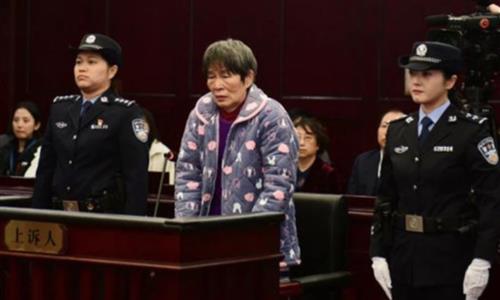
In one representative case, defendant surnamed Wang repeatedly reoffended and cycled in and out of prison. Over more than a decade between 2001 and 2015, he abducted and sold 11 toddlers across multiple regions, causing devastating psychological trauma to the victims' families, with some parents even attempting suicide.
The court found Wang to be the principal offender, noting that his crimes were particularly serious crimes, carried strong malicious intent, and caused significant social harm. Furthermore, after being comprehended, Wang refused to fully confess and showed no remorse.
Wang was then sentenced to death for child trafficking, combined with penalties from previous convictions. The death sentence has been approved and carried out in accordance with the law.
From 2021 to 2025, a higher proportion of defendants in trafficking cases — those involving women and children — were sentenced to more than 10 years in prison, life imprisonment, or death, exceeding the share for all criminal cases by about 10 percentage points over the same period, according to the release.
In addition to strictly punishing trafficking offenses, the top court also focused on intensifying the crackdown on the purchase of trafficked women and children, aiming to curb the "buyer's market," according to the release.
Another case highlighting the "buyer's market" involves Qiu, who profited by posing as an illegal marriage broker between 2018 and 2021. Through intermediaries, he purchased or deceived guardians to obtain women with mental illness or intellectual disabilities, confined them at his residence, and then sold them at high prices as "wives."
The victims in this case were particularly vulnerable due to their conditions, making them easy targets for exploitation. Qiu trafficked six women and sexually assaulted two of them. The court found that his actions — buying and reselling women for profit — constituted the crime of trafficking in women, with particularly serious circumstances. Qiu was ultimately sentenced to life imprisonment.
A third case cited by the top court involves parents selling their own children for profit. Between 2016 and 2023, defendant Li and his wife Zhang, despite already having several children, treated childbirth as a means of illegal gain. They showed no regard for whether buyers intended to raise the children and sold five of their newborns, making a total of 470,000 yuan ($68,400).
The court stressed that the law allows no form of human trafficking under any circumstances. Children are not their parents' property and must not be treated as commodities. Selling one's own children for profit seriously violates their personal rights and will be strictly punished. The couple were both sentenced in accordance with the law.
Crimes involving the trafficking of women and children seriously violate human rights, undermine family well-being, and threaten social stability, and are strongly condemned by the public. The Supreme People's Court has maintained a high-pressure stance against such offenses, ensuring strict punishment to protect the rights and interests of women and children and safeguard social harmony and stability.
Global Times
RELATED ARTICLES