China’s bulk commodity price index rose 4 percent month-on-month in March; analysts cite recovery in domestic market activity and policy effects
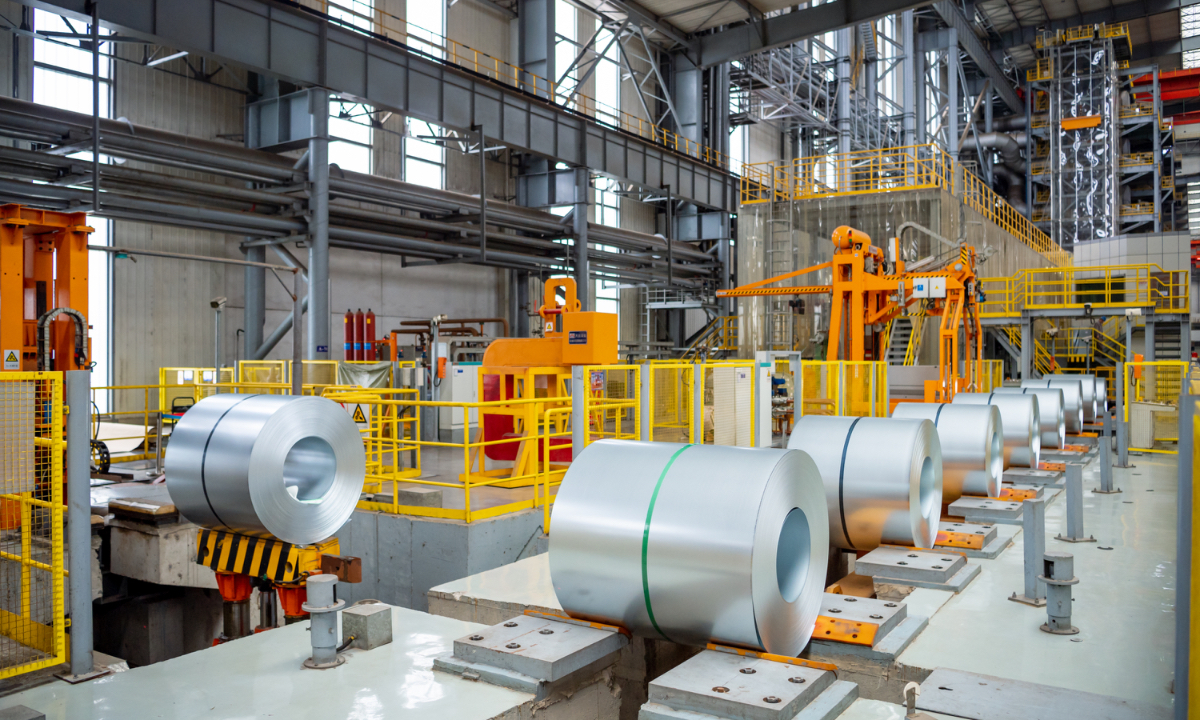
Steel products File photo: VCG
The index tracking the development of China’s bulk commodity market edged up in March, as enterprises’ production steadily recovered after the Spring Festival holidays, and market demand was effectively released, which led to an expansionary trend in the bulk commodity market, data from the China Federation of Logistics and Purchasing (CFLP) showed on Sunday.
In March, China’s bulk commodity price index stood at 129.9, up 4 percent month-on-month and 14.5 percent year-on-year, both higher than the levels in the same period last year, the CFLP data showed, according to China Media Group (CMG).
Among the 50 bulk commodities monitored by the CFLP, 38 commodities saw month-on-month price increases in March. Among them, diesel, methanol, and ethylene glycol recorded the largest gains, rising 30.5 percent, 30.4 percent, and 29.3 percent, respectively, compared to the previous month.
Driven by external factors such as continued tension in the Middle East and the sharp rise in international crude oil prices, China’s domestic energy and chemical price indices rose significantly, up 16.5 percent and 21.8 percent month-on-month, respectively. Meanwhile, driven by rising international fertilizer prices and increased demand for biofuels, the domestic agricultural product price index rose 2.8 percent month-on-month, CMG reported.
Analysts said in the CMG report that the sharp rise in the index in March reflects the combined effects of a recovery in the domestic bulk commodity market’s activity level, the gradual manifestation of policy effects, and continued geopolitical tensions in the Middle East.
Lin Boqiang, director of the China Center for Energy Economics Research at Xiamen University, told the Global Times on Sunday that although fluctuations in international bulk commodity prices have intensified and uncertainties surrounding imports of energy and chemical commodities have increased, pushing up prices, the impact on China’s macroeconomy remains relatively limited. “This is due to China’s strong energy resilience and the effectiveness of its policies,” he said.
In the long term, enterprises need to further strengthen their risk assessment of external factors, broaden the sources of raw materials and the utilization of substitute resources, and enhance their ability to withstand and respond to market volatility risks, Lin noted.
RELATED ARTICLES