Why ‘spheres of influence’ will not work in the 21st century
By Published: Apr 07, 2026 12:00 AM

Photos: VCG
The concept of "spheres of influence" is not new. In fact, for most parts of human history, major powers successfully managed to impose their will on smaller nations and arbitrarily limit the independence and sovereignty of the latter. By the end of the 20th century, for some time, the predominant view was that the traditional hierarchies in global politics were nothing but a clumsy relic of the past, doomed to final and irreversible extinction. No walls, fences, stockades or any other artificial barriers were to survive in a fully globalized world.
However, today the concept of "spheres of influence" is back in circulation. To make the concept even more attractive, they try to apply political or moral restrictions on how great powers should treat their smaller neighbors.
Still, even in such an enlightened form, the concept of "spheres of influence" remains archaic and hard to implement in the contemporary international system. Threats to national security today are not defined by geography as much as they were in the past.
The concept of "spheres of influence" implies that the world will forever stay divided into smaller or larger pieces. To reunite the disintegrating world, one should get back to the alternative concept of collective security. Of course, the existing experience of collective security models at the global and the regional levels does not offer too many reasons for optimism. Yet, this approach has a couple of clear advantages over the repeatedly used "spheres of influence" practices in enhancing international security.
First, collective security should not necessarily be built strictly on a territorial basis. Its particular components may well emerge around specific problems (like nuclear nonproliferation or the fight against international terrorism) as the critical number of engaged participants is amassed.
Second, collective security is inclusive by definition. In such an arrangement, there is no need to draw boundaries between "spheres of influence" of great powers or make a distinction between "great" and "other" powers. The system is democratic and open for participation to everybody.
Third, collective security does not imply a need for an external enemy to prove its legitimacy and to provide for its sustainability. Collective security is focused on internal rather than external threats and challenges. These threats and challenges may lie outside the traditional security domain and include the "soft security" agenda (like the international AI management).
Fourth, the collective security system does not need any rigid hierarchy; there is no red line between those who are bound to lead and those who are bound to be led. All state-to-state commitments are fully mutual, not asymmetrical and all relationships within the system are horizontal, not vertical. This is exactly what the modern international law calls for.
Some of the tenets of this alternative approach can be found in the Global Security Initiative proposed by China four years ago. The initiative aspires to "uphold the principle of indivisible security, build a balanced, effective and sustainable security architecture, and oppose the pursuit of one's own security at the cost of others' security."
Of course, 200 nation-states existing on the planet will never be fully equal to each other in terms of size, population, resources, wealth and international experience. Bigger and mightier ones will continue to bear special responsibility for what is happening in international life, no matter what multilateral arrangements are put in place. But stating this obvious fact is no reason to continue dividing the world into "spheres of influence" of several privileged players in the forefront of world politics, leaving the rest with the unenviable role of extras in the background of the stage or of the audience in the theater gallery.
After all, the fate of everyone present in the global theater hall directly depends on what is happening on the stage of high politics. This reality implies that everyone should have a role in the show.
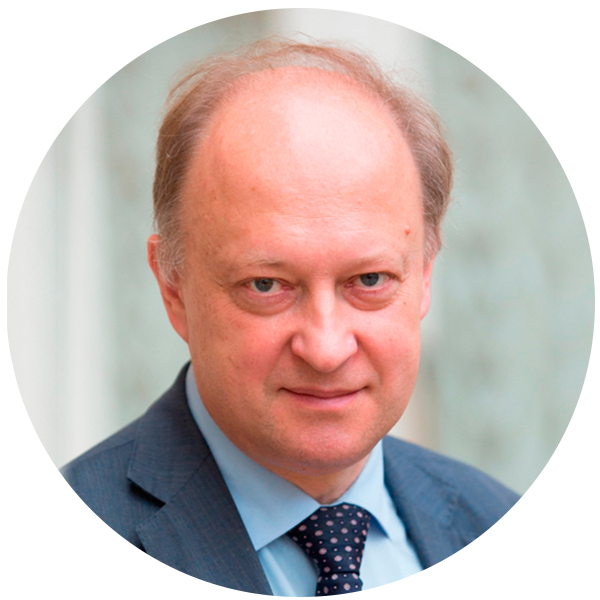
The author is a member of the Russian International Affairs Council. opinion@globaltimes.com.cn
RELATED ARTICLES