Chinese Lihong-2 fully reusable suborbital vehicle to take maiden flight this year: developer
By Published: Apr 07, 2026 06:02 PM

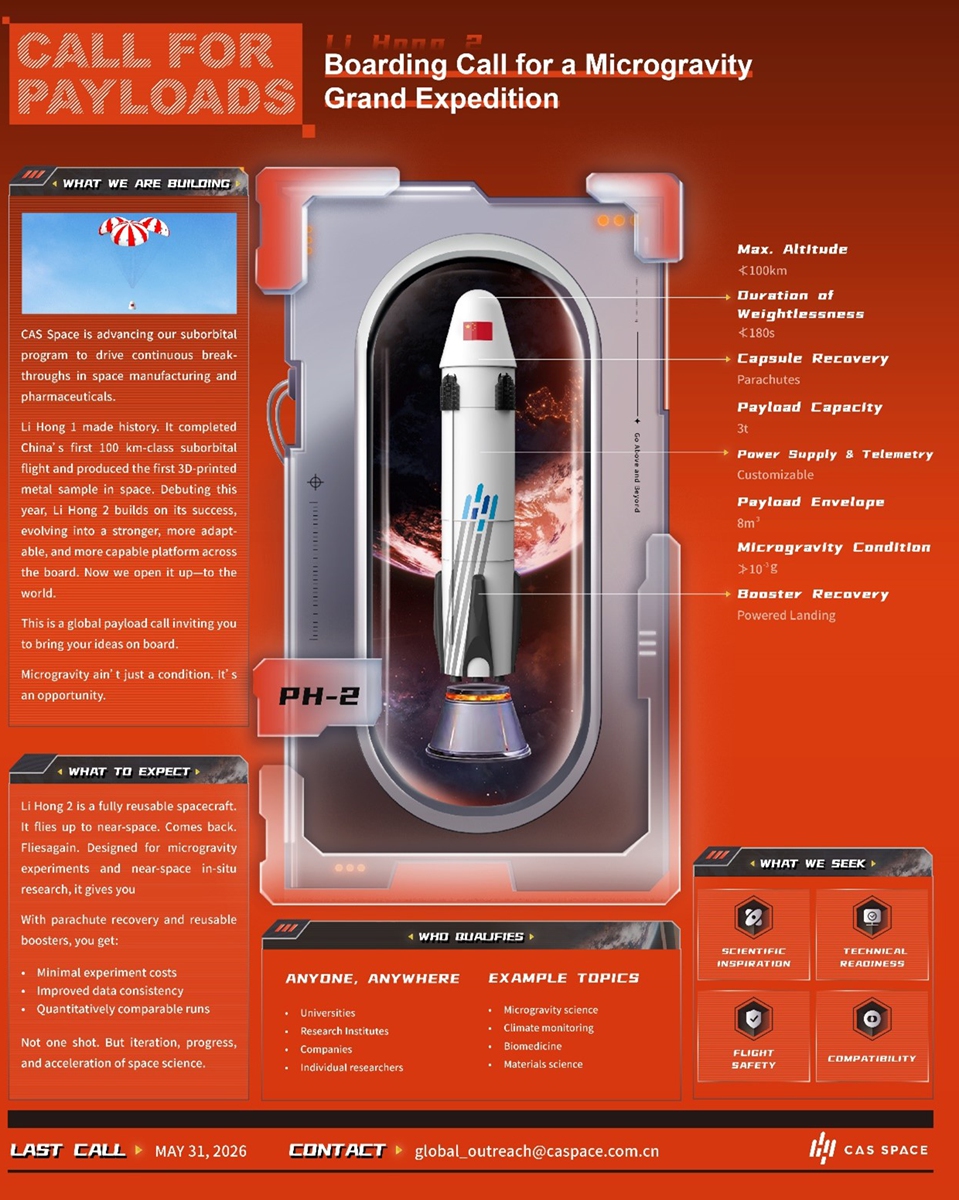
Photo: Illustration of the Lihong-2 maiden flight mission provided by CAS Space
Building on the mature technology of its Lihong-1 vehicle, Chinese commercial space start-up CAS Space has developed the upgraded Lihong-2 fully reusable suborbital vehicle, which is scheduled to conduct its maiden flight later this year, the Global Times learned from CAS Space on Tuesday.
According to a statement the firm provided to the Global Times on Tuesday, the new reusable vehicle offers enhanced mission adaptability, higher operational reliability, greater payload capacity, and increased payload volume.
Wang Yingcheng, general manager of the CAS Space Innovation Center, told the Global Times on Tuesday that the maximum flight altitude of the Lihong-2 spacecraft could reach no less than 100 kilometers above the ground. During the maiden flight, it will provide a microgravity environment for more than 180 seconds. For the first flight, the vehicle can carry up to 3 tons of experimental payload, with an available payload volume of 8 cubic meters. Power supply and telemetry services can be customized according to specific payload requirements, he said.
To fully unlock the potential of this advanced microgravity research and experimental platform, CAS Space is now issuing a global call for experimental payloads.
"We warmly invite research institutions, universities, enterprises, and scientists worldwide to participate. By pooling global expertise, we aim to explore the scientific mysteries of the microgravity environment, drive technological innovation across related fields, and contribute to humanity's efforts in space exploration and the utilization of space resources," the firm said in the statement.
The Lihong-2 is a fully reusable vehicle capable of multiple round trips between the ground and near space, the Global Times has learned. It is primarily designed to conduct microgravity experiments and in situ near-space observations, providing the scientific community with a stable and reliable experimental platform.
Leveraging payload capsule parachute recovery technology and rocket reusability, the Lihong-2 significantly reduces the cost of space science experiments. It enables the repeated use of scientific instruments and samples, improves the consistency and comparability of experimental results, and is expected to promote the development of space science research.
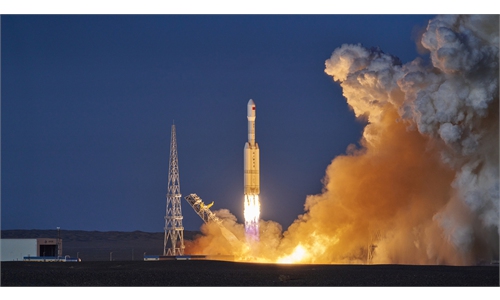
Earlier in January 2026, the Lihong-1 Y1 completed its suborbital flight test mission in Northwest China, Xinhua News Agency reported, noting that the spacecraft was "designed for space tourism."
Using a parachute recovery system, the recoverable payload capsule landed safely and was retrieved at the Jiuquan Satellite Launch Center. The flight test demonstrated re-entry deceleration, verified the recoverable payload module, and showcased precision landing-control technology for the spacecraft's sub-stage, paving the way for the development of future space tourism activities, according to its developer, Chinese commercial aerospace enterprise CAS Space.
RELATED ARTICLES