Multiple Chinese regions log Qingming holiday gains in visits, revenue
Stronger inbound flows, diversified travel patterns underpin domestic demand: expert
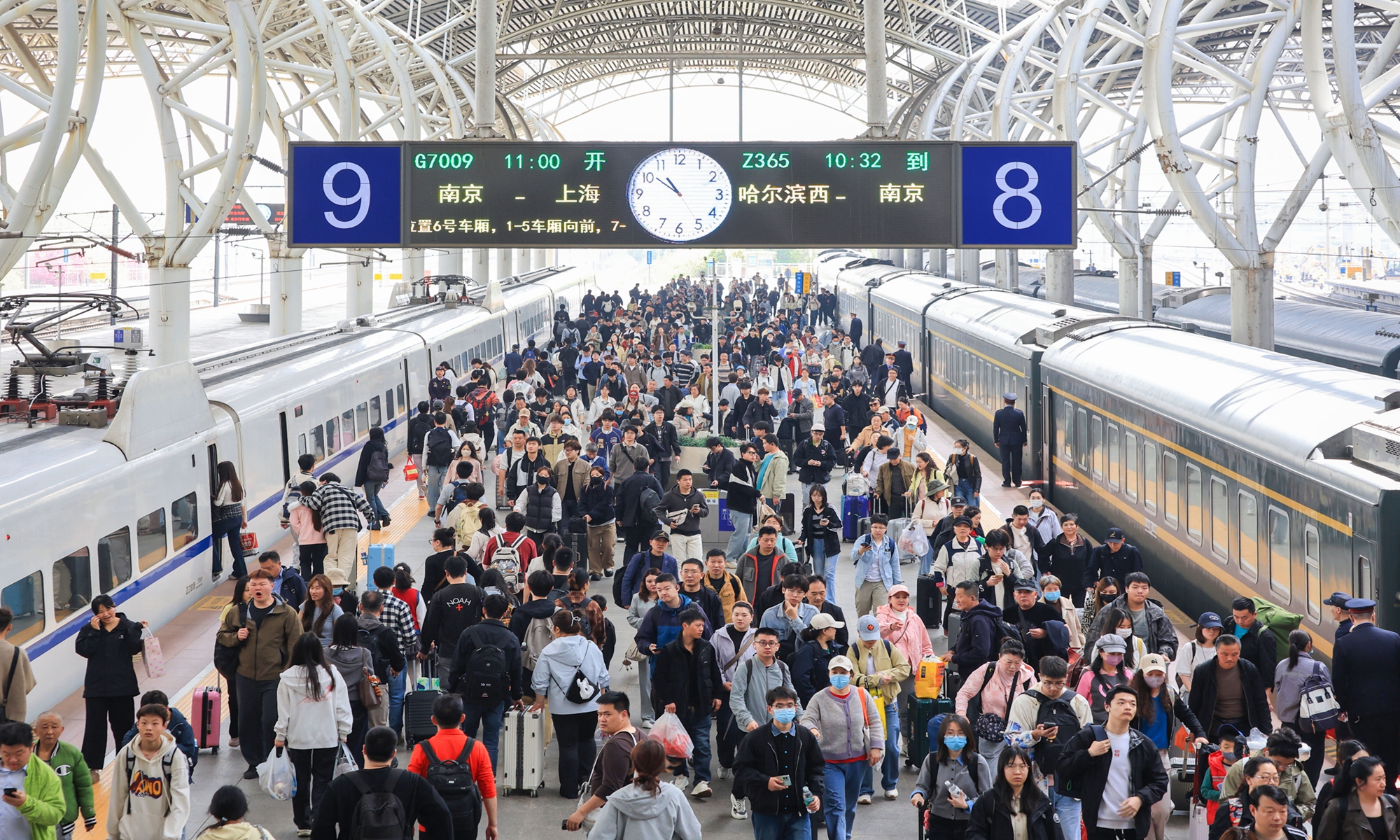
Passengers travel at Nanjing Railway Station in East China's Jiangsu Province on April 6, 2026. It was the last day of the Qingming holiday, and the national railway saw a peak in return trips. Photo: VCG
China's cultural and tourism market posted solid growth during the Qingming Festival holiday, with multiple provinces on Tuesday reporting strong visitor numbers and rising revenues, alongside official data showing double-digit growth in nationwide inbound travel flows.
According to data by the Ministry of Culture and Tourism on Tuesday, over the three-day Qingming Festival holiday, domestic travel in China reached 135 million trips, up 6.8 percent year-on-year, with total spending of 61.367 billion yuan ($8.9 billion), up 6.6 percent year-on-year.
In South China's Guangdong Province, 19.85 million tourist visits were recorded during the three-day holiday from Saturday to Monday, generating 10.43 billion yuan in tourism revenue, local authorities said. The province emphasized integrated online and on-site cultural activities to revitalize local resources and enrich holiday offerings, according to the Guangzhou Daily.
East China's Jiangsu Province reported even higher volumes, with 25.21 million visits across monitored cultural and tourism venues, up 10.6 percent year-on-year, while total consumption rose 11.1 percent to 27.18 billion yuan, according to data released on Tuesday by the province's official WeChat account.
Central China's Henan Province received 21.33 million domestic tourists, generating 12.51 billion yuan in tourism revenue, while Southwest China's Sichuan Province posted double-digit growth in both visitor numbers and ticket revenues at major scenic sites, reflecting robust demand across key tourism markets. In specific, Sichuan recorded 14.99 million visits during the holiday, up 16.1 percent year-on-year, with ticket income rising 18.1 percent to 142 million yuan, according to local authorities.
Northeast China's Liaoning Province reported a 13.63 percent increase in tourist arrivals and a 14.56 percent rise in tourism income.
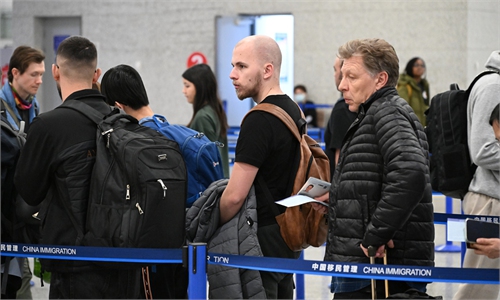
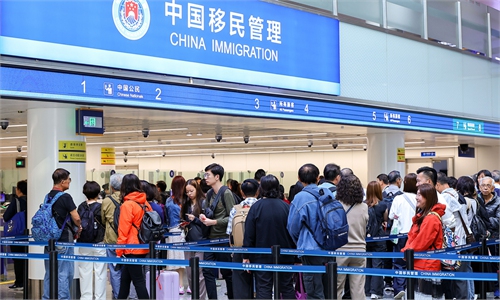
Inbound travel also gained strong momentum during the holiday. Data from the National Immigration Administration showed that foreign nationals made 843,000 cross-border trips, up 20.9 percent year-on-year. Among inbound travelers, 319,000 entered visa-free, a 30.7 percent increase, the Xinhua News Agency reported on Tuesday. Analysts said that this reflects the continued release of policy dividends from visa facilitation measures and China's rising appeal to international visitors.
Major cities showed steady gains. Beijing received more than 10 million visitors, with inbound tourism emerging as a bright spot as international tourist numbers and related spending surged by nearly 50 percent year-on-year. Shanghai recorded nearly 7.4 million visits, with hotel occupancy rates rising 6.4 percent, according to the municipal authorities.
These figures show that strong holiday demand in travel and related consumption, as the holiday economy, led by culture and tourism, is emerging as a key pillar of consumption and a stabilizing force for economic recovery, Li Changan, a professor at the Academy of China Open Economy Studies at the University of International Business and Economics, told the Global Times on Tuesday.
He added that new tourism formats and business models continue to emerge across China, expanding consumer choice and sustaining travel demand, while driving a shift toward more diversified and higher-quality domestic spending.
The trend was also visible in how people traveled during the holiday. Spring-themed travel remained a dominant driver. Across several regions, large-scale blossom events and countryside tourism programs drew strong visitor flows. Shanghai rolled out a wide range of spring activities tailored to different age groups, while Jinan in East China's Shandong Province launched more than 100 themed events.
Meanwhile, cultural venues, exhibitions and public activities attracted growing crowds. In Sichuan, for instance, libraries, museums and cultural centers received more than 1.83 million visits during the holiday, a surge of 56.63 percent year-on-year, according to local authorities, pointing to a continued shift toward culture-driven holiday consumption.
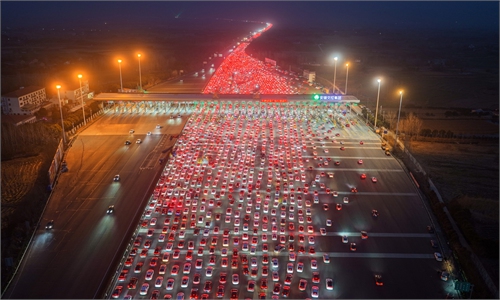
In Huaihua, Central China's Hunan Province, the "hometown effect" tied to motorcycle champion Zhang Xue - founder of ZXMOTO, whose team's motorcycles recently secured two wins at the Portuguese round of the Superbike World Championship - fueled a surge in holiday visits. Tourists and motor enthusiasts flocked to his hometown, boosting traffic at a key highway toll station by nearly 60 percent compared with normal levels, according to local authorities.
This trend reflects the accelerating integration of sports, tourism and consumption, with new consumption scenarios continuing to unlock domestic demand, Li said, adding that tourism is no longer confined to first-tier cities and traditional attractions, but is spreading more broadly and penetrating deeper into local markets, injecting fresh momentum into consumption upgrading.
The economic impact of the holiday extended well beyond the tourism sector itself. Data from the Ministry of Transport released on Tuesday showed that cross-regional passenger trips exceeded 840 million during the holiday, up about 5.6 percent year-on-year.
This year's Qingming Festival holiday coincided with pilot policies in some provinces that extended school spring breaks into a six-day holiday, helping release pent-up demand and boost spring consumption, CCTV reported on Monday, citing the Ministry of Commerce (MOFCOM).
According to the ministry, average daily sales of key retail and catering enterprises rose 2.4 percent year-on-year during the holiday, while monitored commercial districts saw foot traffic and revenue increase by 6 percent and 6.7 percent respectively.
Services consumption also grew steadily, with catering sales up 3.9 percent and hotel accommodation consumption rising 2.6 percent, while demand for experiential services ̵ including theme parks, family study tours and car rentals ̵ surged, MOFCOM data showed.
RELATED ARTICLES