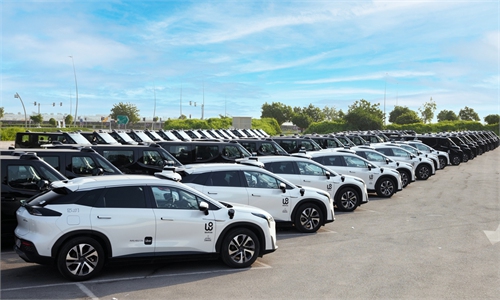
Chinese autonomous-driving firm launches robotaxi service in Croatia as players compete in new market
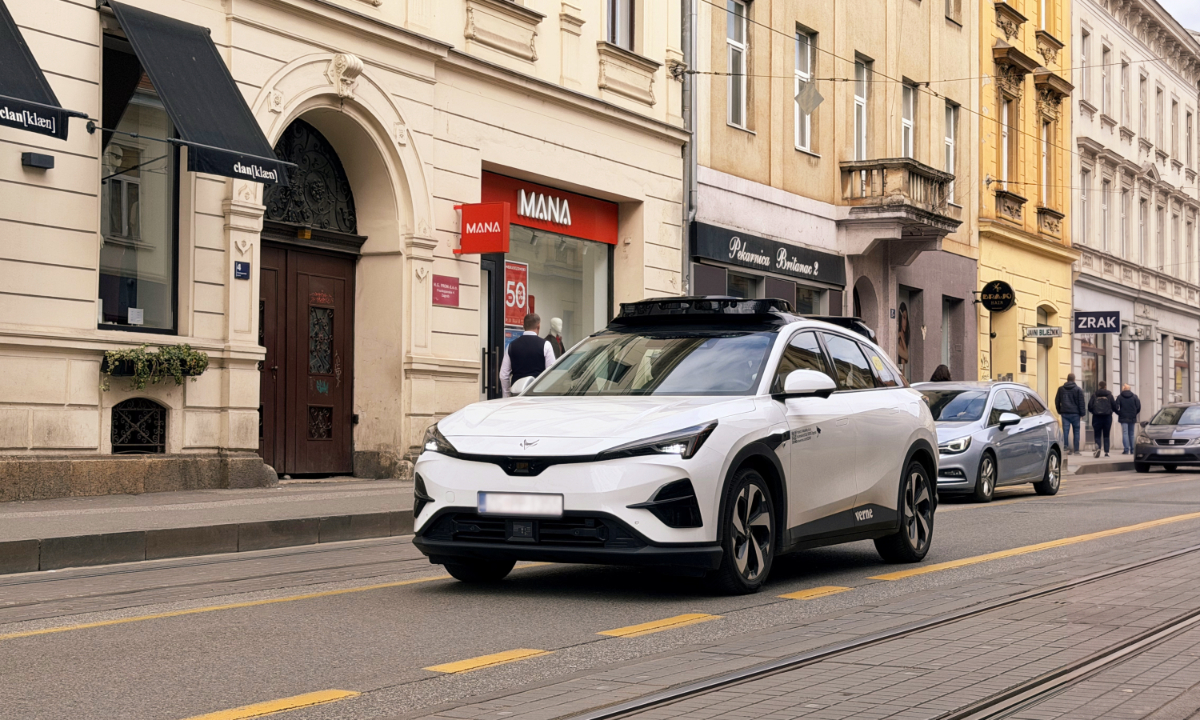
Chinese autonomous driving firm Pony.ai launched commercial robotaxi services in Zagreb, Croatia on April 8. Photo:Courtesy of Pony.ai
Chinese autonomous-driving leader Pony.ai on Wednesday (local time) launched commercial robotaxi services in Zagreb, Croatia, in partnership with local mobility firm Verne and global ride-hailing platform Uber, becoming Europe's first fully commercial robotaxi service open to the public, the Global Times learned from the company on Thursday.
The launch comes as Europe emerges as a new key market for autonomous driving, with Chinese and European giants advancing competing yet complementary strategies to capture the region's fast-growing market.
The service officially began operations in the Croatian capital on Wednesday (local time). Customers can now book rides through Verne's app, with integration into the Uber app planned for a later stage, Pony.ai said in a statement sent to the Global Times on Thursday.
Pony.ai's expansion into Europe comes as Chinese autonomous-driving companies are making splashes across the continent, which has emerged as the next key market for autonomous driving following years of intensive testing and development in the US and China.
On March 19, Chinese autonomous-driving technology company WeRide announced a national-level strategic partnership with ELEVATE Slovakia, officially launching Slovakia's first autonomous-driving project. With the project, Slovakia becomes WeRide's fourth European market after France, Belgium and Switzerland, the Securities Daily reported.
Chinese autonomous-driving firm Momenta last year announced plans to test Level 4 autonomous vehicles in Germany in 2026, aiming to deliver safe, scalable, and efficient robotaxi services in Europe and beyond, Momenta said in a release on its official website in September 2025.
In December, Apollo Go, the autonomous-driving ride-hailing platform under Baidu, announced plans to launch autonomous-driving testing and ride services in London in 2026. This will support London in building a more digital and green future transportation system, the Xinhua News Agency reported.
Some European giants have also announced timelines for the autonomous-driving sector. Volkswagen Commercial Vehicles' Hanover plant is ramping up pre-series production of the fully autonomous ID. Buzz AD, which is intended for use as a robotaxi or roboshuttle.
Before the end of this year, the first 500 vehicles for projects in Europe and the US are scheduled to be manufactured. Series production of the ID. Buzz AD is set to begin in 2027, Volkswagen said in a release on its website in March.
As Europe ramps up its push into autonomous driving, Chinese and European players are largely operating in a complementary way, Zhang Xiang, a visiting professor in the engineering department of Huanghe Science and Technology University, told the Global Times on Thursday.
Zhang explained that the two sides hold distinct core strengths that underpin this complementary relationship. Chinese companies boast mature autonomous-driving technology, robust iteration capabilities, and extensive hands-on experience operating in complex traffic scenarios, while European companies hold an edge in advanced vehicle manufacturing technologies.
Even as local carmakers including Volkswagen develop their own robotaxi services, they are still in a catch-up position in core autonomous-driving technology, with a notable gap between their capabilities and those of leaders in China and the US, Zhang noted. For Chinese firms looking to operate in compliance with local regulations in the European market, local partnerships - particularly with established automakers - are essential to meet the region's strict regulations, data compliance rules and operational standards, Zhang added.
By 2035, about 120,000 robotaxis will be on the streets of European cities, according to an analysis by Boston Consulting Group.
"We expect that the US and China will dominate initial growth, due to supportive regulations, infrastructure investments, and market conditions. In our base scenario, we estimate that the US robotaxi fleet will grow to about 350,000 vehicles by 2035, while China will have about 850,000 vehicles. Under a more optimistic scenario in which adoption is high, these numbers can go up to about 3 million vehicles globally," read the analysis.
RELATED ARTICLES