US President renews NATO criticism after talks with Rutte, exposing contradiction of strategic interests amid Iran war: Chinese expert
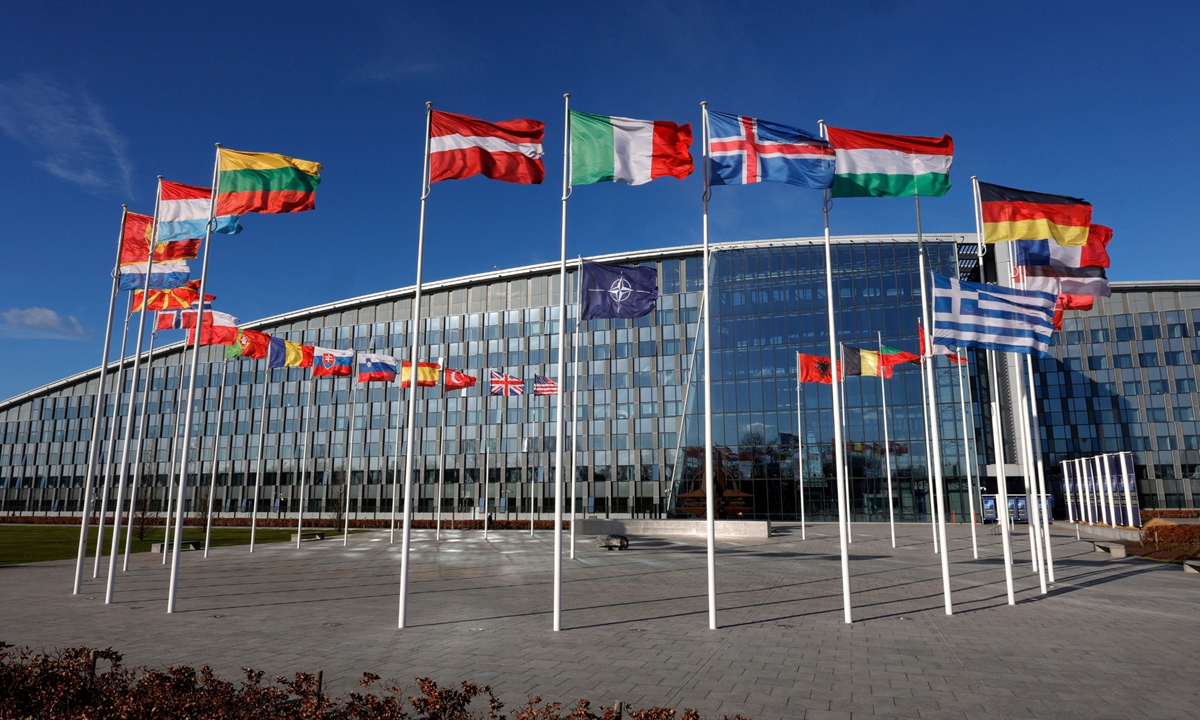
Following the meeting, Trump took to social media to post "NATO WASN'T THERE WHEN WE NEEDED THEM, AND THEY WON'T BE THERE IF WE NEED THEM AGAIN."
Rutte, however, described the meeting with Trump in an interview with CNN as "very frank" and "very open", despite clear disagreements, the BBC reported.
Also, Trump has taken to his Truth Social platform again on Thursday to renew his criticism of the alliance, The Guardian reported. The US president posted that "none of these people" (which people is unclear), including "our own, very disappointing Nato, understood anything unless they have pressure placed upon them!!!"
The timing of the talks has drawn particular attention. The BBC noted that the meeting came as Trump "toyed with the idea of quitting the transatlantic military alliance after several NATO countries resisted his calls to help reopen the Strait of Hormuz to ease rising global oil prices."
Other European media outlets highlighted similar concerns. The Guardian reported that prior to the meeting, Trump had escalated his criticism of the 77-year-old alliance, calling it a "paper tiger" and suggesting the US might consider leaving NATO after member states declined to provide military support to reopen the key waterway.
Politico.eu reported that Trump "tore into" NATO after a roughly two-hour private meeting with Rutte, "underscoring the transatlantic rift following what the military alliance chief described as a blunt exchange of views."
Seeking to contain the fallout, Rutte told CNN shortly after leaving the White House that Trump had expressed "disappointment" during the talks. He said he reminded the president that the "large majority of European nations has been helpful, with basing, with logistics, with overflights", and highlighted "widespread support [in Europe] for the fact that degrading the nuclear and the ballistic-missile capacity from Iran was really crucial, and that only the US was able, at this point, to do that," according to Politico.eu.
A Chinese expert said the exchange once again reflects deepening divisions between the US and Europe over the Iran war, while also exposing growing strains within NATO.
"US-Europe relations are at a critical crossroads, shifting from a traditionally close alliance to a more divided trend. The split over Iran war is particularly pronounced," Li Haidong, a professor at China Foreign Affairs University, told the Global Times on Thursday.
Li noted that Trump has long been dissatisfied with NATO, both ideologically and in practice. Although legal constraints make a formal withdrawal unlikely without congressional approval, Li warned that the Trump administration could effectively scale back its NATO commitments in practice, such as withdrawing US troops stationed in member states and reducing security guarantees to European allies.
According to a report by WSJ citing administration officials on Thursday, the White House is considering a plan to punish some members of the NATO alliance that President Trump thinks were unhelpful to the US and Israel during the Iran war.
The proposal would involve moving US troops out of North Atlantic Treaty Organization member countries deemed unhelpful to the Iran war effort and stationing them in countries that were more supportive, per the report. WSJ noted that the proposal would fall far short of President Trump's recent threats to fully withdraw the US from the alliance, which by law he can't do without Congress.
"If the rift continues to widen, NATO may not collapse outright, but its foundation could be significantly weakened. Such tensions also underscores contradiction of strategic interests between Washington and its European allies," Li said.
The divisions have been further highlighted by European reactions to the US-Israeli military operation against Iran. Several European leaders have voiced opposition and sought to distance themselves from the conflict.
The BBC previously reported that French President Emmanuel Macron criticized the US President's approach, saying the Iran war requires a "serious" strategy that does not change every day.
Spanish Prime Minister Pedro Sánchez has also emerged as a leading critic in Europe. According to Politico.eu, after Madrid banned the US from using jointly operated military bases or its airspace to carry out attacks in the Middle East, Trump issued what the report described as an ultimately empty threat to cut commercial ties with Spain.
While these disagreements highlight mounting tensions, the US and Europe continue to share strategic interests in areas such as security cooperation, Li said, suggesting that the alliance, though strained, is unlikely to fracture in the near term.
RELATED ARTICLES