Editor's Note: This year marks the ninth anniversary of the establishment of the Xiong'an New Area. Since China announced plans to establish the Xiong'an New Area in April 2017, the city has evolved from a blueprint into a vibrant city. However, some Western media have put forward false narratives about the city, with some even claiming it is an "unfinished" project. To explore the real Xiong'an, Global Times reporters Feng Fan, Tao Mingyang and Pang Yue recently visited the city, which reveals itself not as one, but as four: a city of harmony, ecology, technology and culture. Nine years after its establishment, Xiong'an is rapidly developing into "a city of the future."
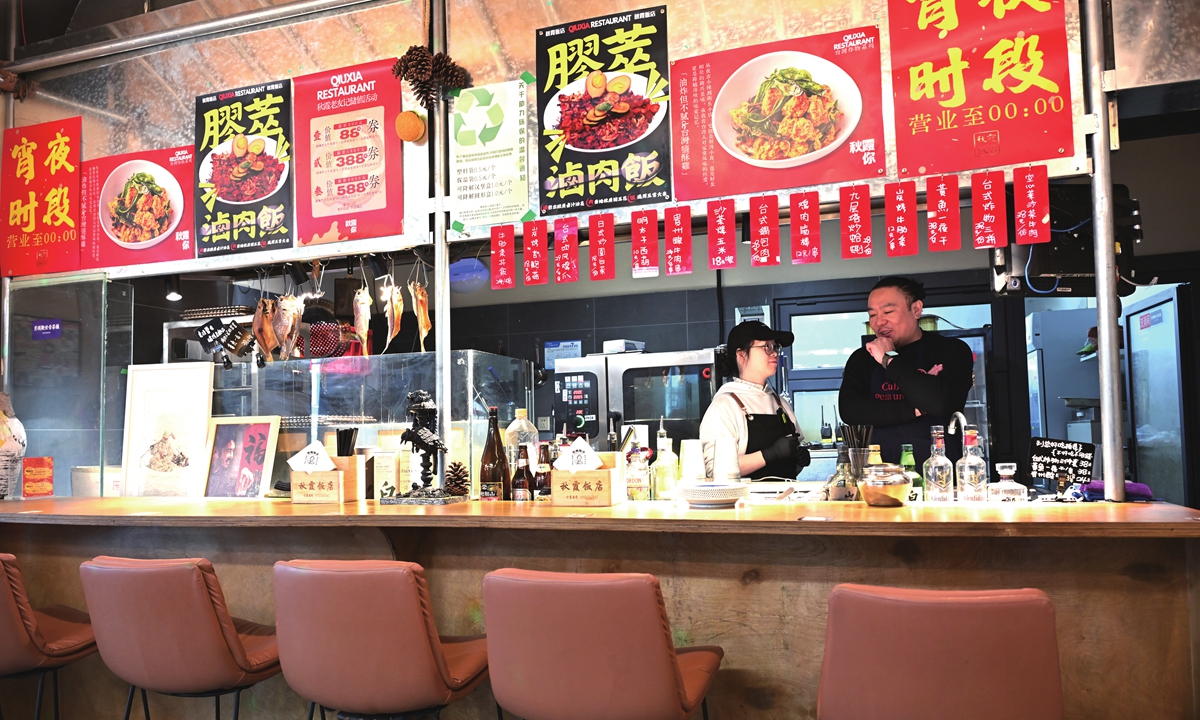
A restaurant owner from Taiwan instructs his staff in the old town of Rongcheng, Xiong'an, on March 20, 2026. Photo: VCG
A Harmonious City
A city is more than a place in space, it is a drama in time.
On a quiet morning, laughters spill out of a kindergarten classroom in Xiong'an. Inside White Tower Kindergarten, children sit in bright and spacious rooms, folding paper, learning the numbers and practicing English. Their drawings line the walls — small, colorful testimonies to a new generation growing up in the new city.
"I think the people of Xiong'an have a really open mind to different cultures and an international view for the future," said Jimmy Redinger, an American teacher, when speaking with the Global Times.
For Jimmy, who has spent nearly 15 years in China, the phrase "open mind" defines his decision to live and work here.
"Xiong'an is not like some other places, where you don't get broad, open mindedness like you do here," he said, describing the city as one that feels both new and inclusive.
Originally from the tri-state region of West Virginia, Pennsylvania and Ohio, Jimmy now teaches children whose families have arrived from across China.
According to the kindergarten, its students reflect the diversity of the city itself, as families relocate to Xiong'an in search of opportunities.
This influx is closely tied to the area's strategic positioning. As a major recipient of functions relieved from Beijing, Xiong'an has, since its establishment in 2017, attracted centrally administrated state-owned enterprises, universities, hospitals and research institutions. By March 2026, its permanent population had reached approximately 1.41 million.
More importantly, the city is not just growing — it is integrating. On its streets, license plates from across China move side by side, while locally issued plates, introduced only in 2023, are gradually becoming more common. The transition from "outsiders" to "new Xiong'an residents" is visible in everyday life.
"The city is always changing, the city is always growing," Jimmy said. "I am really interested to see what's next."
That sense of transformation is echoed in the medical sector.
"Xiong'an is a city that changes very fast. Over the past three years, buildings around our hospital have risen quickly, and the streets have gone from quiet to lively," Wu Hao, administrative director of neurosurgery at Xiong'an Xuanwu Hospital, told the Global Times.
Wu, who commutes between Beijing and Xiong'an, plays a dual role — training local medical teams while providing high-level healthcare services. Since 2023, he has completed nearly 3,000 surgeries in Xiong'an, contributing to the rapid development of its healthcare system.
Such improvements are part of a broader effort to build a high-quality living environment. Institutions such as Xiong'an Xuanwu Hospital, Xiong'an campuses of Beijing No. 4 High School and Shijia Primary School in Beijing have been introduced to provide top-tier medical care and education.
For many newcomers, these guarantees are decisive. For Jimmy, however, the meaning runs deeper.
"It's a diverse group of people who are working together contributing to the growth to the future of the city. And I think I'm a small part of that because these little minds that I am helping and guiding are the future of the city," he said.
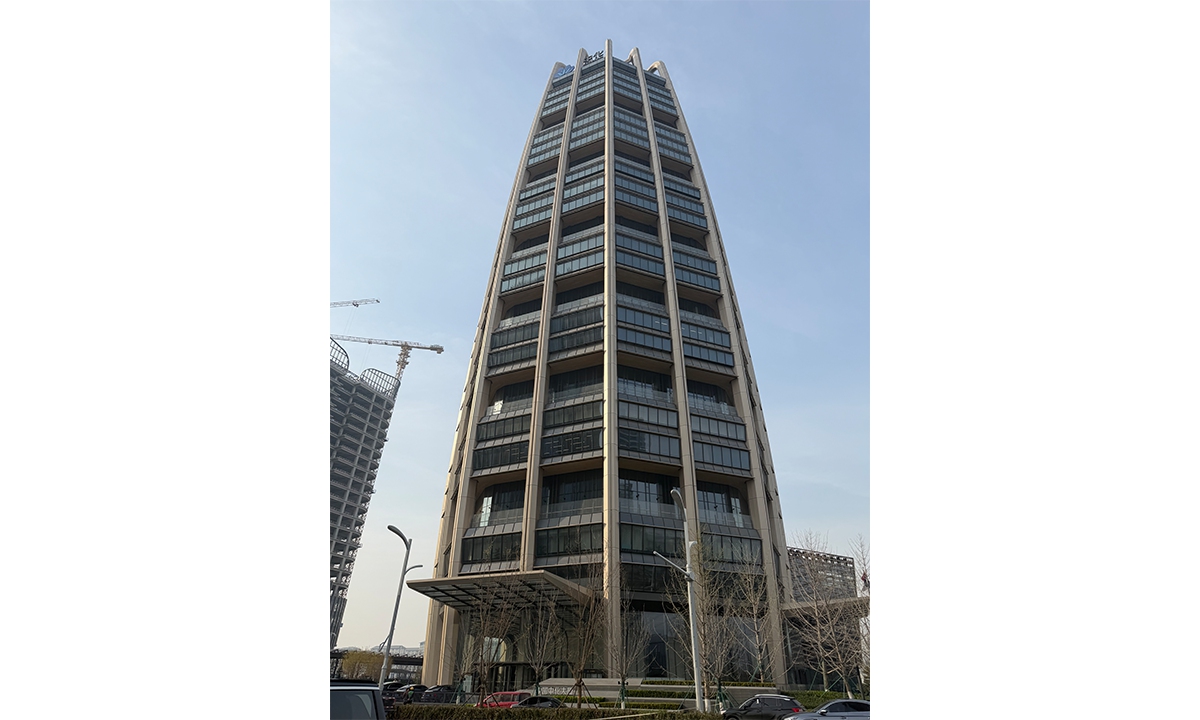
A view of the Sinochem Holding Co Ltd building under construction near the Xiong'an International Trade Center on April 2, 2026 Photo: Feng Fan/GT
A City of Technology
If the human dimension gives Xiong'an warmth, technology gives it rhythm.
Driving through the city, one quickly notices something unusual: long stretches of uninterrupted green lights. These "green-wave" corridors are powered by an AI-driven "city brain" that adjusts traffic signals in milliseconds.
"Driving in Xiong'an, [one can find that ] it's no longer about cars watching the traffic lights; it's the traffic lights that watch the cars," said Zhang Yan, who moved to Xiong'an four years ago.
Zhang leads a team that has deployed this system across the Rongdong district in Xiong'an. By reducing unnecessary stops, it has significantly improved traffic flow and driving efficiency.
Behind the scenes, the system does more than manage traffic. It monitors road conditions in real time, detects equipment failures and automatically generates maintenance alerts. "It can identify problems before most drivers even notice them," Bai Jiaxue from China Telecom Digital City Technology Co told the Global Times.
Autonomous taxis are another visible feature. Within just two intersections, Global Times reporters saw six driverless vehicles gliding quietly through the streets.
With empty driver seats, smooth rides and surprisingly low fares, they represent a new form of urban mobility.
According to local media reports, Apollo Go operates across roughly 25 square kilometers in Xiong'an, covering around 800 stations. Passengers can summon a ride via smartphone, much like using Uber, with wait times of just minutes and fares typically under one US dollar.
Technology also operates beyond the ground level. In the sky, drones patrol the city, not for photography, but as part of its governance system. According to Hebei Daily, the drones, equipped with automatic identification technologies, can detect fallen trees, damaged infrastructure, traffic congestion and even signs of fire, transmitting alerts within 30 seconds.
The low-altitude services system now includes 26 drone units and 22 regular flight routes, supporting 43 AI algorithms across 51 application scenarios — from infrastructure inspection to emergency response.
Underground, another layer of the city is taking shape. Beneath the central business district, a vast transportation hub is under construction, integrating metro lines, high-speed rail and direct links to Beijing Daxing International Airport. When completed, it will enable seamless transfers across four rail lines and reduce travel time to the airport to just 30 minutes.
Together, these systems form an invisible network, one that quietly reshapes how a city functions.
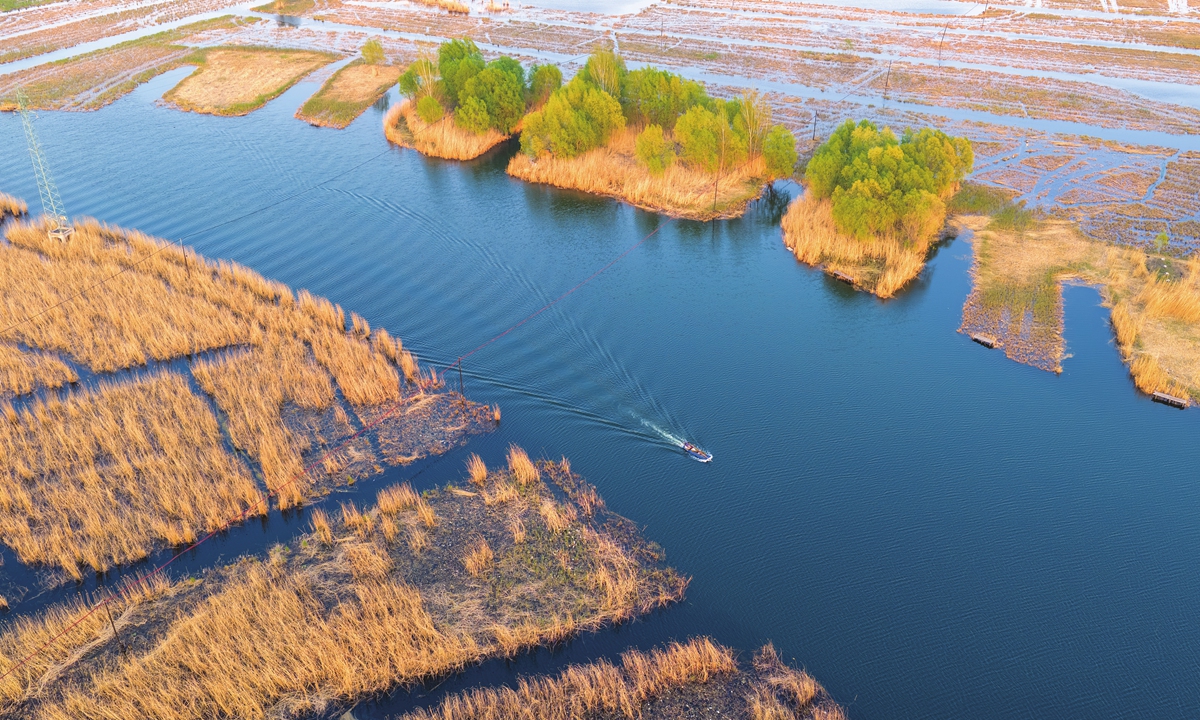
A view of Baiyangdian Lake on April 4, 2026. Photo: VCG
A Green City
On the edge of Xiong'an lies Baiyangdian Lake, which is often dubbed as the "kidney of North China."
For local photographer Zhang Xuenong, it is also a weekly destination.
"I feel genuinely happy for the establishment of the Xiong'an New Area," said Zhang, chairman of the Baiyangdian Photographers Association.
That happiness comes from changes — visible, measurable changes. Over the years, the water quality in Baiyangdian has improved significantly, allowing rare species to return.
"We first photographed the Baer's pochard in 2018. By 2023, we were able to capture them swimming with their chicks. Now, they are regular visitors," Zhang said, referring to the critically endangered bird often called the "giant panda of birds."
According to official data, Xiong'an has implemented systematic ecological restoration measures, including dredging, water replenishment and pollution control. By 2026, 74.22 square kilometers of farmland had been returned to wetlands, and water levels stabilized at around seven meters.
The results are striking: 296 species of wild birds and 50 species of fish now inhabit the area.
Within the city itself, green design principles are equally evident. Urban parks of various sizes are scattered throughout, often connected by waterways, creating a continuous ecological network.
Residents describe summer evenings by the water as filled with the sounds of frogs and insects — "a touch of nature" within the city.
According to the official website of Xiongan New Area, Xiong'an has achieved a planning goal where residents can "reach forests within three kilometers, green belts within one kilometer and parks within 300 meters." Surface water quality and drinking water standards have both reached 100 percent compliance.
"I just want to record my hometown," Zhang said. "When I first learned photography, I had to search for scenery. Now, everywhere in Baiyangdian is beautiful — you can capture a scene wherever you go."
In Xiong'an, ecology is not an afterthought; it is a foundation.
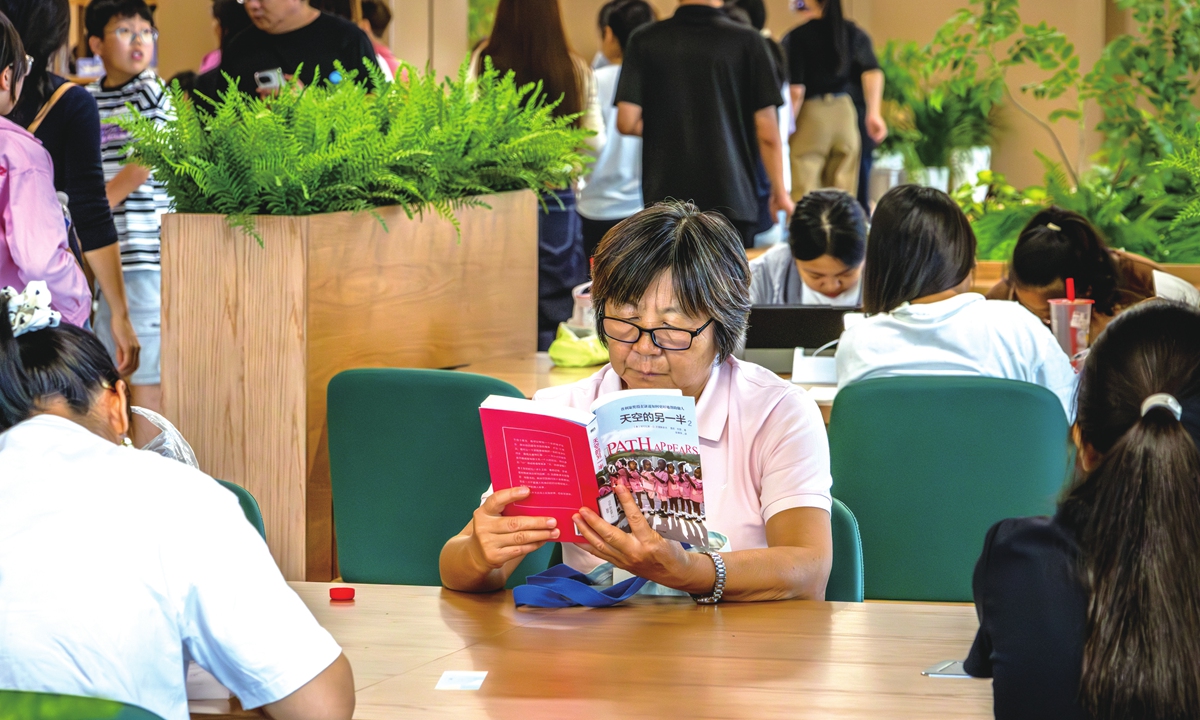
Citizens read in Xiong'an Library on October 2, 2025. Photo: VCG
A City of Culture
On a weekday morning, the quiet order of Xiong'an Library is broken by the arrival of a group of young students. Guided by their teachers, they move curiously through the building — some stopping at immersive VR reading stations, others gathering around low bookshelves filled with picture books designed for children their age.
The space is deliberately inclusive. "Xiong'an Library provides services for all age groups," said Wu Fanfan, head of operations of Xiong'an Library, noting that the facility includes Braille collections, audiobooks and assistive reading devices for visually impaired readers, as well as large-print books and magnifiers for the elderly.
Since its opening on September 27, 2025, the library has quickly become one of the city's most active public spaces. It has received more than 600,000 visits in less than one year, with around 3,000 people entering daily, Wu said. Its readers reflect the city itself: Newly arrived professionals, families, long-term residents and elderly readers all share the same space.
The seven-story building houses more than 505,000 volumes and offers around 3,500 reading seats. By April 1, 2026, borrowing had reached about 350,000 books, with 50,000 library cards issued. Among all categories, history and geography titles are the most popular, followed closely by philosophy, culture and science.
The cultural life of Xiong'an is not defined only by new institutions. It is also shaped by traditions that long predate the city itself. One example is the "Hehuadian Pai (Lotus Pond School)," a literary movement rooted in the Baiyangdian region and closely associated with Chinese writer Sun Li. Known for its understated portrayal of rural life and its quiet reflection of social changes, the style continues to resonate with readers today.
This connection between past and present is made tangible in the Lotus Pond Literature Museum. The building itself reflects a blend of old and new, according to local media. The museum combines the aesthetics of traditional water-town architecture with modern exhibition technology. Inside, scenes from Sun Li's works are recreated through sound, light and digital installations, bringing to life the reed marshes, the fishing boats and the rhythms of rural life.
"Literature is a return to life, and creation is a response to reality," Bai Ye, honorary chairman of the Chinese Contemporary Literature Research Association, was quoted as saying by local Hebei Daily.
That idea seems to echo throughout Xiong'an. As the city continues to grow, its story is not only being built in concrete and steel, but also written in memory, imagination and everyday experience.
It brings to mind the words of Scottish environmentalist and city planner Patrick Geddes: "A city is more than a place in space, it is a drama in time."
In Xiong'an, that drama is still unfolding.
RELATED ARTICLES