ARTS / CULTURE & LEISURE
Fair play is paramount principle as discipline in youth sports cannot be compromised
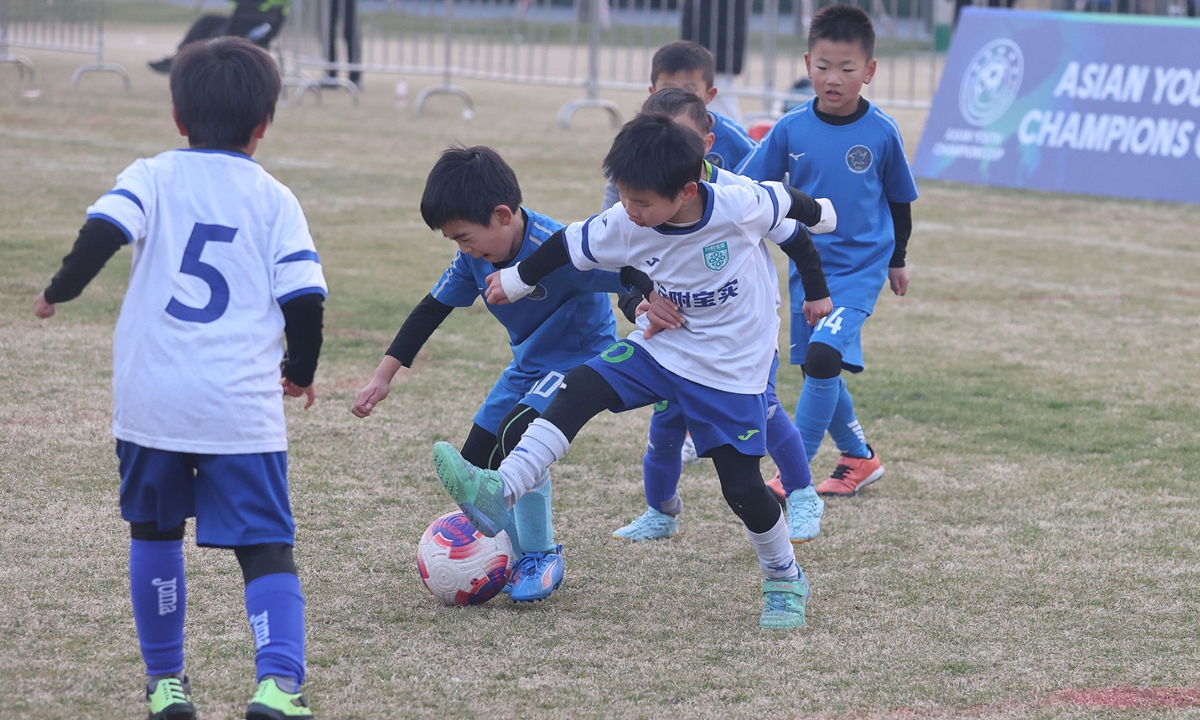
Kids play football. Photo: VCG
Recent controversies in China's youth sports scene have once again drawn public attention to the importance of discipline, integrity and sportsmanship in junior competitions.Within just days, two separate incidents have sparked debate: a suspected age-eligibility controversy involving a player on China's U18 men's basketball team and a shocking case of deliberate own goals in an under-10 football match.
While the specifics of the two cases differ, they point to the same underlying concern that the spirit of fair play in youth sports must be protected from the very beginning. The basketball case surfaced online on Saturday, when reports questioned whether U18 national team player Li Yize might previously have competed under another identity with a different birth date. According to widely circulated claims, the player's appearance closely resembles that of a youth player named Zhang Hanbo, who reportedly participated in domestic competitions under a separate registration record.
Chinese Basketball Association has since confirmed that it has taken note of the issue and launched a verification investigation together with relevant authorities. Officials stressed that the matter would be handled with a "serious and factual approach" and that the results of the investigation would be released to the public in due course.
If an athlete were to compete in multiple age categories under different registration details, it would seriously undermine the fairness that youth tournaments are meant to guarantee.
While the investigation continues and conclusions should await verified findings, the episode serves as a reminder of how critical transparency and accurate registration are in youth sports management. Protecting the integrity of age-group competitions is not merely about rule enforcement, it is about safeguarding the confidence of athletes, families and the broader sporting community.
If the basketball case highlights questions of eligibility, the football incident exposes something even more troubling.
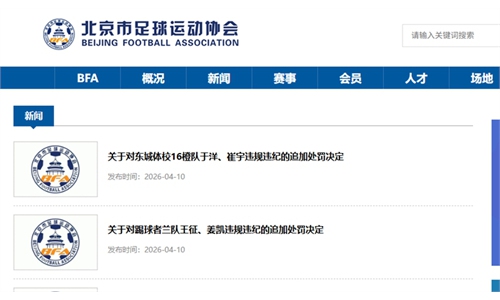
Earlier this month, a match during the Beijing leg of the fifth China Youth Football League boys' Under-10 division caused an uproar after video footage showed both teams repeatedly scoring own goals. The game between Dongcheng Sports School's "16 Orange" team and the Tiqiuzhe Lan team ended in a 3-3 draw, but the unusual scoreline was not the main issue.
Players from both sides deliberately scored own goals in an apparent attempt to avoid topping their group and thereby secure a more favorable knockout opponent.
The incident quickly went viral online, prompting outrage from fans and commentators. Authorities concluded investigations, saying that the behavior constituted a serious violation of sporting ethics and imposed strict sanctions, including lifetime bans from football activities in Beijing for several adults involved in the teams' management.
Children under the age of 10 are unlikely to have independently devised such a strategy. Instead, the episode strongly suggests that adults, coaches or team officials, may have made a utilitarian calculation for the match. They risk sending young athletes a deeply harmful message: Results matter more than integrity, and manipulating competition is acceptable if it produces a strategic advantage.
Youth competitions are not merely arenas for athletic development; they are classrooms for character. Fair play, respect for rules, and the willingness to compete honestly are values that should be instilled long before athletes reach professional levels.
Indeed, both incidents highlight broader structural pressures that have long existed in youth sports systems. When adults prioritize medals and rankings over development and integrity, young players may become collateral damage.
Encouragingly, the swift responses from governing bodies in both cases demonstrate an awareness of the seriousness of the issue. But disciplinary action alone cannot fully address the challenge.
Fostering a healthy youth sports culture demands ongoing education, transparent governance and a shared understanding among coaches, parents and administrators that long-term development must take priority over short-term gains. If young athletes grow up believing that honesty and effort define victory, the foundations of future success will be firmly laid. If, by contrast, they learn that rules can be bent and fairness compromised, the harm will extend far beyond any single competition. Safeguarding sportsmanship in youth sports is not a trivial administrative matter, it is a vital responsibility that shapes the future of Chinese sport.
The author is a reporter with the Global Times. life@globaltimes.com.cn
RELATED ARTICLES