Illustration: Liu Xidan/GT
Recently, some bizarre narratives targeting China-Africa energy cooperation have surfaced. Certain Western media outlets claimed that China's exports of solar panels to Africa threaten the continent's independent green development. They argued that China's large-scale exports of clean energy equipment to Africa widen the trade imbalance between China and Africa. However, these claims are false. Much like the past "China threat" or "China shock" narratives, they reflect a lingering colonial mind-set through which the West smears pragmatic China-Africa cooperation and normal trade exchanges. At their core, they are deliberate smears by forces unwilling to see Africa achieve independent development and wary of the deepening China-Africa cooperation.The African continent is rich in solar resources but has long been constrained by energy shortages. Data shows that around 600 million people in Africa still lack reliable access to electricity. Africa's reserves of key minerals needed for clean energy technologies have attracted foreign investors, including those from China, to participate in mining development. China's direct investment in Africa's mining sector has continued to grow in recent years, forming a cooperation model in which infrastructure construction drives resource development, achieving significant progress in key minerals such as copper, cobalt, lithium, bauxite and manganese.
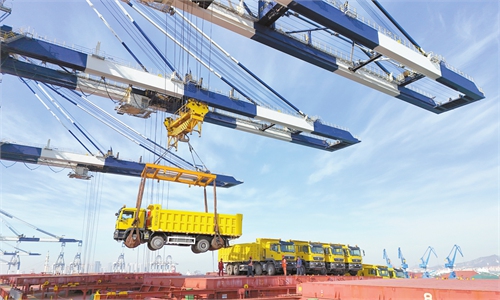
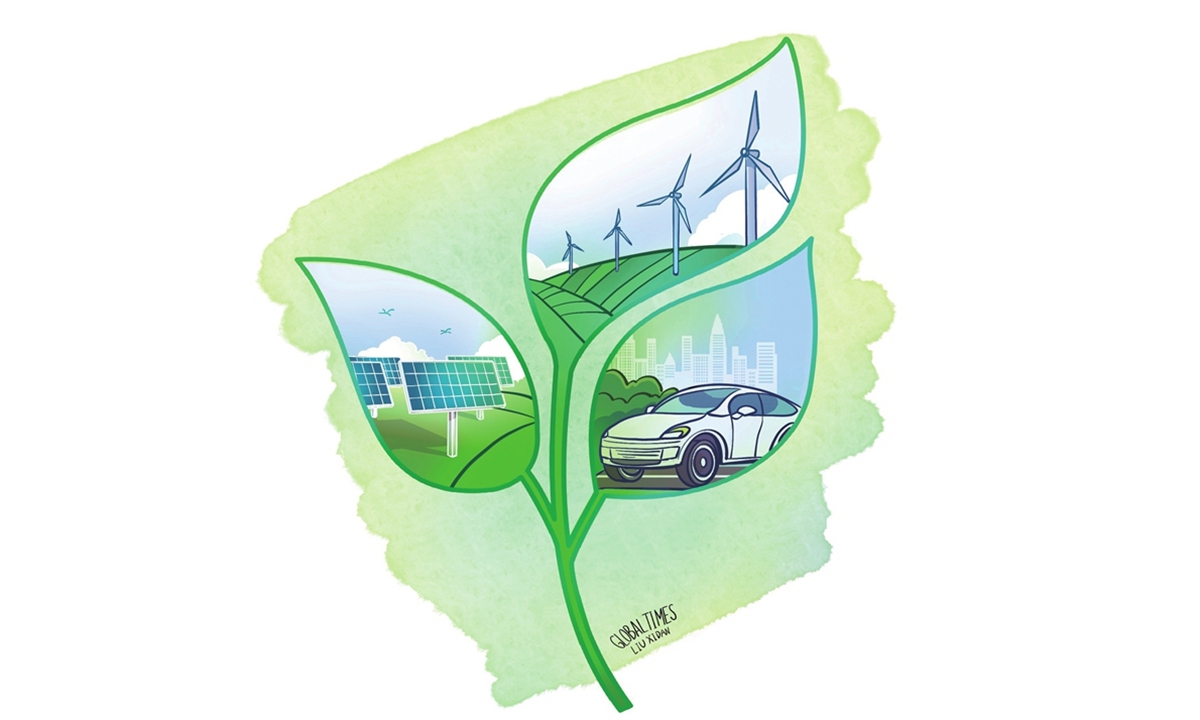
China has built the world's largest and fastest-growing renewable energy system, becoming a key driver of the global energy transition. Take the "export of clean energy equipment" - a topic hyped by some media outlets - as an example. In sub-Saharan Africa, highly polluting diesel power generation remains common. For African nations, addressing the pressing issues of limited access to electricity and high electricity costs is an immediate priority. Leveraging a well-developed industrial chain, robust market competition, and corporate innovation, high-quality and cost-effective key equipment produced in China provides a low-cost and high-efficiency energy solution for Africa's green transition. "We should be thankful for China's aggressive industrial strategy to scale up solar manufacturing, because the dramatic drop in module prices has been the main driver behind the accelerated growth in solar that we've seen over the past year across Africa," says Terje Osmundsen, CEO of Empower New Energy. Clearly, what China brings to Africa is not a "threat," but an opportunity.
A major reason for the smear campaign against China-Africa energy cooperation in the West is that China's development path and its model of cooperation with Africa have shattered the outdated myths that "modernization equals Westernization" and that "cooperation necessarily implies colonial intentions." Current discussions about Africa's mineral resources in Western media focus on narratives of competition between developed and emerging economies over these resources, as well as the challenges posed by China's development of new energy to the African economy. However, for Africa, the real challenge lies in determining which solutions to adopt to address the practical problems in the current development landscape, overcoming real-world development challenges such as weak infrastructure, a monolithic industrial structure, and a shortage of technical talent, and achieving resource autonomy and development autonomy. This involves transforming resource endowments into sustainable drivers of development and breaking free from the longstanding predicament of being exploited and defined by others.
A key highlight of China-Africa cooperation is its inclusiveness and openness. It avoids limiting cooperation paths to a single model and does not let ideology confine development, resulting in remarkable achievements. China's exports of clean energy equipment to Africa and Africa's exports of specialty products to China have formed a complementary and mutually beneficial relationship: China's exports of solar panels and microgrid systems help Africa reduce energy costs and promote green transformation, while China's large-scale imports of coffee, cocoa beans, and mineral resources from Africa not only meet the needs of the Chinese market but also bring stable foreign exchange earnings and employment opportunities to African countries.
Currently, the global order is shifting toward multipolarity, with de-Westernization, decolonization, and the rise of the Global South intertwined and proceeding in parallel. The world urgently needs a cooperative model and stabilizing force to jointly address global challenges. 2026 marks the 70th anniversary of the establishment of diplomatic relations between China and Africa. China-Africa cooperation has a deep foundation and broad scope. China's experience in promoting the development of new energy industries and the demonstrative effect of China-Africa energy cooperation can provide positive inspiration for Global South countries as they advance their green transition.
The author is a researcher at the School of Oriental and African Studies, University of London. opinion@globaltimes.com.cn
RELATED ARTICLES