China no longer optional, but a must for foreign firms seeking global competitiveness: Spanish chamber head
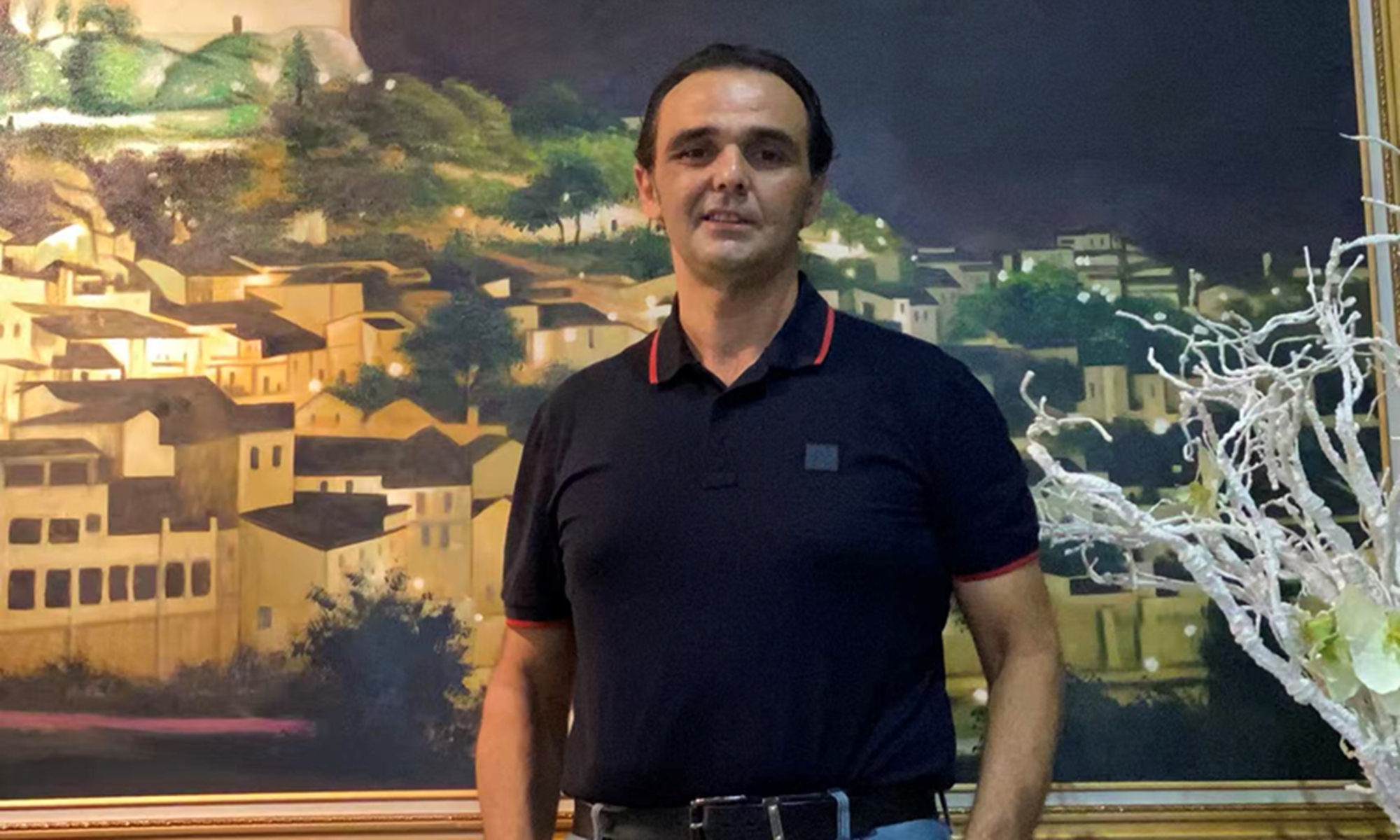
Javier Tora, Vice President of the Spanish Chamber of Commerce in China Photo: Courtesy of Javier Tora
For many foreign companies including those from Spain, being present in China is no longer optional but a must if they want to compete globally, said Javier Tora, Vice President of the Spanish Chamber of Commerce in China, who spoke with the Global Times in an exclusive interview.
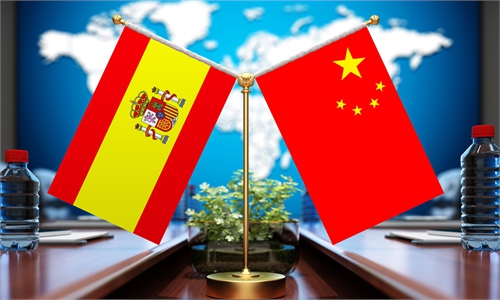
Just on Saturday, Spanish Prime Minister Pedro Sanchez made an official visit to China. The visit, which will last until Wednesday, is the prime minister's fourth visit to China within four years and another important high-level exchange between China and Spain, the Xinhua News Agency reported.
Talking about the visit, Tora said that the visit is a very positive signal at a time when global economic relations are becoming increasingly complex. "It reflects a clear willingness from both Spain and China to strengthen dialogue and deepen economic cooperation," he said.
From a business perspective, Tora expects this visit to reinforce —above other things— trust, "because it is the real foundation of any long-term economic relationship."
On a further note, he said that Spain and China already have strong trade ties, but there is still significant untapped potential, especially in areas like industrial collaboration, sustainability, and technology. "This visit can help move the relationship between both countries from transactional to strategic, creating a more stable framework where companies can invest, operate, and grow with greater certainty," he added.
The visit comes as the bilateral relationship rests on strong economic complementarity. China is Spain's largest trading partner outside the EU, and Spain is an important partner for China within the bloc. According to data from China's General Administration of Customs, bilateral goods trade exceeded $55 billion in 2025, growing 9.8 percent year-on-year.
Tora said that "the Chinese market is absolutely critical for Spanish businesses not only because of its size, but because of its level of sophistication and speed of evolution."
In terms of sectors, Tora sees strong opportunities in areas such as vehicles and electric mobility, where China is leading the global transformation; renewable energy and sustainability, aligned with both countries' priorities; fashion and consumer goods, where Spanish brands are strongly positioned; agri-food and premium products, where Spain has a competitive advantage; and industrial manufacturing and supply chain integration, which are key to global competitiveness.
This year marks the first year of China's 15th Five-Year Plan (2026-30), which highlights further opening-up, which Tora sees as particularly relevant for foreign businesses seeking long-term stability and growth in the China market in the world today.
"In the current global context, where we are seeing increasing fragmentation and protectionist tendencies, China's continued commitment to opening-up sends a very important message," Tora noted.
Speaking as a chamber head and a businessperson, Tora said that he sees firsthand the growing interest of Spanish companies in strengthening their presence in China, as well as the importance of having a stable and open framework to support that expansion.
What he values the most is "predictability, access, and cooperation," noting that any effort that facilitates market access, improves transparency, and encourages collaboration translates into real opportunities on the ground.
"For Spanish companies, this means more opportunities not only to access the Chinese market, but to become long-term partners in innovation, and industrial development... I've learned that the more connected economies and businesses are, the more resilient they become," said Tora.
RELATED ARTICLES