'China spa' draws foreign tourists seeking deeper cultural experiences
Service refinement brings traditional offerings into global view
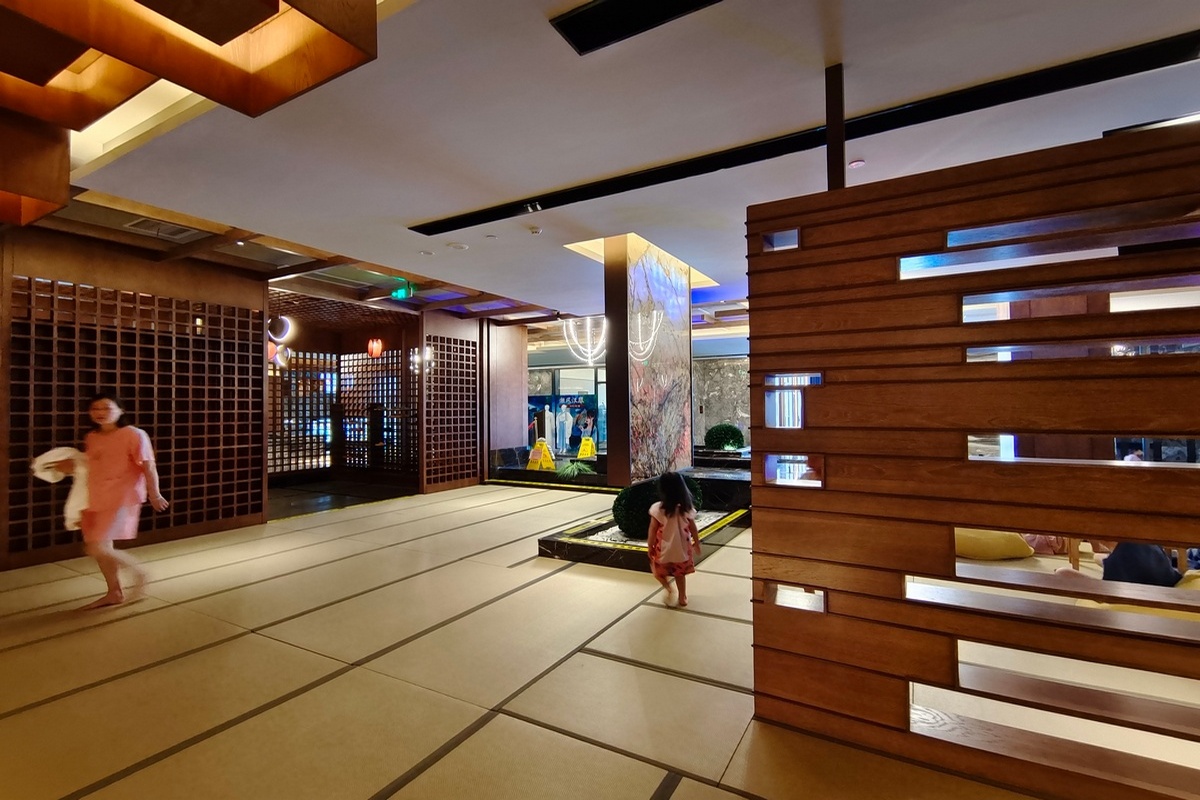
People enjoy a bathhouse experience in Nantong, East China's Jiangsu Province. Photo: VCG
"I found the bathing culture really intriguing," Bailey, an Australian social media content creator who has visited bathhouses twice in Dalian, Northeast China's Liaoning Province, told the Global Times. He once encouraged "more foreigners to go to Chinese bathhouses" in a social media post.
For Bailey, the experience was far more than a bath. He was struck by the lounge area, the food and drinks, and the leisurely rhythm of the place. In his eyes, what he entered was not simply a public bathhouse, but a distinctly Chinese leisure space.
That feeling is now resonating with a growing number of foreign visitors in China. On TikTok, videos tagged with phrases such as "24-hour spas in China" have become a fresh traffic magnet. On Chinese social media platforms like Douyin, the Chinese version of TikTok, some foreign visitors have described bathhouses as must-try stops for anyone wanting to understand everyday life in China beyond landmarks and museums.
Observers said that as China's services sector becomes more refined and personalized, traditional service offerings rooted in local culture are increasingly being rediscovered and reintroduced in ways that feel fresh and striking to foreign visitors.
'China spa' surprises foreign visitors
A recent visit by a Global Times reporter to a hot spring bathhouse in Beijing showed just how much such venues now pack into a single stay. Spending 488 yuan ($71.4), the reporter spent more than 10 hours there, moving between hot spring pools, buffet dining, sauna areas, VR games, karaoke, and complimentary drinks. The experience also included traditional Chinese wellness services such as massage and sauna-based therapies, adding to the venue's appeal as more than just a bathhouse.
But according to Katharina, a visitor from Germany, bundling all of these experiences into a single day in Germany would usually mean spending two to three hours at an amusement park first and then heading to a resort or spa for the bathing experience, with the total cost likely running to more than 1,000 euros.
For Katharina, the visit offered a first close-up look at a distinctly Chinese form of leisure, one that blends bathing, dining and relaxation in a way she had never experienced in Germany. The surprise experience came this winter, when her fiancé, Nie Qiming, took her to a Chinese bathhouse for the first time.
For Nie, by contrast, the setting felt deeply familiar. Growing up in Fuyang, East China's Anhui Province, he said winter trips to the bathhouse were a routine part of life, a practical and comforting way to keep warm, unwind and spend time indoors during the colder months.
They booked a suite, stayed overnight, had two buffet meals, and tried several of the venue's signature offerings, including a traditional body scrub and a red-wine back treatment. Katharina said she was struck by both the quality of the facilities and the level of service, adding that the experience was so enjoyable she hardly wanted to leave.
Katharina said what impressed her most was the all-in-one nature of the experience. Germany has thermal baths, she said, but not the same kind of integrated bathhouse culture that combines bathing, leisure, meals, and overnight stays. By contrast, the Chinese version felt highly convenient and surprisingly affordable.
Not only do the one-stop service model and surprisingly affordable prices stand out, but the distinctive cultural atmosphere also draws foreign visitors in.
Bailey said what stood out to him most was the atmosphere of Chinese bathhouses, which he described as relaxed and leisurely. He also said the experience offered good value for money. In his view, a similar service in Australia would be much more expensive.
Impressed by the experience, he later encouraged "more foreigners to go to Chinese bathhouses" in his post.

Foreign visitors experience a Chinese bathhouse. Photo: Courtesy of the interviewee
Buoyant growth in services sectorA Chinese expert noted that the growing popularity of bathhouses among foreign travelers is also part of a broader shift in China's consumption landscape, where traditional services are being upgraded in more professional, diversified, and consumer-friendly ways.
Industry figures and official data alike point to a striking rise in the popularity of "China spa" experiences among foreign visitors.
Citing data released by the Shanghai Municipal Administration of Culture and Tourism, The Paper reported that the city received 9.3602 million inbound visitors from overseas in 2025, up 39.58 percent year on year. Notably, among the places drawing foreign travelers were bathhouses, with some overseas visitors even making a Chinese-style bathhouse experience a key purpose of their trip.
Meanwhile, Chinese e-commerce platform Meituan told the Global Times that its 2025 national bathhouse industry trend report described the year as the inaugural year for the sector. The statement showed the bathhouse industry's transaction scale had risen for four consecutive years and hit a recent high last year, with growth exceeding 20 percent year on year.
"For many overseas visitors, these distinctly Chinese consumer experiences offer an intuitive gateway to Chinese culture. The appeal of Chinese bathhouses lies not only in their novelty, but also in the combination of solid service and affordability, which helps explain their growing popularity among foreign visitors," Bian Yongzu, executive deputy editor-in-chief of Modernization of Management magazine, told the Global Times on Monday.
The rise of this trend is closely linked to the growing strength of China's services sector, Bian noted. As more of foreign visitors step beyond conventional tourist routes and into bathhouses, clinics, food halls, and other everyday consumption spaces, they are discovering a side of China that is less about spectacle and more about how people actually live.
These distinctly Chinese traditional services have repeatedly attracted the interest of foreign visitors. In tourism hubs such as Sanya and Xiamen, foreign visitors spending the day at scenic spots and the evening receiving traditional Chinese medicine therapies has become an increasingly common pattern.
Bian said the growing popularity of Chinese bathhouses is a vivid example of how traditional Chinese culture is being reinterpreted in modern consumer settings. In his view, it also reflects the broader upgrading of service consumption with Chinese characteristics.
He noted that such venues have retained their cultural roots while evolving to meet modern demand for more diversified, personalized, and integrated services. Bian said that more foreign visitors are coming into contact with, and developing an affinity for, these distinctly Chinese consumer experiences, a process that is likely to further strengthen both cultural resonance and consumer interest.
RELATED ARTICLES