Sinochem’s unit says it reserves right to pursue legal remedies against restrictions on Pirelli
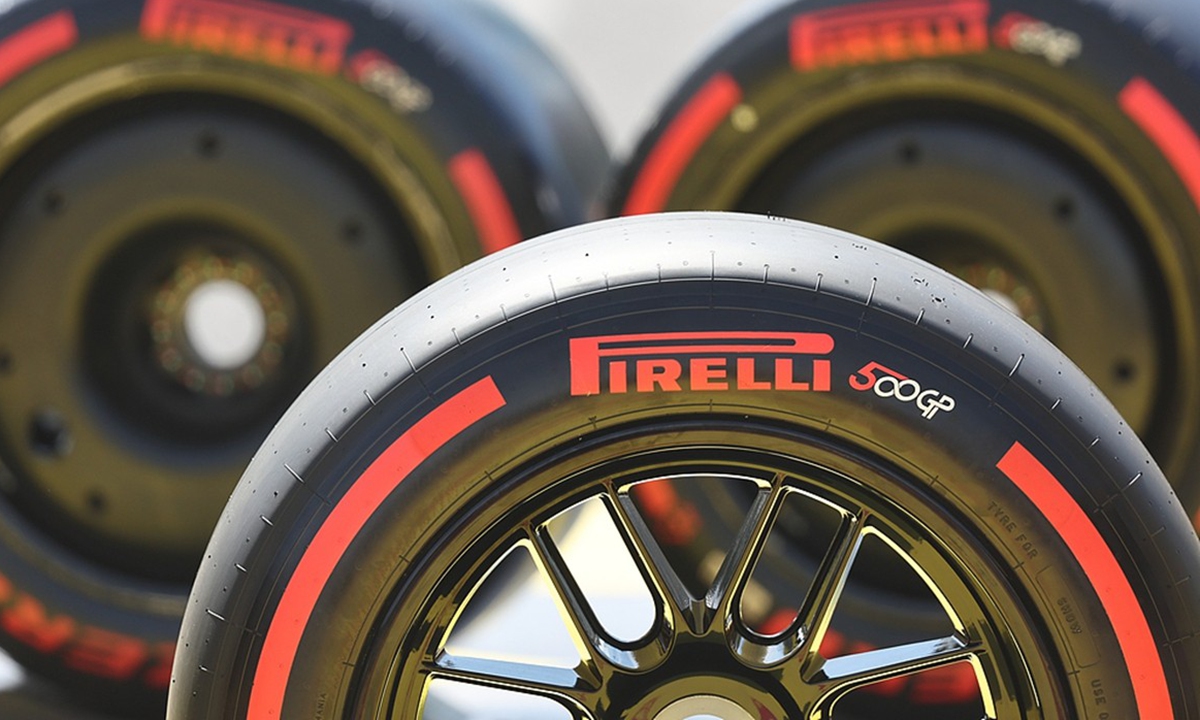
Pirelli Photo: VCG
Chinese state-owned company Sinochem's Italian subsidiary, Marco Polo International S.r.l., said on Tuesday in a statement it sent to the Global Times that it reserves the right to pursue all necessary legal remedies to protect its legitimate shareholder rights and interests after it received a decree from the Italian government on April 10 exercising its so-called "golden power" over Pirelli's corporate governance.Among the terms set under "golden power" rules designed to preserve national interests in corporate matters, Italy government on Thursday cut the number of representatives Sinochem can name to Pirelli's next board to three from eight, in an effort to avoid US restrictions on the Italian group, Reuters reported.
In a statement issued through its unit, Marco Polo International S.r.l., the holding company of Pirelli in terms of capital structure, Sinochem said the company deems that the administrative restrictions set out in the decree infringe the legitimate shareholder rights and interests to which it is entitled under Italian corporate law and Pirelli's bylaws. Such measures are discriminatory and will inevitably have a negative impact on Italy's investment climate.
"The Company expresses its deep regret regarding this decision and reserves the right to pursue all necessary legal remedies to safeguard its legitimate shareholder rights and interests," Marco Polo International S.r.l. said.
Sinochem, which produces and trades chemicals and fertilisers, is Pirelli's largest shareholder with a 34 percent stake. Camfin, the vehicle of Italian businessman Marco Tronchetti Provera, holds around 26 percent, with plans to increase it to up to 29.9 percent, Reuters reported Tuesday.
In 2015, when Italy was still grappling with the aftermath of the European debt crisis, Pirelli was sold for $7.8 billion to a group of investors including ChemChina, which later merged with Sinochem, according to previous media reports.
Among the Italian restrictions, Italy barred Sinochem representatives from holding top corporate roles such as chairman or chief executive, while also requiring Pirelli to withhold sensitive information from its Chinese investor, according to Reuters' report.
The curbs will remain in force as long as Sinochem retains a stake in Pirelli above 9.99 percent, a sign that Rome wants Sinochem to cut its shareholding, Reuters reported.
According to Reuters, the Italian government's move may also be linked to the US, as both Pirelli and Camfin said Sinochem's ownership position complicates Pirelli's expansion plans in the US amid Washington's tightening of restrictions on Chinese technology in the automotive sector. The US is a key market for Pirelli's premium tyre business.
Chinese analysts believed the Italian government's latest move is discriminatory against Chinese investment and clearly commercially unreasonable.
Jian Junbo, director of the Center for China-Europe Relations at Fudan University's Institute of International Studies, told the Global Times that such a practice essentially turns market and commercial issues into security-related matters, which violates market principles and the laws of the market economy, disrupts normal international trade order, and harms China-Italy economic exchanges.
He added that in the longer term, this politically-tinged policy may not serve Italy's own interests, as it would undermine the confidence of Chinese enterprises in cooperating with Italian markets and businesses.
This is clearly a discriminatory measure targeting Chinese capital. Such incidents will inevitably affect the willingness of Chinese investors to invest in Italy and even Europe in the future, as they send a clear signal that the Italian government may at any time take similar interventionist actions against foreign investment on various flimsy grounds, according to Jian.
"This will not only affect future Chinese investment but could also spill over to other foreign direct investment, ultimately harming Italy's interests," Jian said.
RELATED ARTICLES