Photo: VCG
Recently, EU institutions have intensively proposed trade and economic legislation, cooking up protectionist tools such as amendments to the Cybersecurity Act and the Industrial Accelerator Act. These moves attempt to legitimize the weaponization of market access and discriminatory practices, sparking huge controversy within the EU and worldwide.The amendment to the Cybersecurity Act uses "cybersecurity" as a pretext, targeting 18 key industries of the European economy. It focuses on imposing mandatory restrictions or exclusion measures against "high-risk suppliers" from third countries. The Industrial Accelerator Act promotes the dual priority principles of "Made in Europe" and "low carbon," aiming to increase the manufacturing sector's share of EU GDP from 14.3 percent in 2024 to 20 percent by 2035. To this end, it requires foreign investments to make actual contributions to the EU, attaching a series of harsh conditions such as equity caps, forced technology transfers and local R&D procurement.
The aforementioned moves have embarked on the crooked path of a "non-fair competition market." Fair competition should mean that whoever has high efficiency, strong innovation and good products wins the market.
This move by the EU has crossed two boundaries. First, the bottom line of rules. Both acts contain exclusive protectionist clauses, constituting serious investment barriers and institutional discrimination, violating WTO principles, and increasing uncertainty for foreign enterprises investing in the EU. Forcibly severing originally solid international economic ties through administrative interference not only violates market laws but will also accelerate the camp-formation and fragmentation of the global industrial and supply chains, increasing the risks of global economic and trade friction and even trade wars. Core industry organizations have warned that local content thresholds deviate from the direction of technological innovation.
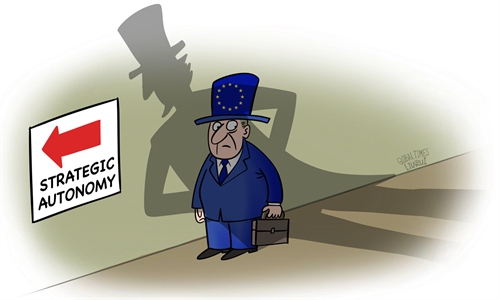
Second, the boundary of power. Relevant acts attempt to use European Commission directives to make a "one-size-fits-all" cut, forcing member states to implement uniform restriction measures. The European Commission packages economic management issues that should be autonomously decided by member states as "internal market rules" and centralizes evaluation power within the Commission. This may lead to member states losing control over their key infrastructure and policy autonomy. The Treaty on European Union stipulates that national security remains the sole responsibility of each Member State, but the European Commission's use of powers obtained through the Cybersecurity Act has exceeded the regulations of the EU Treaty. Former European Commission officials believe that "non-technical" risk assessment standards are hard to quantify and easily mixed with political and ideological factors, leading to arbitrary decision-making by the European Commission.
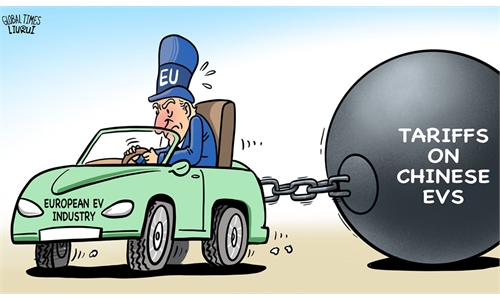
The two acts will bring high economic costs to EU enterprises. According to preliminary calculations by the European Union Chamber of Commerce in China, if the measures of the Cybersecurity Law are fully implemented, it will cause an overall economic loss of up to 840 billion euros to the EU, and the Industrial Accelerator Act will also force EU enterprises to purchase more expensive components.
It is widely believed abroad that the European measures are prominently targeted at China, due to its stubborn adherence to negative perceptions of China.
Once the relevant bills are implemented, they are bound to cause a substantive and large-scale "decoupling" of the Chinese and European economies. If the European Commission persists in its unilateral actions, it is very likely that China will take strong countermeasures to safeguard the legitimate rights and interests of enterprises. Facing the protracted crisis in Ukraine, the tense situation in the Middle East triggering a global energy crisis and the US waving the tariff stick, can the European side still bear the weight of a trade war with China?
In 2012, the EU proposed the Re-industrialization Strategy, aiming to increase the manufacturing sector's share to 20 percent by 2020; however, it has fallen. In 2022, the EU's Chips Act was introduced, aiming to increase the global chip production capacity share to 20 percent by 2030, yet most recently, the Commission assumed that the share will only amount to 11.7 percent by then.
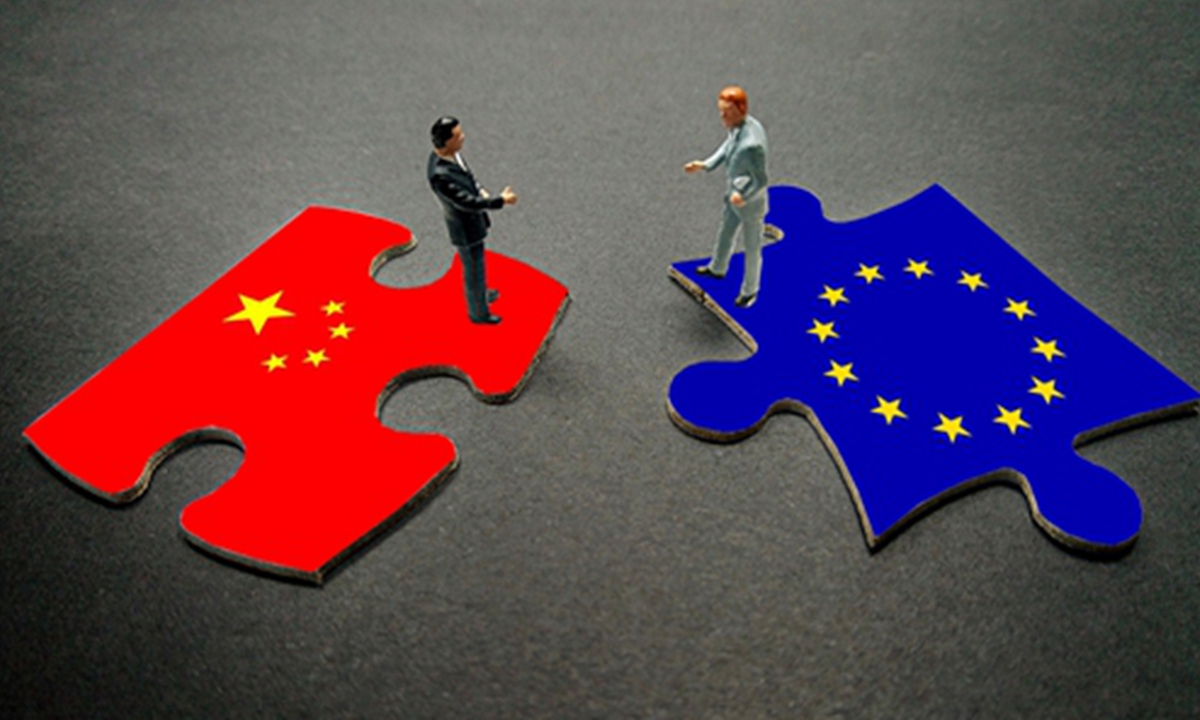
Practice has proved that open cooperation is the right path for development. Only by deepening the convergence of interests can the economies of China and Europe become more secure, and only through open cooperation can both sides promote the acceleration and upgrading of industries. Jointly, China and Europe can provide more certainty for the world economy.
The author is an international affairs observer. opinion@globaltimes.com.cn
RELATED ARTICLES