ARTS / CULTURE & LEISURE
From abandoned blind boy to public icon, reading brought light to Nyima Wangdu’s life
Beyond the shadow
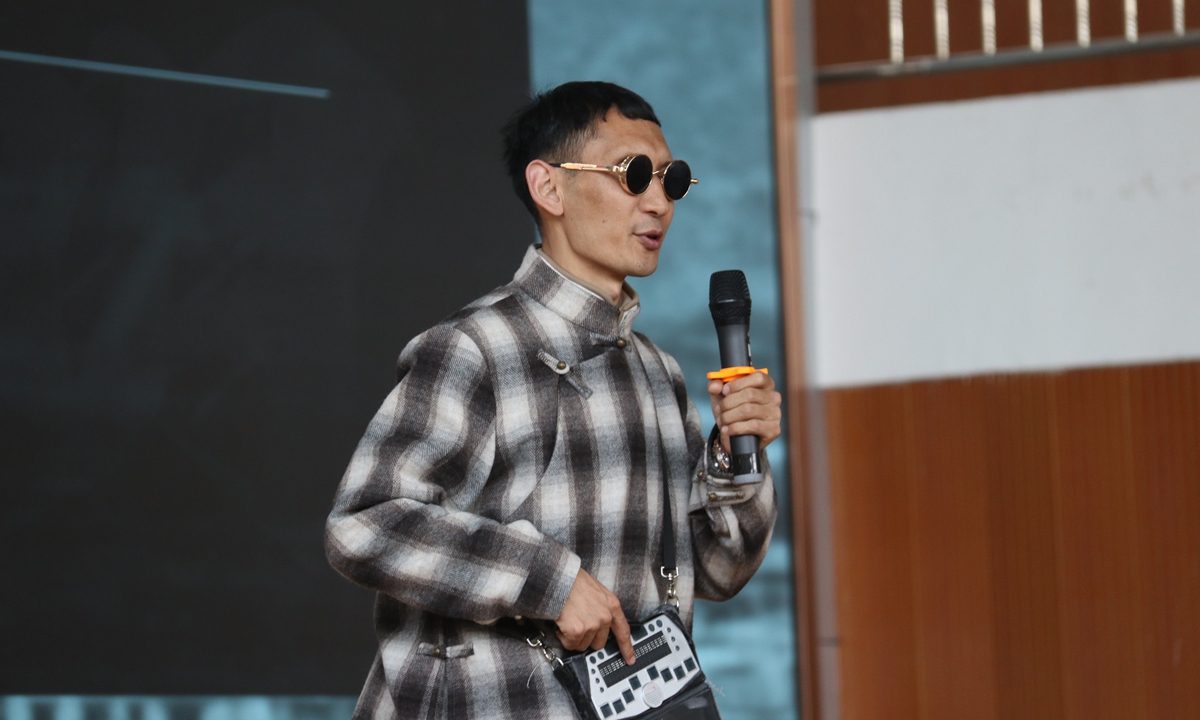
Nyima Wangdu Photo: Courtesy of Nyima Wangdu
Editor's Note:In an age of information overload, reading remains a necessary channel to invigorate the mind, provide inspiration and cultivate virtue. Whether it is childhood enlightenment or the pursuits of adulthood, everyone's reading journey carries unique emotions and life experiences.
The Global Times has specially launched the "100 Avid Readers" series, inviting guests from various fields to share their connections with books, stories of growth and sparks of thought.
In this installment, blind author Nyima Wangdu shares the reading journey that changed the course of his life and how books inspired him to help more visually impaired children find their own value.At 38, Nyima Wangdu is a man of many pursuits: bilingual public speaking, marathons, book publishing, stand-up comedy, and more.
To anyone curious about him, Nyima Wangdu sends a profile of self-introduction packed with such achievements. Even with a quick glance, it is easy to see that he is a person committed to exploring life's possibilities.
But a closer reading of his profile reveals that Nyima Wangdu's exploration of life demands extra effort and passion.
Born in the Garze Tibetan Autonomous Prefecture in Southwest China's Sichuan Province, he lost his sight when he was just 3 months old.
From childhood, living in an invisible world brought him doubts. Yet it also taught him that the heart can accomplish what the eyes are meant to do, and his passion for reading is one such example.
Luminous path
Recalling his childhood, Nyima Wangdu says that even as a young boy, he never let his blindness breed self-pity or shame.
After losing his sight, he was abandoned by his mother. But his grandparents never gave up on him, they raised him as their own.
Unable to gain knowledge through sight, he learned from his grandparents through oral instruction, including mental arithmetic, horse riding, ethnic Tibetan scriptures, and more.
With knowledge acquired through listening, he was just like any other child, imagining the world in his own way.
At 14, fate led him to a blind school in Lhasa, Southwest China's Xizang Autonomous Region. Learning Braille there uncovered his gift for languages, and that was when Nyima Wangdu first fell in love with reading.
He told the Global Times that, like many people with disabilities, one of the books that left the deepest impression on him was Three Days to See by US author Helen Keller.
Keller, who had been blind and deaf since infancy, wrote the book in which she imagined what she would want to see if she were granted just three days of sight. Behind this imaginative scenario, she conveyed her appreciation for the people and things around her, as well as her hopes for humanity.
Noting that he feels "a strong connection" with Keller's book, Nyima Wangdu told the Global Times that there is a long-held misconception about blind people that they "are trapped forever in pain and in the shadow of their disability."
"Actually, I've never felt like I live in darkness. Instead I just live in my own world," he said, adding that he wants to take action to help the wider public gain a better understanding of this community.
What he has chosen to do is to read more and start to write his own book. Inspired by Keller, he created a book in the first-person oral narrative style titled No Need to See 3 Days.
The book records the things that gave him strength, including small moments such as getting his own white cane for the first time and traveling abroad to give a speech for the first time, as well as major life events like how he met his wife Yuzhen and learned to become a parent.
"Whether it's through reading or writing, this whole process of input and output is my way of reaching out to the world," Nyima Wangdu told the Global Times.
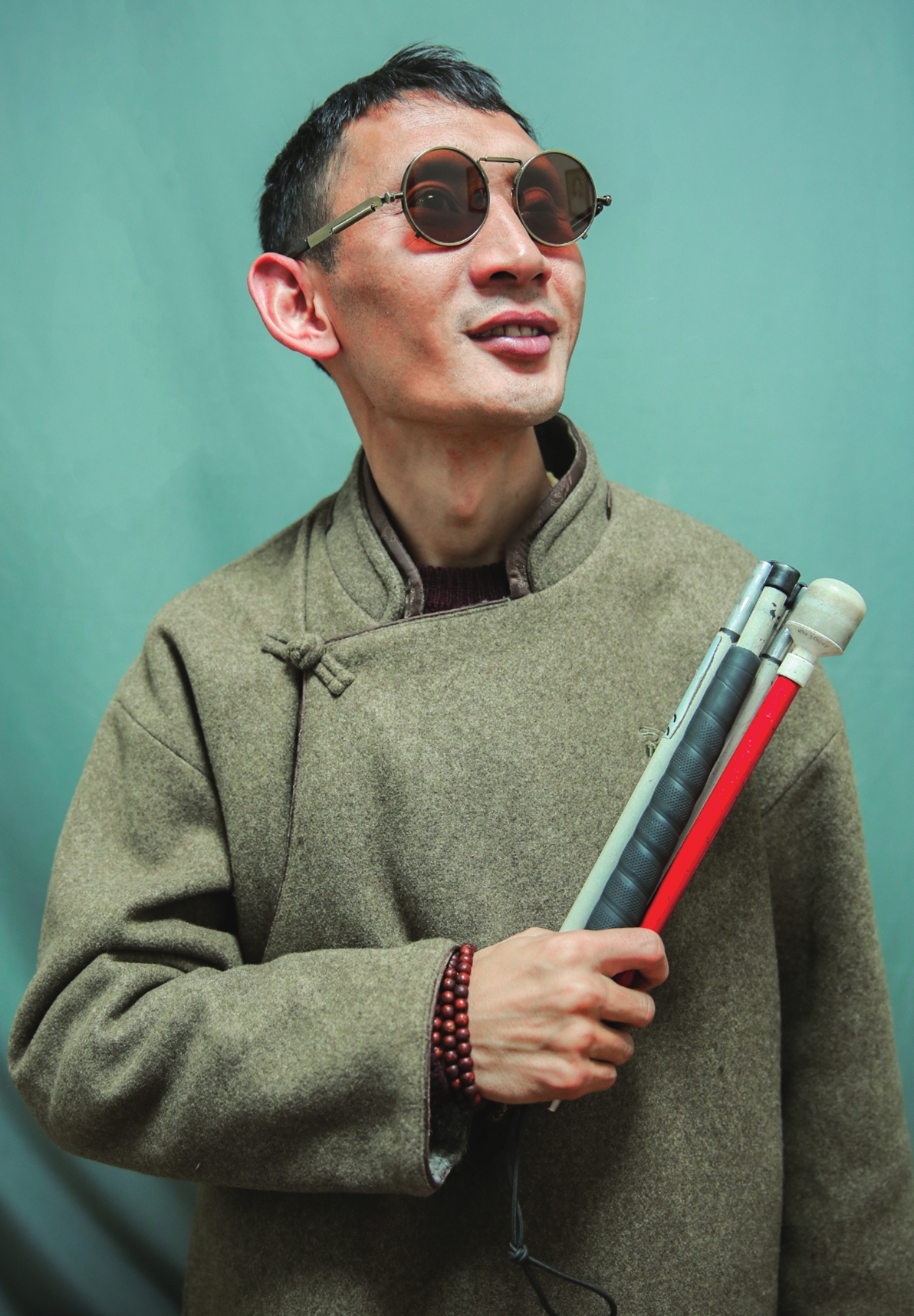
Photo: Courtesy of Nyima Wangdu
From one to many
Perhaps it was the law of attraction at work. Nyima Wangdu's passion for reading led him to accidentally cross paths with Suolang Yangpei, a bookstore owner who runs an urban bookstore in Lhasa.
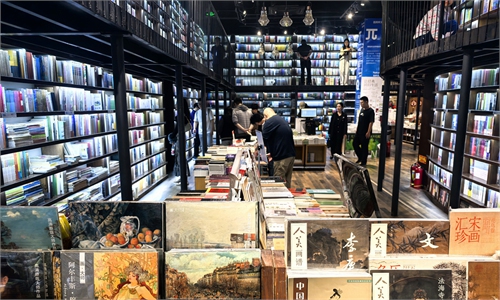
The bookstore is called Byangbshe Bookstore, which refers to the "source of knowledge," the owner told the Global Times. Founded in 2020, it has set up a Braille reading area.
The area provides books including classic works in both Chinese Putonghua and Tibetan, traditional scriptures, as well as full-length novels like Flower and Dream that were created by local authors.
Beyond books, the bookstore also organizes reading and sharing activities that bring visually impaired readers together with sighted readers from the broader community.
"People who come to our bookstore range from visually impaired students, young musicians, the elderly and beyond. Had we not opened the Braille reading space, we would have remained completely unaware of the scale of this need," Suolang Yangpei told the Global Times.
He also said that he came to know Nyima Wangdu for the simple reason that one day he happened to come to the bookstore to read.
Through Suolang Yangpei's introduction, the blind readers at the bookstore have transformed from strangers into close companions.
Among them, Nyima Wangdu stands out as a particularly radiant figure, thanks to his inspiring life story and his regular speech sessions at the bookstore.
This light has driven him to go even further - to give more blind children the opportunity to read and receive an education. To this end, he has not only stood on stages to give speeches time and again, but also become the principal of the very blind school that once changed his own life.
"I love this job. In this position, I am able to help more children transform their lives through education and reading, and help them find their own way in life," said Nyima Wangdu.
RELATED ARTICLES