China slams transiting of Japanese warship via Taiwan Straits, calls it ‘deliberate provocation’

Latest News
The Chinese Foreign Ministry and China's Ministry of National Defense voiced China's firm opposition and protests on Friday over the entry of a Japanese Self-Defense Force (SDF) vessel into the Taiwan Straits, while the Eastern Theater Command of the Chinese People's Liberation Army (PLA) vowed to resolutely safeguard China's sovereignty and security, as well as regional peace and stability.
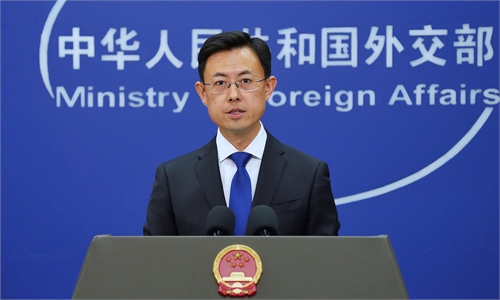
Chinese Foreign Ministry spokesperson Guo Jiakun said at a regular press conference on Friday that the Chinese military has handled the entry of the Japanese SDF vessel in accordance with laws and regulations. Guo added that Japanese Prime Minister Sanae Takaichi's erroneous remarks on Taiwan have already severely impacted China-Japan relations. The Japanese side is compounding the wrongdoing by sending the SDF vessel into the Taiwan Straits to flex its muscles and deliberately provoke China.
Guo noted that this action severely undermines the political foundation of China-Japan relations and threatens China's sovereignty and security. China firmly opposes it and has lodged strong protest against Japan.
"The Taiwan question bears on China's sovereignty and territorial integrity, and the political foundation of China-Japan relations. It is a red line that must not be crossed. China urges the Japanese side to do serious soul-searching on its wrongdoings, return to the right track at once, exercise prudence in its words and actions, and stop going further down the wrong path," Guo noted.
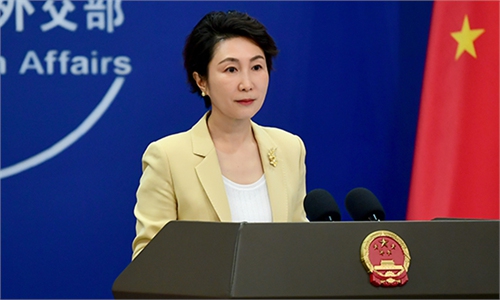
Also on Friday, Zhang Xiaogang, spokesperson of China's Ministry of National Defense, said that China has lodged solemn representations and strong protests with the Japanese side, questioning what Japan intends to achieve through such deliberate provocations and repeated mistakes. Zhang said by stirring up trouble in the Taiwan Straits, the SDF vessel has sent the wrong signal to "Taiwan independence" separatist forces, adding that this will only fuel greater indignation among the Chinese people and strengthen our resolve to resolutely counter Japan's provocative acts of playing with fire.
"We urge Japan to come to its senses, abide by the one-China principle and the spirit of the four political documents between China and Japan, and refrain from going further down the wrong path," said Zhang, adding that the Chinese military remains on high alert at all times, firmly countering all foreign interference attempts and safeguarding national sovereignty and territorial integrity.
Senior Colonel Xu Chenghua, spokesperson for the PLA Eastern Theater Command, said in a statement released by the PLA Eastern Theater Command on its WeChat account that from 4:02 to 17:50 on Friday, the Japanese destroyer JS Ikazuchi transited the Taiwan Straits, sending wrong signals to "Taiwan independence" separatist forces. The PLA Eastern Theater Command deployed naval and air assets to track and monitor the vessel throughout the process, ensuring an effective control of the situation.
Forces of the Eastern Theater Command will remain on high alert at all times, and resolutely safeguard China's sovereignty and security, as well as regional peace and stability, Xu said.
Following China's solemn stance, the incident has drawn close attention from Japanese media outlets. Kyodo News issued a breaking news report titled "Chinese Foreign Ministry says Japanese SDF vessel enters Taiwan Straits." The article noted that a Chinese Foreign Ministry spokesperson said on Friday that a vessel of the Japanese SDF had sailed into the Taiwan Straits, and that China had lodged a strong protest against Japan.
Several other Japanese media outlets, including the Kyoto Shimbun, Okinawa Times, Saga Shimbun, and Kumamoto Nichinichi Shimbun, have reposted Kyodo News' report.
Some Japanese media outlets also published more detailed coverage of the remarks made by the Chinese Foreign Ministry. The Mainichi Shimbun quoted Guo as saying that the Chinese military had handled the entry of the Japan SDF vessel in accordance with laws and regulations, and that Guo stated Beijing had lodged a strong protest with Japan. Nippon Television Network reported that Guo further criticized Japan for deliberately sending SDF warships to flex military muscles, and that such moves laid bare Japan's dangerous attempt to meddle in affairs related to Taiwan Straits.
Japan's move to send a vessel into the Taiwan Straits may aim to hype its so-called "regional security concerns" and is a show of force, Xiang Haoyu, a distinguished research fellow at the Department for Asia-Pacific Studies of the China Institute of International Studies, told the Global Times on Friday.
It intends to test the Chinese mainland's response to the Taiwan question and send a "pro-Taiwan" signal to the secessionist DPP authorities, laying bare the negative policies and risky tendencies of Japan's administration on Taiwan-related affairs, Xiang said.
String of provocations
There has also been a string of provocative incidents targeting Chinese nationals in Japan recently. On Thursday, the Chinese Embassy in Japan revealed a recent series of terror threats received by the embassy as well as the absence of effective measures by Japanese police.
Shi Yong, Charge d'Affaires ad interim of Chinese Embassy in Japan, revealed on Thursday that on March 5, an organization claiming to consist of former Japanese police officers and former SDF members sent a terror threat letter to the embassy. Nineteen days later, a serious incident occurred in which active-duty Japan SDF member Kodai Murata broke into the Chinese Embassy by scaling the wall carrying a knife on March 24. Just one week after the break-in incident, on March 31, another individual claiming to be a reserve SDF member sent a terror threat to the embassy via the internet, according to CCTV News.
Addressing the regular press conference on Friday about the recent incessant harassment and provocations targeting Chinese missions in Japan, Guo said that soft-pedaling such incidents and even distracting attention from them or spreading disinformation will only lead to more such incidents with even more dreadful consequences, and put more Japanese people under its harmful impact. The malevolent emergence of neo-militarism in Japan could also threaten peace and stability in the region.
"We once again urge the Japanese side to reflect on and correct its policy and behavior, conduct a thorough probe and take full responsibility for the incident," Guo said.
Xiang noted that the recent series of provocative incidents are not isolated. Japan's domestic political landscape has become increasingly right-wing, leaving less room for rational voices, and with the continuous growth of its defense budget, right-wing conservative forces are attempting to create external tensions to justify security policy adjustments.
"In addition, the frequent occurrence of extremist acts reflects the fact that radical tendencies in Japanese society have not been effectively contained, which is an outcome of the country's overall rightward shift," the expert said.
RELATED ARTICLES