Photo: Screenshot from media reports
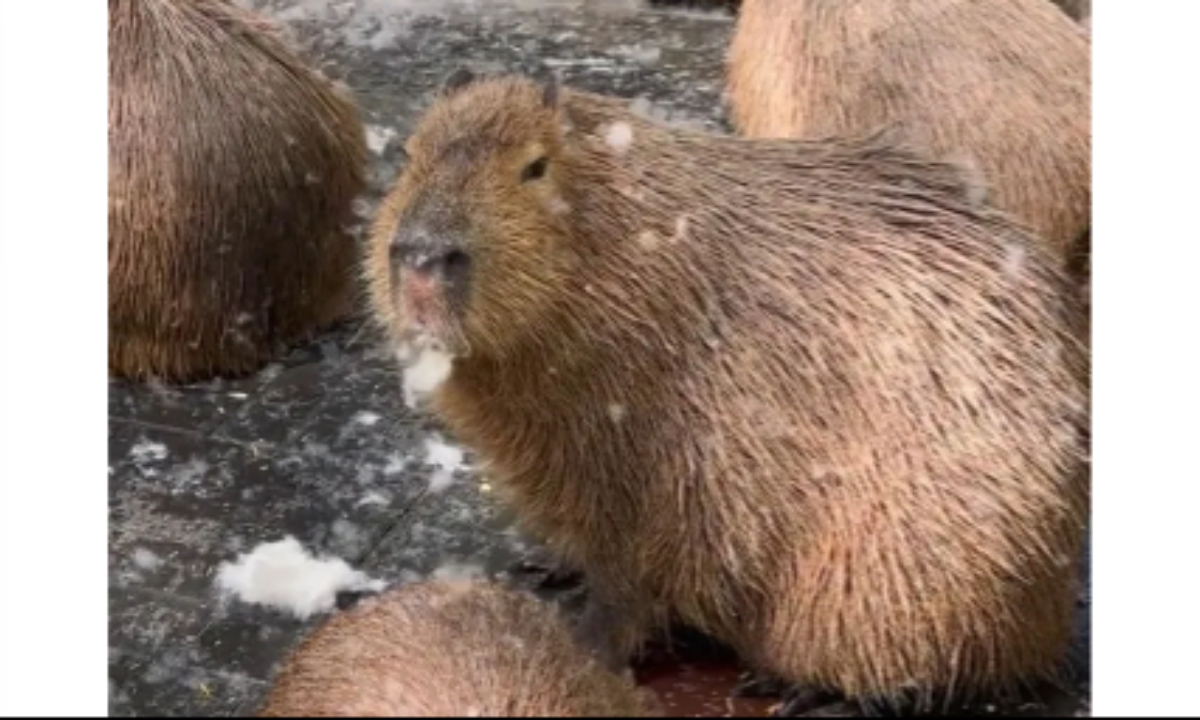
As Beijing entered its peak willow and poplar catkin season, a capybara at the Beijing Wildlife Park was spotted calmly nibbling on the floating fluff – almost like little fluff cleaner helping people clean up the seasonal fuzz.
A video posted by a netizen shows Beijing Wildlife Park, surrounded by woods, covered in floating poplar and willow catkins. The wind blew the fluffy seeds toward a group of capybaras, with one filmed slowly chewing the catkins, looking totally relaxed and carefree.
The video drew nearly 130,000 likes and over 140,000 shares on Chinese social media platform Douyin. In the comments, netizens joked that the capybara truly lives up to their reputation as the “epitome of emotional stability” by helping eliminate catkins. Some humorously wondered, "Will the capybaras develop hay fever and get stuffy noses from catkin allergies?"
Some netizens also expressed concern that swallowing catkins might cause health issues for the animals. A park staff member explained that catkins themselves are non-toxic, composed primarily of plant fibers and seeds, and that capybaras are large herbivorous rodents naturally equipped to digest high-fiber plants, Science Daily said.
"It's fine for capybaras to occasionally eat a few catkins – they can pass through their digestive systems normally," the staff member said, adding that the park runs a professional veterinary hospital, where vets conduct regular health checks on the animals, according to the report.
Capybaras are not particularly attracted to catkins — they simply eat whatever drifts close to their mouths, Science Daily reported, citing the staff member.
The staff member also said that the capybaras are currently in good health, and keepers will continue to monitor their condition closely, per the report.
To tackle the catkin issue, the park has deployed high-pressure water sprayers to routinely flush the canopies of willow and poplar trees at scheduled times each day, reducing the production of catkins at the source, the park said on its official WeChat account. Cleaning staff have also increased their sweeping frequency, promptly clearing catkins in high-traffic visitor areas to minimize their spread in the air, according to the park.
Global Times
RELATED ARTICLES