US-Iran ceasefire clock ticks down amid mixed signals from both sides; China supports maintaining ceasefire and negotiations momentum
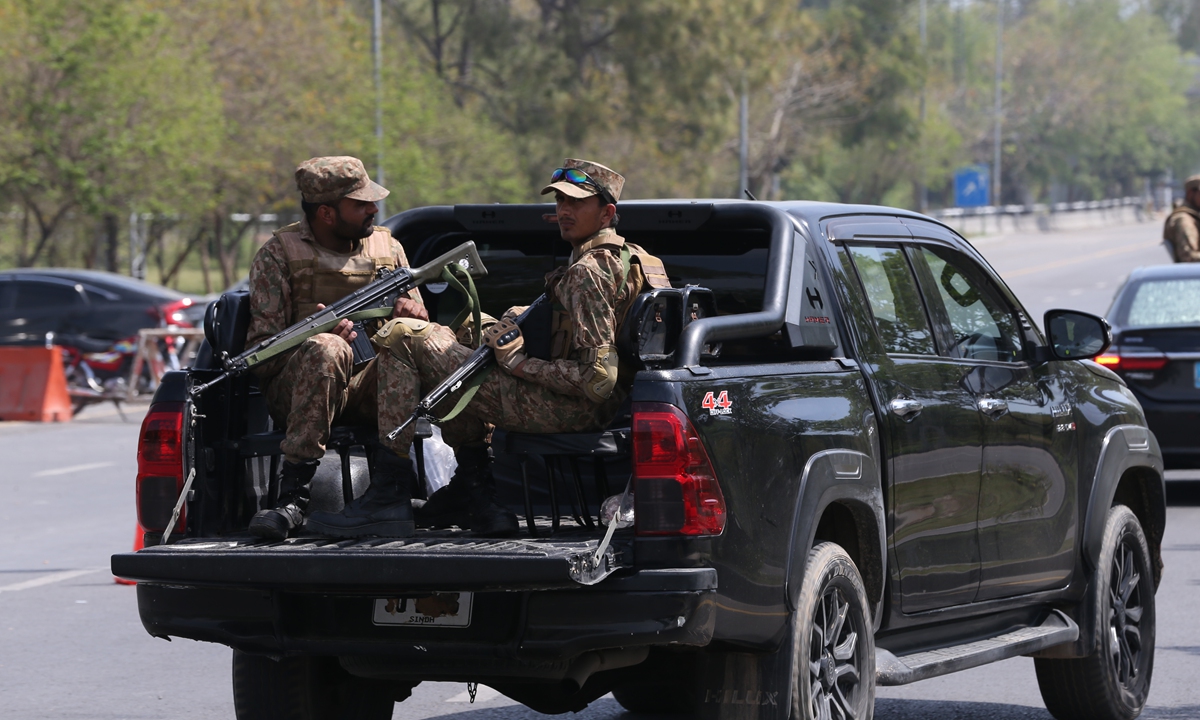
Security forces take extensive measures in Islamabad, Pakistan, on April 21, 2026 as the US-Iran ceasefire deadline looms. Photo: VCG
With the US-Iran ceasefire about to expire at 0000 GMT Wednesday (8 am Wednesday in Beijing), the two sides continue to send mixed and complex signals with the US signaling it is willing to negotiate while simultaneously making military maneuvers, and Iran making clear it rejects negotiations "under the shadow of threats."
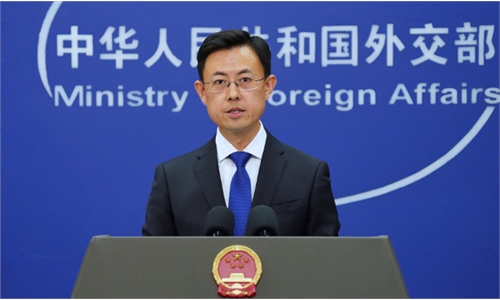
When asked to comment on the ceasefire between Iran and the US which expires Wednesday and it is not clear whether talks between Iran and the US will resume in Pakistan, Chinese Foreign Ministry spokesperson Guo Jiakun said on Tuesday the current regional situation is at a critical stage of whether the conflict could end. Now that the window for peace has been opened, favorable conditions need to be created to end the war at an early date.
Guo added that China supports efforts by relevant sides to maintain the momentum of ceasefire and negotiation. We will continue playing a constructive role for promoting deescalation and bringing lasting peace and stability to the Middle East.
Guo's remarks came less than a day before the expiration of the Iran-US ceasefire agreement which falls on 0000 GMT Wednesday. It remains unclear whether either of the two sides will show up at the negotiating table.
Iranian Parliament Speaker Mohammad Bagher Ghalibaf posted on X on Tuesday that Iran would not accept negotiations under the shadow of threats, saying that "in the past two weeks, we have prepared to reveal new cards on the battlefield."
On Monday, the Iranian President Masoud Pezeshkian criticized the conduct of the US, saying that US officials were sending "unconstructive and contradictory signals." "They seek Iran's surrender," Pezeshkian wrote on X. "Iranians do not submit to force."
US media outlet Axios, citing three US sources, reported that Vice President JD Vance is expected to depart for Islamabad by Tuesday morning for talks with Iran over a potential deal to end the war. US President Donald Trump's envoys Steve Witkoff and Jared Kushner are also expected to travel to Islamabad for the talks. Al Jazeera reported later Tuesday that the three had not departed Washington DC and that the Pakistani side expected them to depart early Wednesday.
The New York Times said that Iranian officials have publicly expressed skepticism about the prospects for a diplomatic breakthrough, but also mentioned that two senior Iranian officials had said Ghalibaf was planning to lead a delegation to Islamabad if Vance attends.
Tian Wenlin, a professor at the Renmin University of China's School of International Studies, told the Global Times on Tuesday that Iran's hesitation over whether to participate in the negotiations reflects its deep distrust of the US.
As the ceasefire deadline counts down, Trump made a series of statements about next steps. "I have no problem meeting them," he told the New York Post on Monday, while also warning that "lots of bombs" will "start going off" if there's no agreement before the ceasefire expires, the Washington Post reported.
The US president told CNBC that he does not want to extend the ceasefire and expects a "great deal."
Meanwhile, Washington is also making military maneuvers. The USS Gerald R. Ford aircraft carrier, along with the destroyers USS Winston S. Churchill and USS Mahan, left the US Naval Forces Europe-Africa/US 6th Fleet area of operations late last week, a US official confirmed to Stars and Stripes on Monday.
The deployment of US warships is more of a means to pressure Iran, in the hope of forcing it to accept negotiation terms through military coercion, Ding Long, a professor at the Middle East Studies Institute of Shanghai International Studies University, told the Global Times on Tuesday.
The US-Iran talks face major structural obstacles despite growing speculation about a negotiated end to the current crisis, Salar Mohandesi, a professor at Bowdoin College in Maine was quoted by Al Jazeera as saying, arguing that what is happening in Iran does not meet serious definition of "regime change."
Ding believes a substantial agreement is unlikely even if they sit down together in Islamabad again.
Should the negotiations proceed in a positive manner, the two parties may prioritize extending the soon-to-expire ceasefire first, with other issues to be addressed through follow-up consultations, according to Ding.
RELATED ARTICLES