ARTS / CULTURE & LEISURE
‘Realness, sincerity, true emotion’ honor cultural guardian Wan Tongshu: director
By Published: Apr 21, 2026 10:54 PM

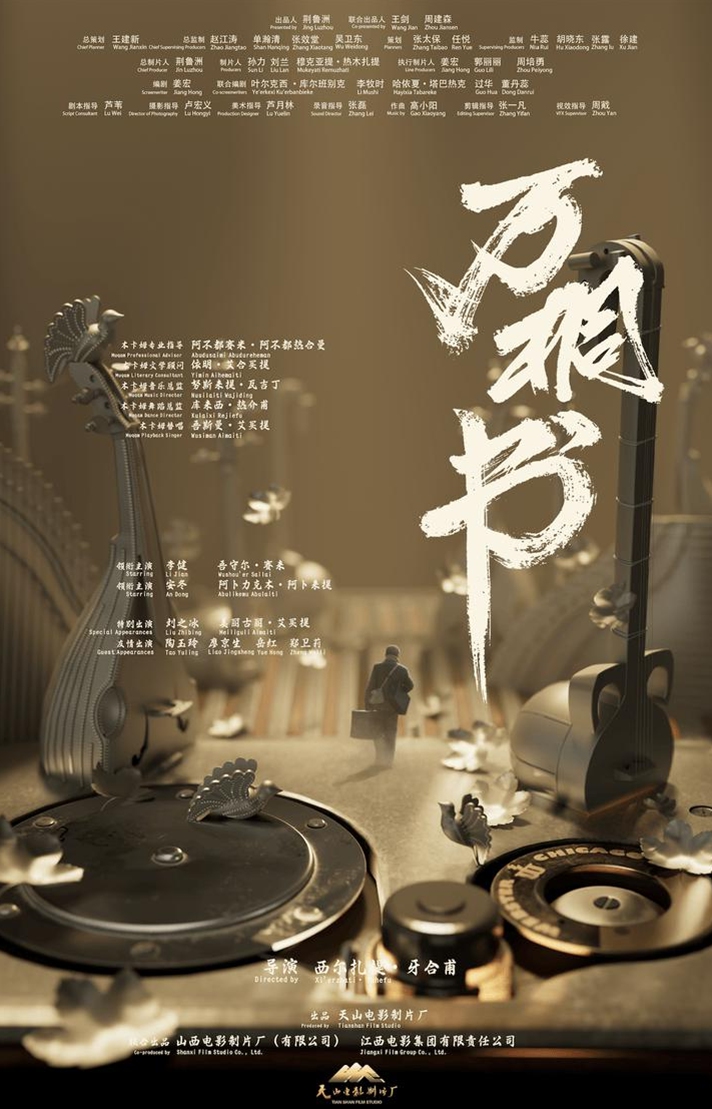
Wan Tongshu Photo: Courtesy of Douban
The biographical film Wan Tongshu premiered in the Xinjiang Uygur Autonomous Region on Monday, with a nationwide release scheduled for April 30. Directed by Xirzat Yahup, the movie tells the true story of musicologist Wan Tongshu and his wife Lian Xiaomei, who dedicated their lives to rescuing the endangered Muqam art form alongside folk artist Turdi Ahong ever since the 1950s. The film pays homage to Wan, an ordinary hero who devoted his life to preserving Muqam, a traditional art of the Uygur ethnic group in Xinjiang, integrating songs, dances, and folk and classical music.In 2005, the Xinjiang Uygur Muqam Arts of China was approved by UNESCO as a "Masterpiece of the Oral and Intangible Heritage of Humanity."
In a recent interview with the Global Times, Xirzat Yahup spoke about the immense pressure he felt when starting to adapt Wan Tongshu's story for the big screen.
"The pressure was enormous," he recalled. The events unfold in the 1950s, a time that feels distant to modern audiences. "I needed time to truly understand the weight of this cultural rescue mission and the inner world of these characters who accomplished it under extraordinarily harsh conditions."
The film encompasses themes of ethnic unity and cultural inheritance on a grand historical scale. "It is not just a biography; it is about how an ancient art form survived and thrived," the director explained.
To bridge the gap between past and present, the production team adhered strictly to the "three truths" principle - realness, sincerity, and true emotion - while putting in what the director calls "hard, honest work." Every detail - costumes, props, posture, and even eye expressions - was meticulously refined. For the central figures of Wan Tongshu, Lian Xiaomei, and Turdi Ahong, the team pored over historical documents, archival footage, and conducted extensive interviews with witnesses and intangible heritage experts.
Central to the film is Muqam itself, which Xirzat insisted must function not as mere backdrop but as the very soul of the narrative. "It drives the story and connects the characters," he emphasized. Key sequences capture Wan's awe upon first hearing the music, Turdi Ahong's struggle to perform in front of a recorder, and Wan's fieldwork across southern and northern parts of Xinjiang.
These moments highlight Muqam as a living art born from and sustained by communal interaction. To bring this to life, the crew enlisted hundreds of regional artists, while renowned musician Dao Lang composed the theme song, forging a dialogue between contemporary sound and ancient melody.
Screenwriter Jiang Hong and director Xirzat agreed that only an artistic, emotionally resonant approach could succeed. They focused on the deep artistic bond between Wan Tongshu and Turdi Ahong - their shared pursuit that overcame differences.
"As long as the story is engaging, the emotions authentic, and the characters lively, the larger messages of cultural transmission, ethnic unity, and craftsmanship will flow naturally to the audience," he noted.
Filming proved both physically and spiritually demanding. Spanning four seasons, 17 location changes, and over 17,000 kilometers, the crew retraced Wan Tongshu's footsteps through Xinjiang.
"In that era, someone truly devoted an entire lifetime to guarding one thing quietly and resolutely - not for fame or profit, but out of deep love and responsibility for culture," the director said.
The director hopes audiences will not only appreciate the splendor of Muqam but also remember the "ordinary heroes" like Wan Tongshu who walked great distances for what they cherished. "They didn't shout slogans; they simply followed their hearts along a path that links the past to the future and connects every one of us to our shared cultural identity and emotional home."
RELATED ARTICLES