Yuan assets gain traction amid shifting global landscapes
By Qi Xijia and Published: Apr 26, 2026 10:03 PM


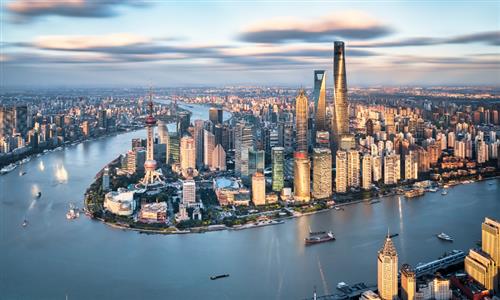
A city view of Nanshan district, Shenzhen, South China's Guangdong Province Photo: VCG
Amid recent geopolitical tensions in the Middle East, global risky assets have faced widespread downward pressure, driving investors to prioritize risk control and diversify their holdings amid heightened uncertainty. Against this volatile backdrop, China's solid, better-than-expected first-quarter economic performance has stood out for its resilience, strengthening global investors' confidence in Chinese assets.
A rising number of analysts at international financial institutions say that yuan-denominated assets are evolving from an optional choice to a core holding in global portfolios, thanks to China's steady economic growth, market stability, and unique defensive value in a turbulent global market.
There has been growing confidence among investors in yuan-denominated assets, as they view such assets as relatively safe, and China as a relatively stable market, Ding Shuang, chief economist for Greater China and North Asia at Standard Chartered, said in a note sent to the Global Times on Sunday.
"Investors have yet to identify a full-fledged alternative to dollar assets in the short term. However, the trend toward asset diversification is clearly gaining momentum," Ding said.
From China's perspective, a moderate inflation rate, coupled with rapid growth in emerging industries, has already begun lifting returns on assets, including equities. This improvement in yields, combined with global demand for safe assets, greater openness and convenience for overseas investors to invest in China's markets, and the introduction of more risk-hedging instruments, is expected to strengthen the appeal of yuan-denominated assets, according to Ding.
He added that if this momentum continues and all beneficial factors are taken together, yuan assets could become a meaningful component of alternative safe assets. In the coming years, they are set to play an increasingly indispensable role in global asset allocation.
Shu Chang, chief Asia economist for Bloomberg Economics, noted that Chinese assets are becoming a must-have for global investors and China's massive market size underpins this trend, according to Shanghai-based International Finance News.
Shu said China's bond market reached nearly 200 trillion yuan ($29.25 trillion) by the end of 2025, making it the world's second-largest. More importantly, China's economic growth is shifting from property-led to innovation-driven, with high-tech industries expected to surpass real estate as a share of GDP in 2026. As worries grow over the sustainability and stability of dollar-denominated assets, Chinese assets, boasting complete industrial chains and strong innovation capabilities, have become a key destination for global capital.
"Major global asset allocators are gradually reducing excessive reliance on dollar assets. In the process of diversified allocation, Chinese assets are expected to secure sustained net capital inflows," said Xing Ziqiang, chief China economist at Morgan Stanley, per International Finance News.
Strong economic fundamentals
Optimism for Chinese assets is built on the country's robust macroeconomic performance. China's economy got off to a strong start in 2026, with impressive economic indicators laying a solid foundation for the stable performance of Chinese assets and further strengthening their safe-haven attributes.
Official data showed that China's GDP reached 33.4193 trillion yuan in the first quarter, growing 5.0 percent year-on-year, 0.5 percentage points faster than the fourth quarter of last year.
"Given that first-quarter GDP growth has come in stronger than expected, it has also created favorable conditions for achieving the full-year GDP growth target," Ding from Standard Chartered said. China's major economic indicators also are in line with or exceeding expectation in the first three months, Ding said.
The industrial sector saw remarkable improvement. The producer price index (PPI) rose 0.5 percent year-on-year in March, ending a 41-month decline, according to official data.
Consumption and investment also showed positive momentum. In the first quarter, retail sales of consumer goods approached 13 trillion yuan, rising 2.4 percent year-on-year, 0.7 percentage points faster than the previous quarter. Fixed-asset investment increased by 1.7 percent year-on-year.
Zhao Qingming, a Beijing-based veteran financial expert, told the Global Times on Sunday that the upgrading of Chinese assets from "optional" to "must-have" is an inevitable result of the inherent resilience of China's economy.
He noted that given China's important position in the global economy, trade, and financial markets, yuan assets have long been an indispensable core category for global institutional investors, sovereign funds, and cross-border capital.
After a period of under-allocation, foreign capital is now systematically increasing its holdings of Chinese assets, with ample room for further growth as current allocation levels remain far below reasonable benchmarks.
Against the backdrop of escalating geopolitical conflicts and energy price fluctuations, China's diversified energy layout, complete industrial system, and strong manufacturing capacity have made its economy more stable and resilient, with limited impact from external shocks, turning it into an important safe-haven and value-added destination for global capital, Zhao noted.
Surging foreign inflows
Optimistic expectations have spurred frequent foreign investment moves.
In 2025, northbound capital notched a net inflow of over 250 billion yuan. By the end of 2025, overseas institutions and individuals held more than 10 trillion yuan in onshore yuan financial assets, while China's bond market, worth nearly 200 trillion yuan, ranked as the world's second-largest, Shanghai-based yicai.com reported.
Foreign participation in equities has also picked up. Since early 2026, foreign institutions have surveyed over 400 A-share listed firms. Over 120 A-share companies had qualified foreign institutional investors among their top 10 shareholders at end-2025, with over 80 percent of them seeing increased or new holdings in the fourth quarter, according to yicai.com.
RELATED ARTICLES