ARTS / CULTURE & LEISURE
Embracing graded reading to cultivate children into lifelong readers
By Published: Apr 27, 2026 10:24 PM

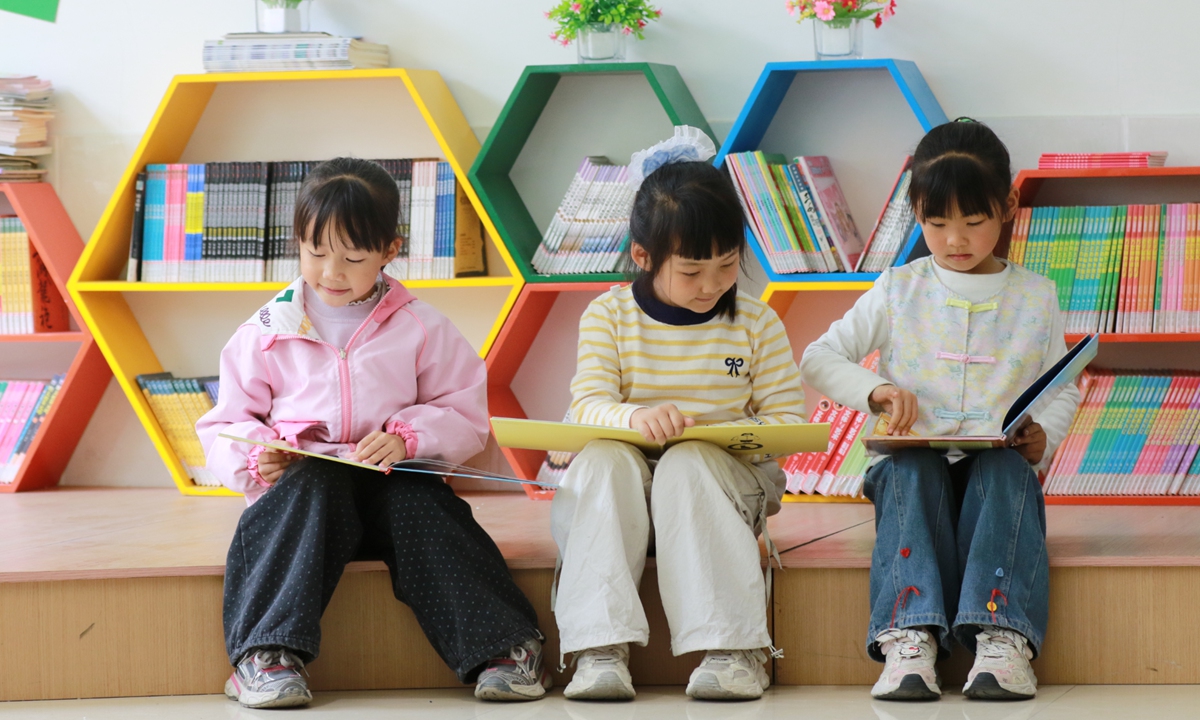
Photo: VCG
During China's first National Reading Week, the topic of graded reading for children drew widespread discussion. Initiatives such as China's National Library's children's division promoting reading based on different ages, cognition, and psychological needs have brought a new round of attention to how reading should be structured for children. Experts emphasized that graded reading is not about restricting choices, but about providing a supportive framework so reading stays centered on the needs of each child, helping develop skills that benefit them for life.In recent years, interest in graded reading has increased, but consensus is still lacking. Most children do not read books that best fit their developmental stage. Often, parents pick books based purely on personal preference. Because there is no unified Chinese grading standard, book choices can be random.
The report said that some commercial interests use the idea of "graded reading" for marketing. Books focusing on success and achievement now dominate children's book sales, while genuine children's literature has dropped to only 16 percent of the market in 2025, down from nearly half from previous years.
China's regulation to promote reading among the public have already called for promoting reading programs for young people that match their intellectual development and reading ability, and for offering guidance suited to their stage.
Zhang Peng, an associate professor at Nanjing Normal University and head of a publishing house, said the key to graded reading is to match the cognitive level of minors. There are large differences in the way children think at different ages, and reading far beyond their level can overload them or make them lose interest. Still, he noted that books should be a little more advanced than a child's current level and should require some guidance - this challenge helps children grow as readers.
A reading grading system should make clear which books children can read alone, which need supervision, and which are not suitable at all, Xiong Bingqi, director of the 21st Century Education Research Institute, told the Global Times on Monday.
Xiong noted that today's practical, achievement-focused reading among minors is partly due to incorrect parental guidance. Some parents misunderstand how to foster reading habits and, without proper standards, may not choose suitable books. Having a clear grading system would give parents better guidance when picking books for their children.
"Overly practical reading may mislead young people to treat reading as just a means to success, rather than a lifelong habit. Popular success-oriented books are often tied to anxiety about education, which can lead to pressure and even over-education in families that care deeply about achievement," Zhang told the Global Times.
To guide parents, the National Library has launched "children's reading guidance training classes." These programs invite reading promotion experts, educators, and experienced librarians to introduce reading characteristics at different ages, share joint reading tips, and answer parents' questions about book selection and reading habits. Professional librarians are also available for one-on-one family consultations, according to the China Youth Daily.
Zhang added that achieving true graded reading requires joint efforts. Specialized organizations can set local grading standards, teachers can make recommendations based on classroom observations, and children should always have the freedom to choose their own books. Families should let their children's interests lead the way and adjust book lists based on real-time feedback when reading together.
The author is a reporter with the Global Times. life@globaltimes.com.cn
RELATED ARTICLES