ARTS / CULTURE & LEISURE
Storytelling in the AI age starts with reading: Music producer Ma Chao
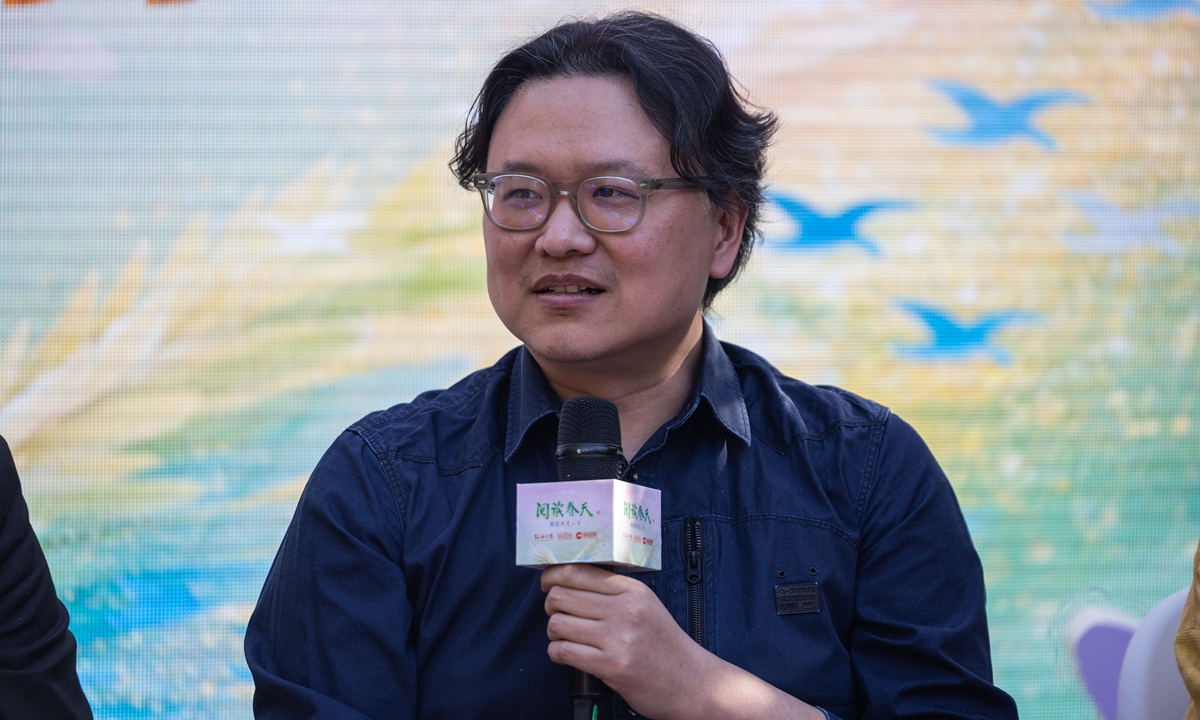
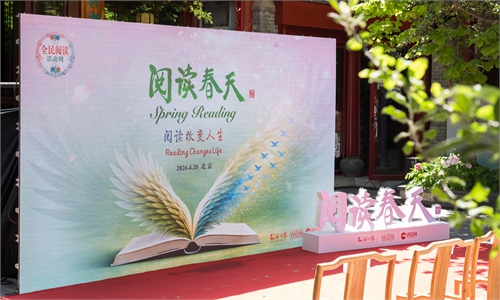
A viral song, a familiar melody, and a reversed narrative — for Ma Chao, the creator behind the AI-driven music project Innokids, music creation often starts from something recognizable, before turning into something unexpected.Speaking at the Global Times "Spring Reading" event at the Guangcheng Academy in Beijing on April 20, Ma reflected on what lies behind such creations.
A viral song, a familiar melody, and a reversed narrative — for Ma Chao, the creator behind the AI-driven music project Innokids, music creation often starts from something recognizable, before turning into something unexpected.
His recent work Go East, adapted from the Western classic Go West, reinterprets the original melody with new lyrics and visuals to present contemporary China. The song quickly gained traction across both domestic and overseas social media platforms, with many international listeners saying it offers "a different view of China."
Speaking at the Global Times "Spring Reading" event at the Guangcheng Academy in Beijing on April 20, Ma reflected on what lies behind such creations. In today's media landscape, even reading a short post can feel like "deep reading" - a sign of how fragmented information consumption has become, he told the Global Times.
"That exactly explains why advocating reading still matters," he said. "But it has also become much harder."
Unlike short-form content designed for instant impact, Ma's work often builds on longer narratives, stories that require not only technique, but a deeper understanding of history, society, and human experience. That understanding, he explained, does not come from a single source.
"Inspiration comes from everywhere — a book, a film, or even a story you hear in conversation," he said. "Over time, these things shape how you see the world."
For Ma, reading is not simply a source of material, it is a process of forming judgment. Through the accumulation of texts, ideas, and perspectives, a creator slowly builds the ability to interpret reality, and, in turn, to craft narratives that resonate beyond mere entertainment.He described storytelling not as inventing new ideas, but as revealing existing ones. Drawing on insights from Made to Stick, Ma argued that what resonates with audiences is often something they already believe, presented in a way that allows them to recognize it.
"You are not creating a value," he said. "You are expressing a value that already exists, and helping people see it."
This approach has become more complex in cross-cultural contexts. For Ma and his team, translating content is never a literal process. Lyrics are rewritten, meanings adjusted, and narratives reshaped depending on the audience. What travels across cultures, he noted, is not language itself, but the ability to make ideas understood.
At the same time, AI has become deeply embedded in his creative process. From music production to visual generation, it serves as a powerful tool. Yet Ma remains cautious about its limits.
"In theory, everyone can become a creator in the AI era," he said. "But in reality, only a small number of people will continue to create meaningful work."
As AI lowers the barrier of production, he expects a surge of low-quality content. Faced with this, audiences may grow more selective, turning instead to work that is more refined, more thoughtful, and more grounded in real experience.
"AI can generate content," he said. "But it cannot experience life."
For Ma, that distinction is decisive. Technology may change how stories are told, but not where they come from. Meaningful creation still depends on what a person has lived through, and how that experience is understood.
"Everyone may have the tools," he said. "But not everyone has something to say."
As art creation becomes easier in the AI era, what grows scarce is not content, but depth. And for Ma, that depth is not produced instantly, but formed over time, through reading, reflection, and the slow shaping of one's own understanding of the world.
RELATED ARTICLES