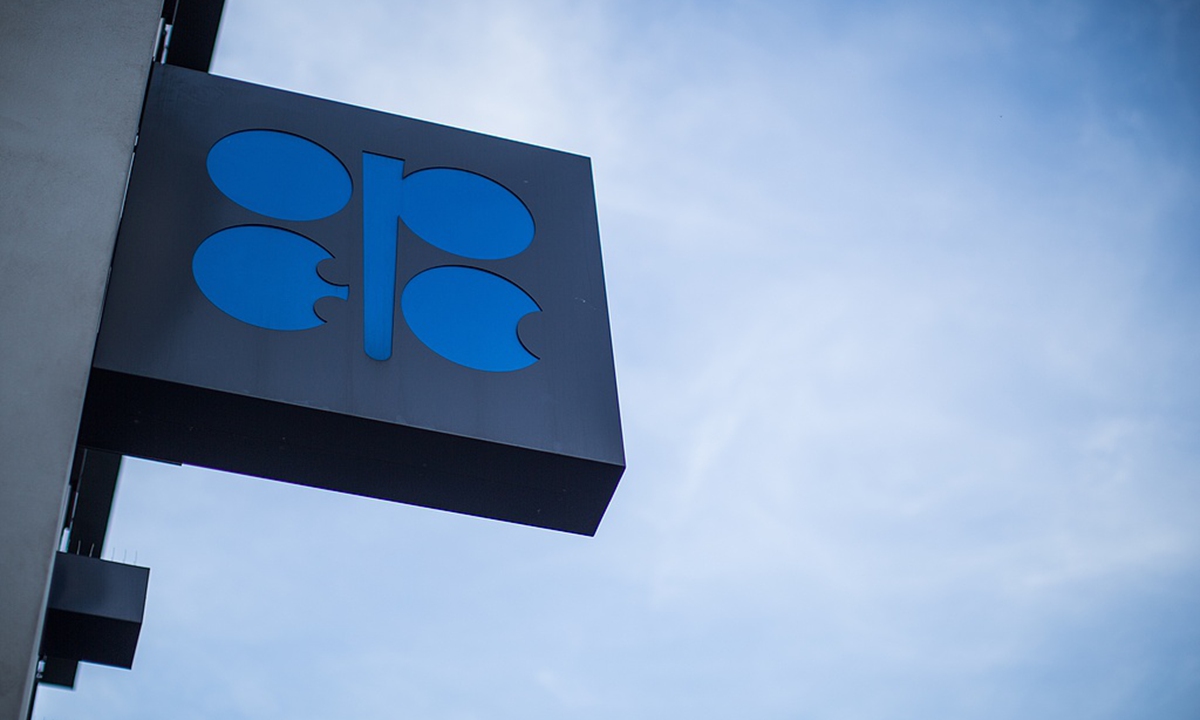
The Organization of the Petroleum Exporting Countries (OPEC) Photo: VCG
The United Arab Emirates (UAE) announced on Tuesday that it will exit from the Organization of the Petroleum Exporting Countries (OPEC) and the wider OPEC+ alliance from May 1, 2026, Xinhua News Agency reported citing Emirates News Agency.
The UAE's decision to withdraw is deeply influenced by the current geopolitical landscape, Chinese experts stated. After a comprehensive evaluation of various factors, this move may potentially shake the very foundation of OPEC.
The decision follows a comprehensive review of the UAE's production policy and its current and future capacity, and is based on the UAE's national interest and commitment to contributing effectively to meeting the market's pressing needs, Xinhua reported.
The decision reflects the UAE's long-term strategic and economic vision and evolving energy profile, including accelerated investment in domestic energy production, and reinforces its commitment to a responsible, reliable, and forward-looking role in global energy markets, according to Xinhua.
Lin Boqiang, director of the China Center for Energy Economics Research at Xiamen University, told the Global Times on Tuesday that although OPEC's global influence has weakened, internal constraints such as output management and production quotas remain in place.
In addition, OPEC's collective response to issues surrounding Iran and other regional matters does not align with its own interests, said Lin.
"Coupled with the lack of stability and reliability in US commitments, the UAE has concluded after a strategic trade-off that the benefits of remaining within the mechanism are limited," he noted.
The UAE joined OPEC in 1967 and its departure will leave the oil cartel with 11 members, BBC reported on Tuesday, noting that with the UAE's exit, OPEC will lose approximately 15 percent of its production capacity, citing an analyst.
Lin projected that the UAE will increase its oil exports after leaving OPEC. However, he noted that on a global scale, a production increase from a single country will not immediately impact oil prices, and the impact on China will likewise be limited.
On April 22, China reduced retail prices of gasoline and diesel by 555 yuan per ton. National Development and Reform Commission, China's top economic planner, said the average price during the 10 working days considered for this round of adjustment remained lower than that recorded in the previous pricing cycle, according to Xinhua.
Global Times
RELATED ARTICLES