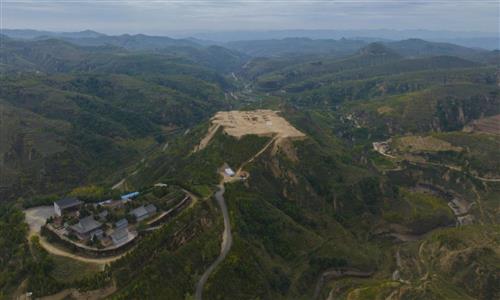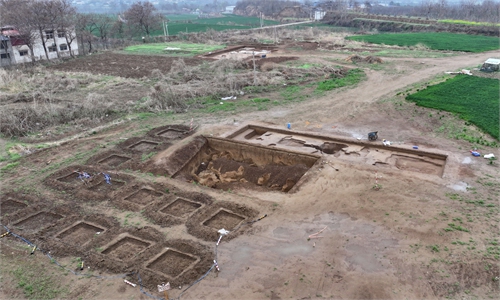
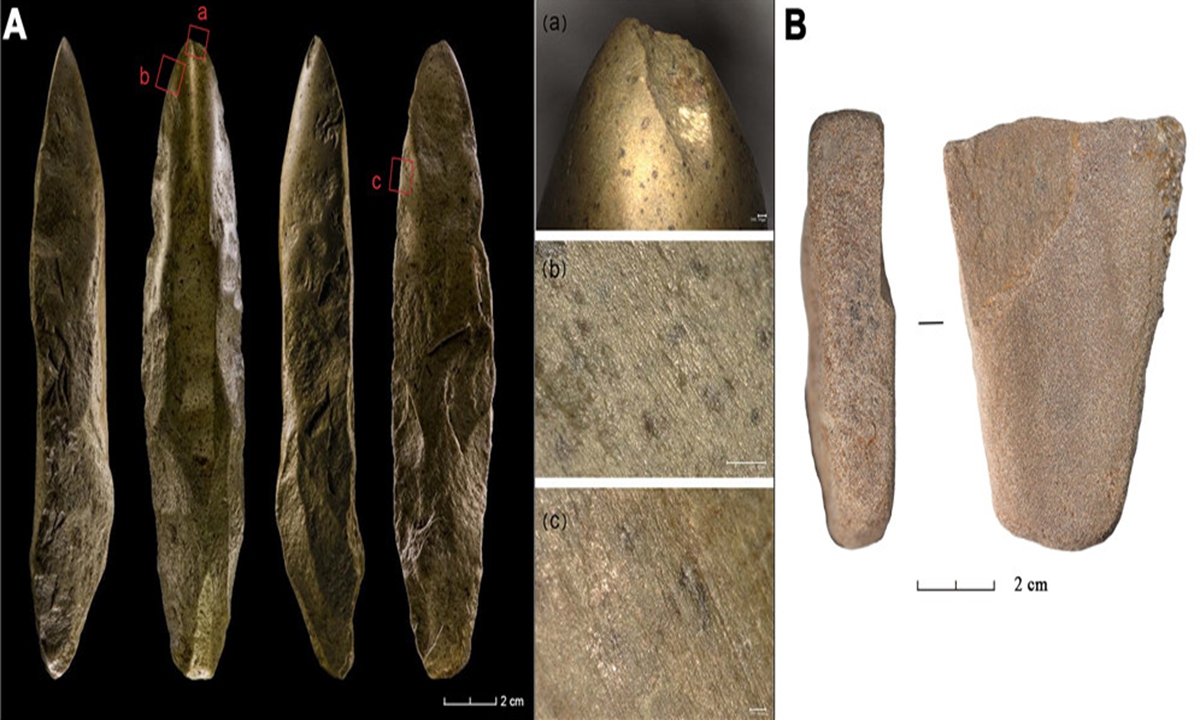
Stone tools found from the Changbai Mountain Paleolithic site group in East China's Jilin Province. Photo: Courtesy of National Cultural Heritage Administration
The top 10 archaeological discoveries of 2025, overseen and chosen by the National Cultural Heritage Administration (NCHA), were officially selected from a pool of 21 Chinese archaeological sites on Wednesday. At the announcement ceremony, Chinese experts said that Chinese archaeology is in a "golden age."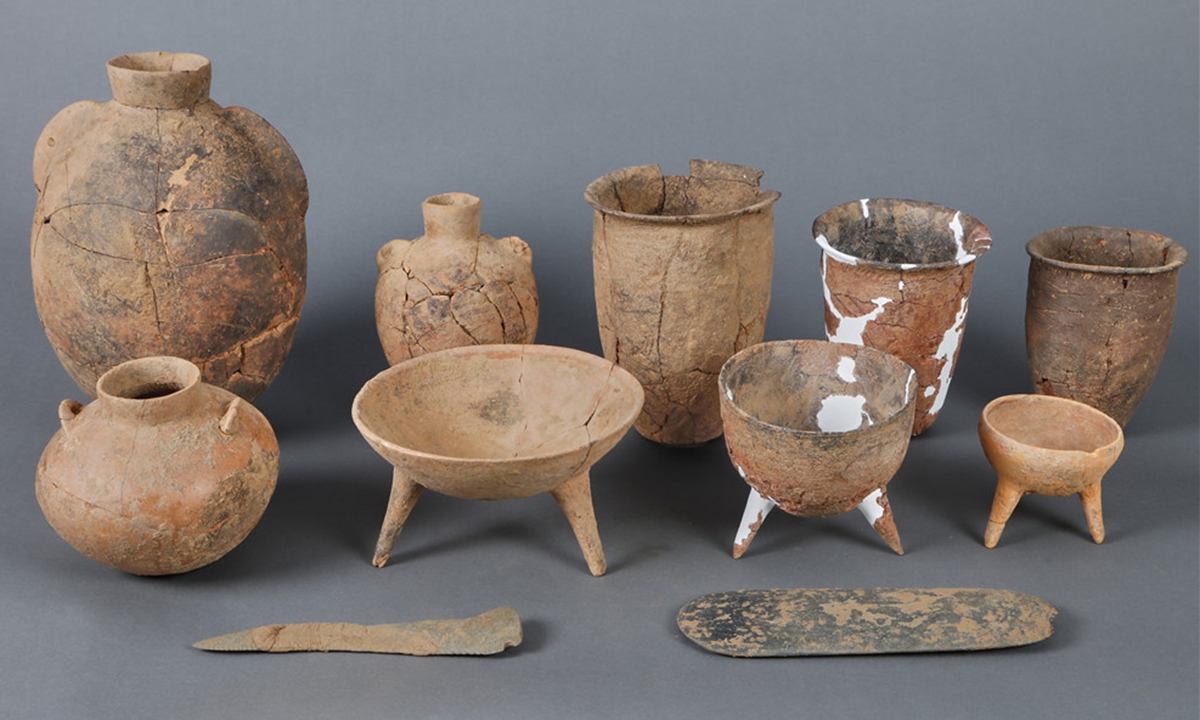
The artifacts unearthed from the Peiligang site in Xinzheng, Central China's Henan Province. Photo: Courtesy of National Cultural Heritage Administration
Archaeologists on the jury said the honored projects represent the most outstanding achievements in field archaeology over the past year, covering critical domains including Paleolithic settlement, the birth and early development of Chinese civilization, the Xia, Shang, and Zhou dynasties, and the consolidation of a unified multi-ethnic nation. Together, they underscore the distinctive characteristics of Chinese civilization and hold what experts describe as irreplaceable academic value.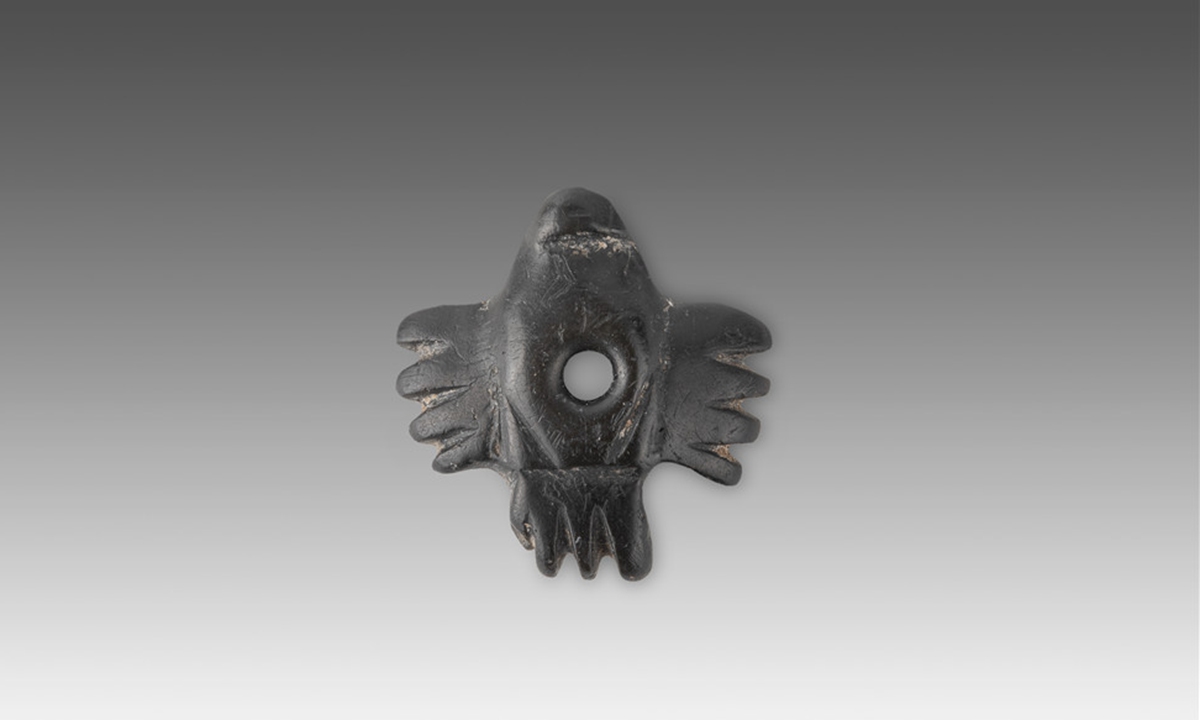
A jade owl from the Zhengjiagou site in Zhangjiakou, North China's Hebei Province. Photo: Courtesy of National Cultural Heritage Administration
Wang Wei, a member of the Chinese Academy of Social Sciences (CASS) and one of the country's respected archaeologists, said at the ceremony that three defining features, including multidisciplinary integration, technology-driven innovation, and sustained breakthroughs on fundamental questions, are shaping the field."Chinese archaeology is truly in a golden age," he said.
One of the most conspicuous trends, Wang noted, is the sharp rise in Paleolithic projects. "Among the shortlisted entries this year, four belong to the Paleolithic, not to mention other discoveries involving even earlier phases," Wang said.
That shift reflects an intensified focus within China on major global academic questions such as human origins and the emergence of modern humans. The late Paleolithic, in particular, is closely tied to the origins of modern humans, and field investigations across the country have gained considerable momentum in recent years.
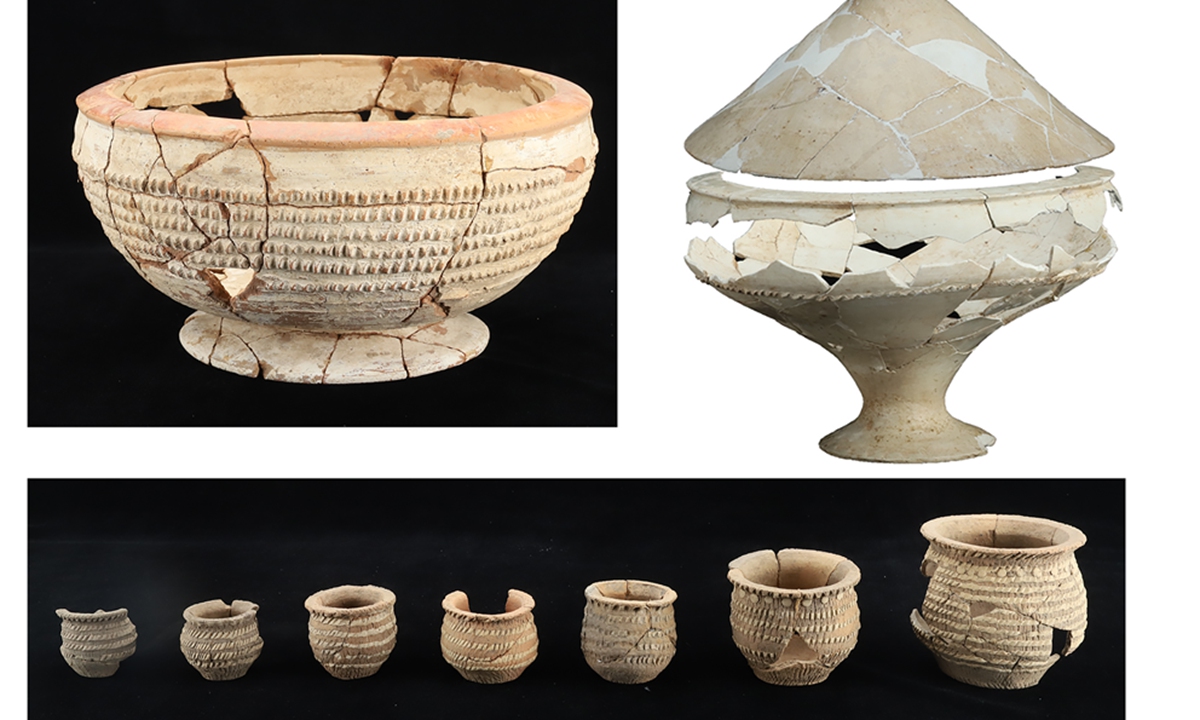
The pottery ritual vessels from the Nanzuo site in Qingyang, Northwest China's Gansu Province. Photo: Courtesy of National Cultural Heritage Administration
Research into the origins of Chinese civilization remains one of the core threads. Chen Xingcan, director of the Institute of Archaeology under the CASS, said at the ceremony that the newly recognized sites offer deeper insight into how the landmass of China entered a stable trajectory toward civilization starting around 5,800 years ago."These findings once again give robust material support to the assertion that China has a civilization stretching back more than 5,000 years," Chen said.
Chen explained that the archaeological narrative of China's civilization surpassing five millennia follows a clear sequence: roughly from 5,800 to 5,300 years ago, a formative stage of civilization dawned, with initial social differentiation; then, during the second phase of the archaic-state era, between 5,300 and 4,300 years ago, stratification deepened and early states began to take shape.
Two of this year's top 10 - the Zhengjiagou site in Zhangjiakou, North China's Hebei Province, and the Nanzuo site in Qingyang, Northwest China's Gansu Province - sit squarely within that critical window.
"Previously we knew almost nothing about the existence of such remains in the Xuanhua area of Zhangjiakou," Chen said. The Zhengjiagou site, dated to between 5,300 and 4,800 years ago, has for the first time compelled academia to confront the large-scale southwestern expansion of the Hongshan culture.
Complex combinations of primary and secondary burials, systematic ritual ceremonies and sophisticated jade craftsmanship collectively paint a clear picture of a society that had already stepped onto the path of civilizational development around 5,000 years ago.
About 1,000 kilometres to the west, the Nanzuo site is reshaping scholarly understanding of the civilizational trajectory along the upper and middle reaches of the Yellow River.
Chen said the Nanzuo settlement covers a staggering 600 hectares - larger than well-known sites such as Erlitou, Taosi, and Shimao. Dated to between 5,100 and 4,700 years ago, it coincides with the pivotal period when Chinese civilization was being born and accelerating.
"This discovery provides a completely new reference point for interpreting the path to civilization on the western Loess Plateau and further corroborates the evidence-based judgment that Chinese civilization has a 5,000-year genesis," he said.
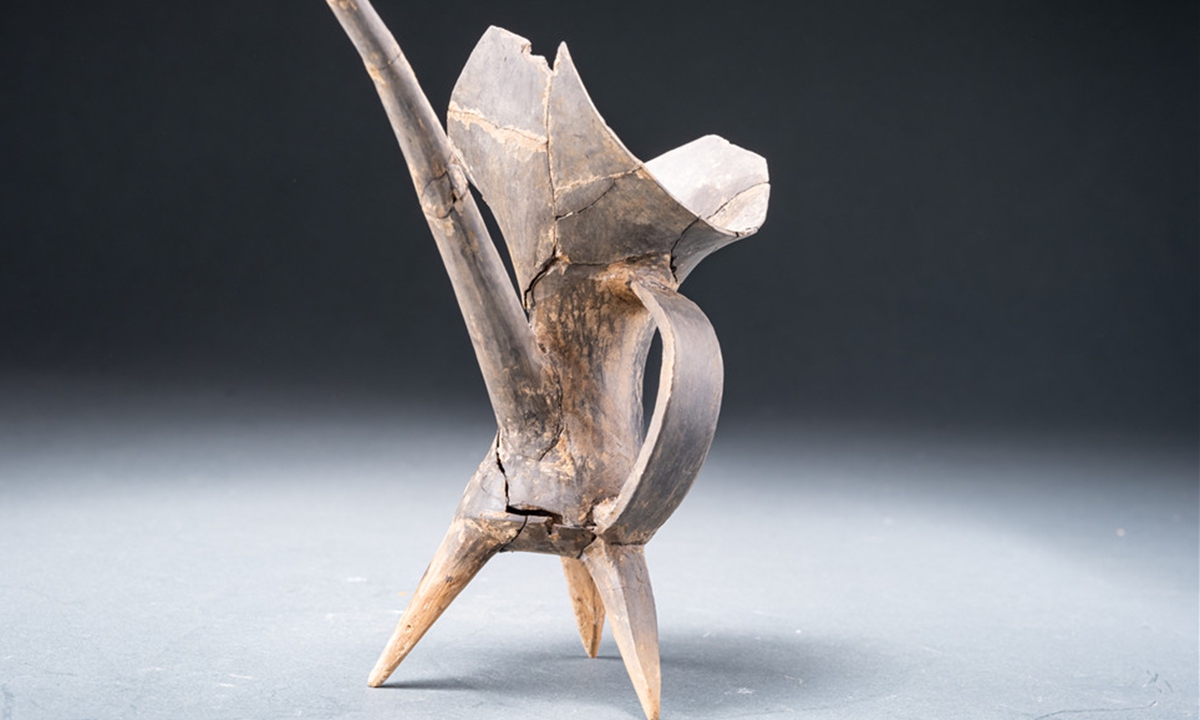
A pottery drinking vessel from the Zhongcun site in Xiyang county, North China's Shanxi Province. Photo: Courtesy of National Cultural Heritage Administration
Several frontier-area projects attracted public attention during this year's selection, with the Suyukou kiln site along the Helan Mountains in Northwest China's Ningxia Hui Autonomous Region among the final 10.Nestled deep in a valley about 10 kilometers inside the Helan Mountains, Suyukou is the largest and best-preserved fine-white-porcelain site yet found in northwestern China. Regarded as an imperial kiln of the Western Xia dynasty, it exemplifies a localized innovation that absorbed advanced porcelain-making expertise from both the south and the north, standing as a vivid example of cultural fusion and a testament to how multiple ethnic groups collectively forged Chinese civilization.
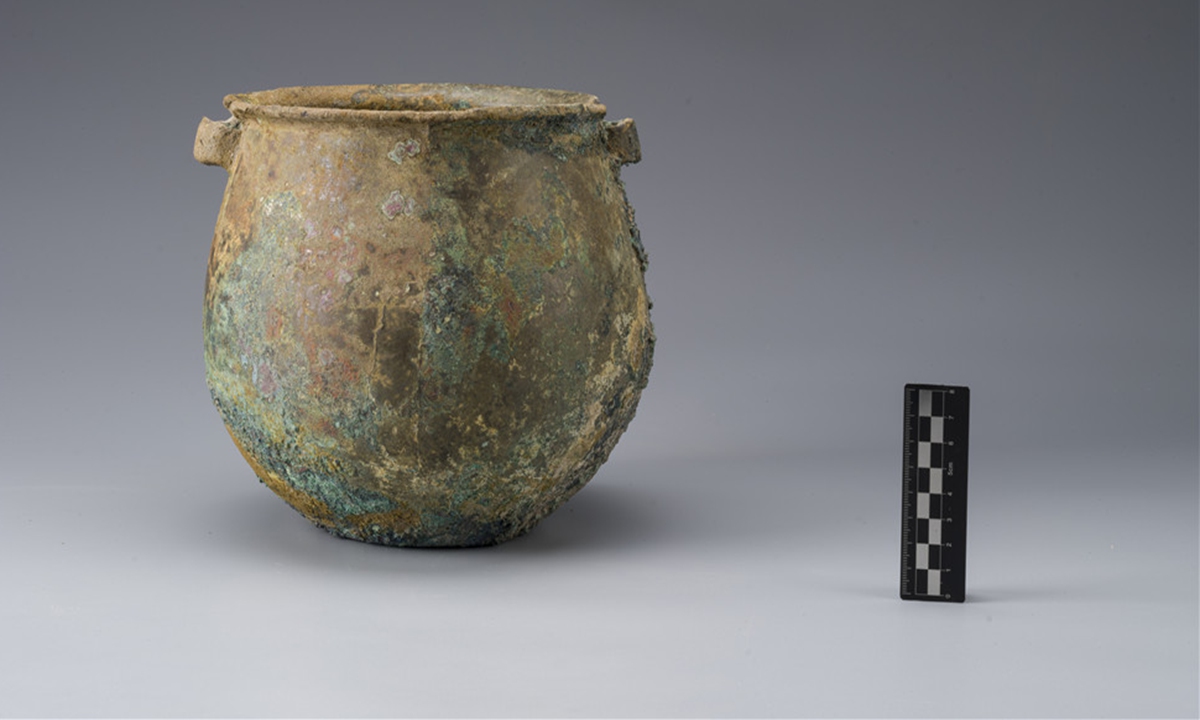
A bronze jar from the Shang Dynasty capital in Zhengzhou, Henan Province. Photo: Courtesy of National Cultural Heritage Administration
Huo Wei, a professor at Sichuan University's School of History and Culture and one of the judges, told the Global Times that frontier archaeology has become a crucial theme in China's archaeological development."Archaeology offers irreplaceable and invaluable physical evidence for understanding the formation of the Chinese national community," he said.
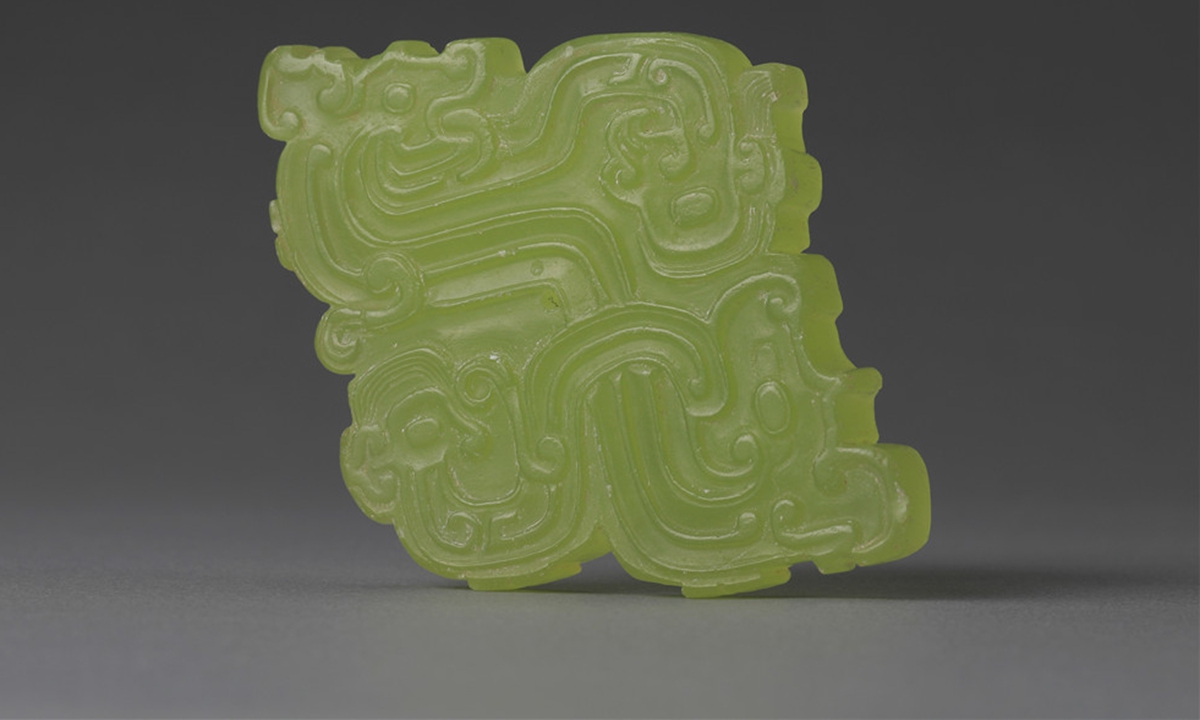
A jade artifact from the Changchun site in Fuping county, Northwest China's Shaanxi Province. Photo: Courtesy of National Cultural Heritage Administration
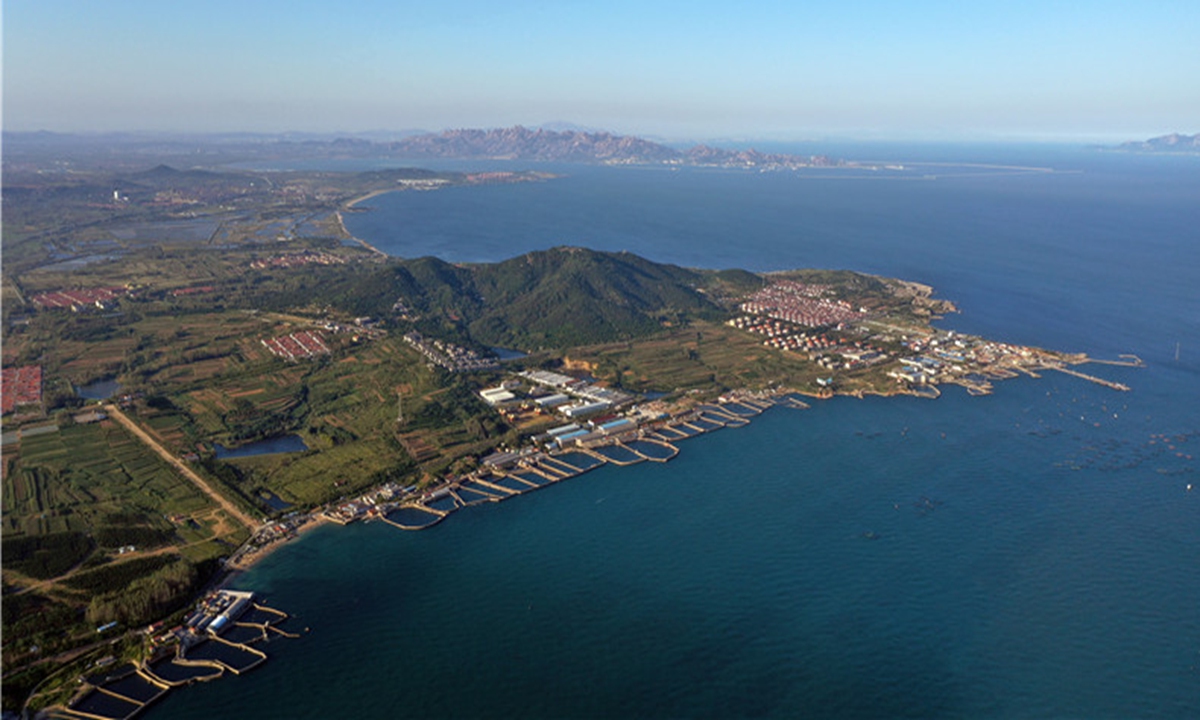
A bird's eye view of the Langyatai site in Qingdao, East China's Shandong Province. Photo: Courtesy of National Cultural Heritage Administration
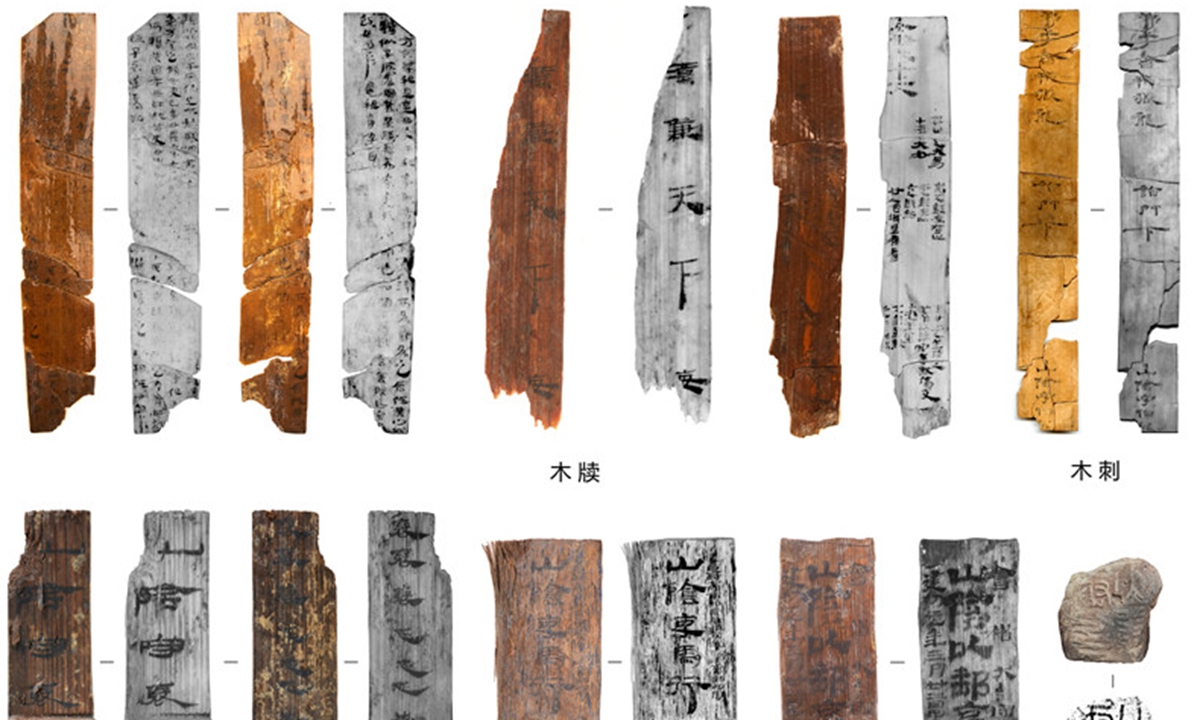
Inscribed bamboo slips found from the site which yields capital city of the Yue State from the Eastern Zhou Dynasty (770-256 BC) and the Kuaiji prefecture from the Han (206 BC-AD 220) and Six Dynasties (222-589) periods in Shaoxing, East China's Zhejiang Province. Photo: Courtesy of National Cultural Heritage Administration
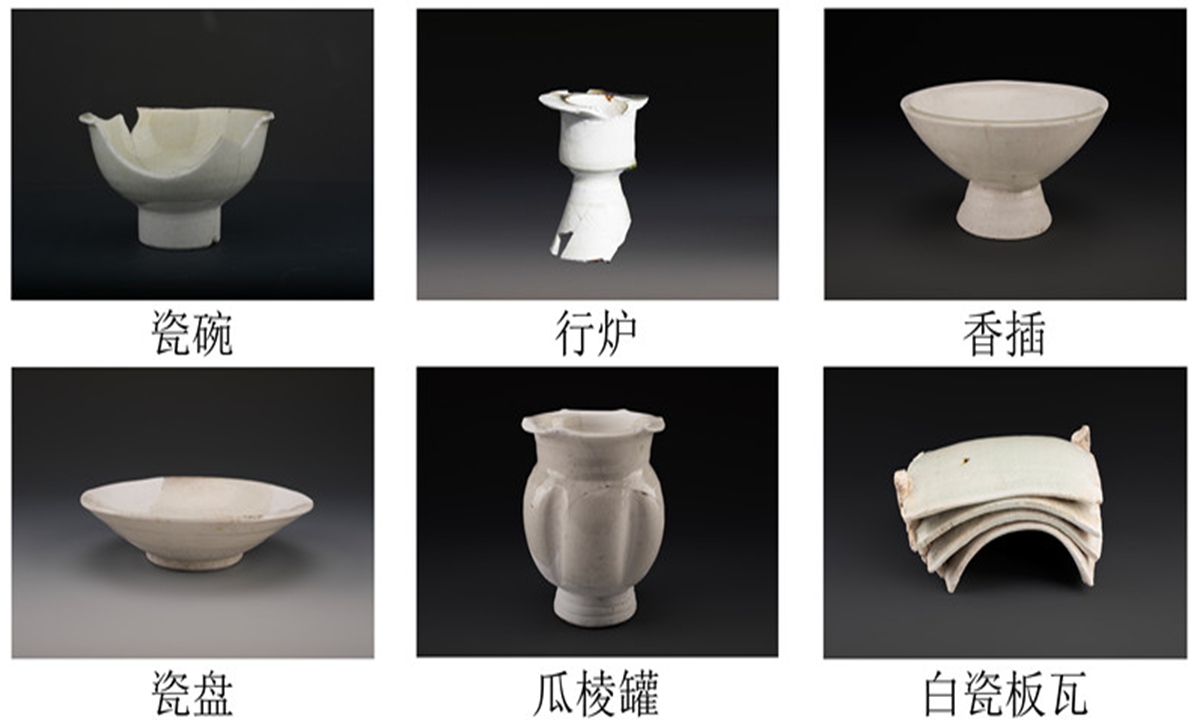
White porcelain found at the Suyukou kiln site in the Helan Mountains in Northwest China's Ningxia Hui autonomous Region. Photo: Courtesy of National Cultural Heritage Administration
The full 2025 list also features the Changbai Mountain Paleolithic site group in Northeast China's Jilin Province, the Peiligang site in Xinzheng, Central China's Henan Province, the Zhongcun site in Xiyang county, North China's Shanxi Province, Zhengzhou Shang Dynasty (c. 16th century-11th century BC) city site in Zhengzhou, Henan Province, the Changchun site in Fuping county, Northwest China's Shaanxi Province, the Langyatai site in Qingdao, East China's Shandong Province, the site that yielded the capital city of the Yue State during the Eastern Zhou Dynasty (770-256 BC) and the Kuaiji prefecture from the Han (206 BC-AD 220) and Six Dynasties (222-589) periods in Shaoxing, East China's Zhejiang Province, according to NCHA.