EC reportedly recommends members exclude Huawei, ZTE gears; move to increase costs, impact bilateral ties: analysts

European Commission headquarters in Brussels, Belgium Photo: VCG
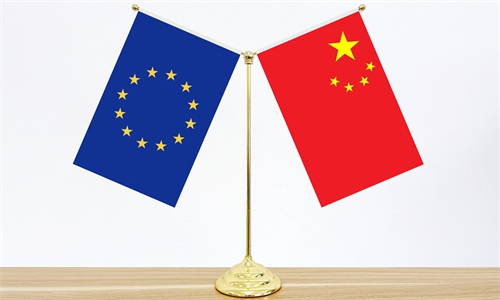
In another move that overstretches the concept of security, the European Commission (EC) recommended that EU member states exclude Huawei and ZTE gears from their local telecom operators' connectivity infrastructure, an EC spokesperson claimed on Monday local time, according to Reuters. Chinese officials have previously vowed to take measures if Chinese firms are subject to discriminatory treatment. Chinese analysts on Tuesday said that the EU's move would not only increase costs for its members but also undermine China-EU cooperation.During a briefing in Brussels, the EC spokesperson claimed that the new cybersecurity rules being approved would grant the bloc the possibility to ban the use of gears from what it claims to be "high-risk suppliers" in the EU market, Reuters reported.
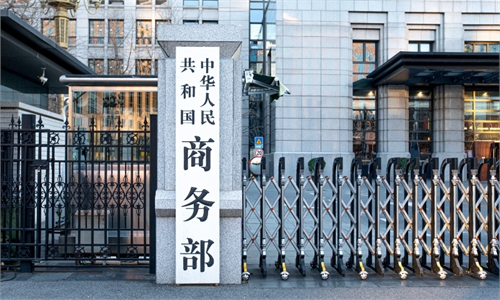
The Chinese side had previously issued a clear response to the EU's attempt to revise its cybersecurity rules. A spokesperson for China's Ministry of Commerce (MOFCOM) said on April 23 that if Chinese enterprises are subjected to discriminatory treatment as a result of the EU's revision of the EU Cybersecurity Act, China will take measures in accordance with the Foreign Trade Law and regulations on industrial and supply chain security to safeguard the legitimate rights and interests of its enterprises.
The latest remarks from the EC spokesperson came after the MOFCOM on April 24 formally submitted comments to the European Commission on the EU's Industrial Acceleration Act, expressing China's official position and grave concerns that the measures constitute serious investment barriers and institutional discrimination.
Notably, on April 14, a Chinese insider familiar with the matter told the Global Times that the EU should not underestimate China's resolve to take swift and resolute countermeasures if Brussels continues to escalate its protectionist measures against China, including the Foreign Subsidies Regulation (FSR) and proposed revisions to the Cybersecurity Act.
The insider stressed that China has a full policy toolkit - and stands ready to deploy it when necessary to respond to EU protectionist measures, warning that any escalation of trade frictions would ultimately impose significant economic costs on EU member states and businesses.
Ding Chun, director of the Center for European Studies at Fudan University, told the Global Times on Tuesday that the EU's attempt to exclude Chinese firms' gears under the pretext of so-called "high-risk suppliers" is essentially discriminatory trade practice.
Ding further pointed out that despite the EC's attempt to strengthen and institutionalize restrictions on Chinese telecom products, such moves would increase costs and differences in fiscal capacity and technological development among member states make it difficult for such policies to be implemented uniformly across the bloc.
Xiang Ligang, director-general of the Zhongguancun Modern Information Consumer Application Industry Technology Alliance, noted that Europe currently has a relatively small number of 5G base stations compared with China. Banning cost-effective and technologically advanced Chinese equipment, he said, would slow down Europe's mobile communications development and significantly drag on social efficiency and economic growth.
Xiang said that the EU move would not only undermine the business environment in the bloc but would also have a negative impact on normal China-EU economic and trade cooperation.
Recently, the EU has increasingly overstretched the concept of "security" to curb Chinese products and technologies in the bloc. According to a May 4 report by the Financial Times, the bloc has banned public funding for Chinese-made inverters on so-called "security concerns," citing an EC official as saying that "in practice, this could mean a remote shutdown of member states' networks leading to countrywide blackouts."
Regarding the move, the China Chamber of Commerce to the EU said on Monday that such measures send a policy signal that could generate clear negative spillover effects on market access expectations, corporate investment decisions, and confidence in industrial cooperation.
The chamber added that politicizing and over-securitizing trade and technology risks creating unnecessary frictions that serve no long-term interests. Excluding Chinese firms would weaken competition, hinder Europe's green transition, and raise electricity costs for households and businesses, thereby eroding overall consumer welfare.
"In the long term, Chinese companies with strengths in technology, quality, cost and service remain competitive in the global market, while the EU will eventually feel the drawbacks of lacking viable alternatives," Xiang noted.
RELATED ARTICLES