IN-DEPTH / IN-DEPTH
American World Food Prize laureate Heidi Kuhn plants friendship tree in Beijing, carrying forward 150-year family bond with China
Goodwill takes root
By Published: May 05, 2026 11:16 PM
Editor's Note:
Chinese President Xi Jinping often quotes an ancient saying on many diplomatic occasions: "No mountain or ocean can distance people who have shared aspirations." This powerful message underscores the force of friendship and cooperation in bridging hearts across nations, cultures and civilizations. Inspired by the Chinese leader's vision, people-to-people exchanges between China and the world have been flourishing.
People from diverse backgrounds and fields, united by common goals and dreams, traverse mountains and oceans to connect with each other. Through letters, face-to-face dialogues and vibrant cultural events, they are collectively weaving a magnificent tapestry of building a community with a shared future for humanity.
The Global Times presents "Intertwined Destinies, Shared Paths," a series spotlighting the touching stories written by these "friendship ambassadors." They are scholars pushing the boundaries of research, diplomats advocating for deeper cooperation on the global stage, artists igniting imaginations with their creations and ordinary people extending heartfelt love beyond national borders driven by their genuine sincerity.
Their stories illuminate the spark of cultural exchanges, the driving force of technological innovation, the bountiful harvest of economic cooperation and the enduring warmth of human connection - all contributing to a more peaceful, prosperous and open world. This is the 12th installment of the series.
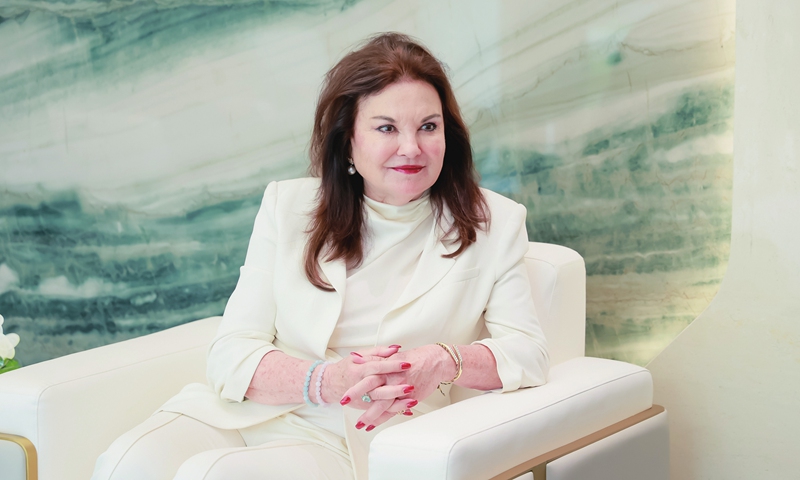
On Earth Day which falls on April 22, with spring in full bloom in Beijing, Heidi Kuhn set out for a walk through the city with a clear goal in mind: to find white roses.
The next day, she brought the roses to the Temple of Heaven. For Kuhn, the symbolism was unmistakable: the roses spoke of peace, the temple of agricultural abundance - both themes she cares deeply about and has devoted herself to.
This was the third time that Kuhn, founder of the US-based NGOs Roots of Peace and PAX AGRICULTURA and a World Food Prize laureate, had come to China. She told the Global Times that each time she returns, China seems "more beautiful."
For Kuhn, this trip felt like an arrival layered with multiple meanings. She was not only continuing to speak in China about her belief in "peace through agriculture," but also extending a family bond with China that stretches back more than 150 years.
According to Kuhn, at a time when "anti-Chinese sentiment" was running high in the US, members of her family offered land and refuge to Chinese laborers facing discrimination. More than 150 years later, Kuhn has chosen to carry that intergenerational goodwill forward in her own way - from family stories along the California coast, to land restoration and agricultural rebuilding in war-torn places such as Afghanistan, to her efforts today in China to speak about the enduring links between peace, agriculture and China-US friendship.
Kuhn stands at the intersection of these histories. She is both a witness to a long chapter of China-US people-to-people friendship and someone still working, in very practical ways, to plant and nurture that friendship today.
Friendship spanning 150 years
A shovel goes into the ground, and the soil turns over. Kuhn bends down beside her son Tucker to pack earth around the root of a young pine tree.
The scene unfolded at the 2026 Beijing International Friendship Forest Tree Planting Event, held in Beijing's Changping district on April 24. That day, nearly 200 international guests, including diplomats, foreign experts and students from more than 40 countries, took part in the event and planted a new grove of friendship, according to the Beijing News.
On the tree, Kuhn and her son hung a small sign that read: "The Tree of Friendship between the McNear Family and China." It became a quiet but vivid marker of a bond that has lasted more than 150 years.
That bond, according to Kuhn, goes back to the 19th century.
The day before the planting activity, in a hotel in Beijing, Kuhn recounted to the Global Times her family's long connection with China and the Chinese people.
By the early 1870s, Kuhn said, her family owned extensive land in Northern California, where her ancestor witnessed the discrimination faced by Chinese laborers who had helped build America's transcontinental railroad and risked their lives during the Gold Rush in the US.
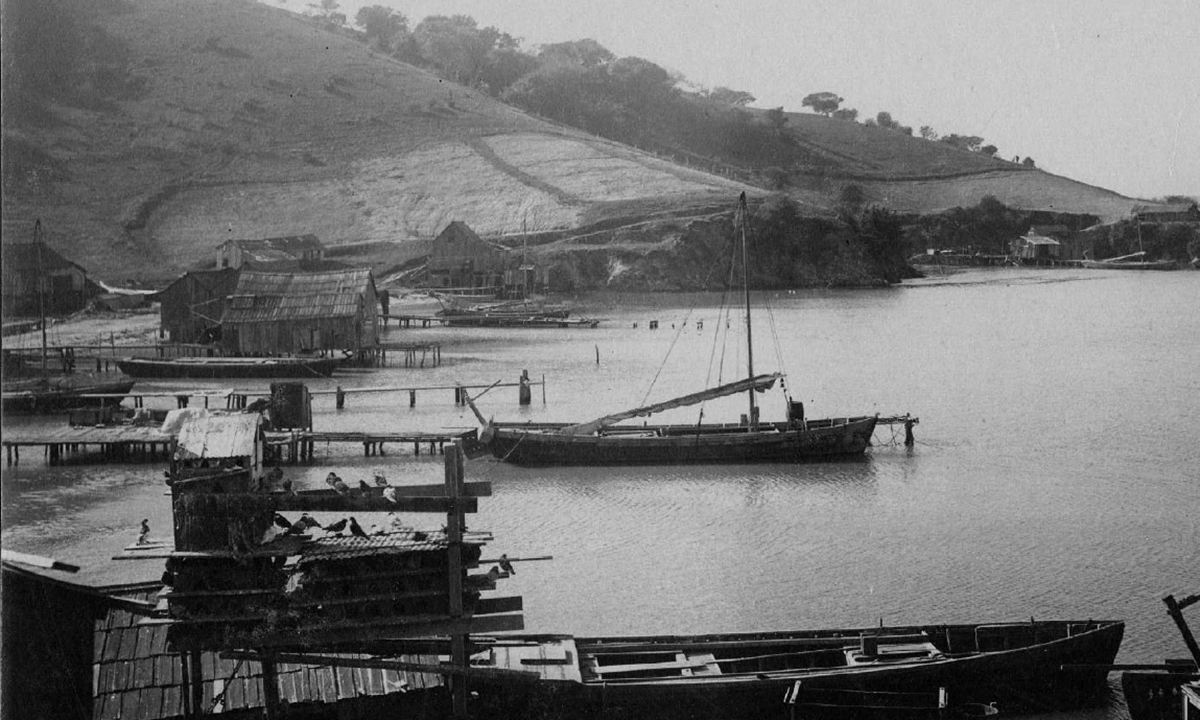
So he took action. He offered the Chinese workers refuge on his private property. In the interview, Kuhn said: in a time of hostility and exclusion, her ancestor chose not to stand by, but to open up his land and offer Chinese workers a place of refuge.
More than 500 men accepted the invitation. Later, they started families and built a thriving community, including a successful shrimping business that exported millions of pounds of dried shrimp to China each year at that time, according to Kuhn.
Kuhn told the Global Times that her great-great-grandfather later even learned Chinese so that he could better help Chinese residents with doctors and lawyers. She described him as "a true friend to the Chinese people."
But the story was not without violence. Kuhn recalled that the Chinese village was once burned down at night. The next morning, her ancestor told the devastated residents, "Don't worry. I have another cove. Let's rebuild together."
Looking back, Kuhn summed up that family legacy in one line: "Lessons of respecting the land and its people were passed down through generations." Those lessons, she said, later deeply shaped her own vision in founding Roots of Peace.
The legacy did not end there. Even now, she told the Global Times, she still takes her grandchildren to China Camp, now a state park in California, for picnics and tells them these stories.
Before the planting activity in Beijing, Kuhn asked the Global Times what the pine tree symbolized in China. When told that it stands for endurance, remembrance and continuity, she was visibly moved.
"They'll stay long," she repeated, describing that kind of longevity as something that helps people remember "the long way, the beauty of memory and our connection to the earth."
In pursuit of Yuan Longping, father of hybrid rice
Kuhn told the Global Times that this trip to China was also, in a sense, a journey in pursuit of the footsteps of Yuan Longping, China's "father of hybrid rice."
Born in 1930, Yuan succeeded in cultivating the world's first high-yield hybrid rice strain in 1973, which was later grown on a large scale in China and other countries to substantially raise output. He passed away at the age of 91, according to the Xinhua News Agency.
Thanks to this technology of hybrid rice, China has managed to feed nearly 20 percent of the world's population with less than 9 percent of the world's arable land, and become the largest food producer and the third largest food exporter in the world. From 1979, hybrid rice began to be introduced to the world, benefiting nearly 70 countries across five continents, Xinhua reported.
What impressed Kuhn most, she said, was not only that Yuan dramatically increased grain yields and helped feed an enormous population, but also that he shared his knowledge with other countries rather than keeping it to one nation. To Kuhn, that spirit itself carries a significance that goes beyond national borders.
She also connected that admiration to her own World Food Prize experience. Kuhn told the Global Times that one of the most humbling moments for her, upon receiving the 2023 World Food Prize for her own work, was realizing that she was standing on the same stage where Yuan Longping had stood in 2004.
"Lessons of respecting the land and its people were passed down through generations, and deeply inspired the vision of planting the Roots of Peace on Earth, cultivating peace through agriculture," she said.
Today, Kuhn is best known as the founder of the US-based humanitarian NGO Roots of Peace. In 1997, she put forward the idea of "from mines to vines," hoping to turn war-scarred land buried with land mines back into vineyards and orchards around the world.
In her view, demining has never been simply about removing danger. As she put it, she could not accept a world in which children could not walk the land safely, or kick a soccer ball out of bounds, without risking the loss of "a life or a limb" to a hidden explosive buried in the soil.
Roots of Peace partners with professional organizations that carry out the demining, and then helps local communities replant the land. Together with her husband Gary, she has traveled to Afghanistan many times - "not with a gun, but with a shovel" - working with local farmers to revive agriculture and introduce planting techniques. Over the years, the organization has helped plant millions of fruit trees there.
That way of thinking has led her to see agriculture as a form of peacebuilding.
Around the time of this China trip, Kuhn was also advancing a new initiative, PAX AGRICULTURA - Latin for "Peace Through Agriculture." She described it as a new organization and platform created alongside Roots of Peace, expanding her long-held belief that agriculture can help restore not only land and livelihoods, but also peace.
She said the new initiative aims to link food production, land restoration and peacebuilding at a time when conflict, climate pressures and supply-chain disruptions are putting the global food system under growing strain.
Shortly before coming to China, Kuhn and Kenneth Quinn, former US diplomat and President Emeritus of the World Food Prize Foundation, jointly issued a public appeal urging world leaders to recognize the role agriculture can play in peace.
During the interview, she telephoned Quinn, and on the other end of the line, Quinn recalled that it was he who had presented the World Food Prize to Yuan Longping in 2004, in Des Moines, Iowa. In Quinn's view, agriculture has long been one of the most important bonds in China-US relations, and one of the foundations that helped sustain decades of peace between the two countries.
'Roses in her hand, flavor in mine'
This was Kuhn's third trip to China. She told the Global Times that each time she returns, the country seems "more beautiful."
What struck her this time was not only the symbolism of Earth Day events, white roses and the Temple of Heaven, but also the feel of daily life in Beijing. She walked through the city on her own to buy white roses from a flower shop, feeling very safe, she told the Global Times.
That sense of confidence in today's China also extended to what she saw as broader changes in the country.
Kuhn said she deeply admired China's efforts to tackle poverty, describing that mission as one she found "really so admirable." In many ways, she added, that aspiration was not far from her own work, trying to alleviate poverty by making land safe again and restoring agriculture.
Kuhn is not a diplomat, and she does not speak about China-US ties in the language of strategy. In the interview, she described herself instead as a mother and grandmother. Yet that may also explain why her understanding of the relationship remains grounded in something more basic: that friendship between peoples still matters, and that it can still be nurtured in practical ways by telling stories, planting trees, sharing flowers, restoring land and feeding children.
During her time in China, Kuhn also learned a new Chinese phrase: "The roses in her hand, the flavor in mine."
She was immediately taken with the expression. In a way, it echoed the spirit of what she has spent years trying to do: whether handing a white rose to a stranger, helping transform war-torn land into orchards and fields, or bringing the idea of peace through agriculture to more places. What remains, in each case, is not only practical benefit, but also a kind of goodwill that does not easily fade.
After the tree-planting event, Kuhn visited the Great Wall and said she still hoped to see giant pandas before leaving China. She told the Global Times that she hoped to return soon, visit more places and, in her own way, carry forward the bond with China that has run through her family for generations.
Chinese President Xi Jinping often quotes an ancient saying on many diplomatic occasions: "No mountain or ocean can distance people who have shared aspirations." This powerful message underscores the force of friendship and cooperation in bridging hearts across nations, cultures and civilizations. Inspired by the Chinese leader's vision, people-to-people exchanges between China and the world have been flourishing.
People from diverse backgrounds and fields, united by common goals and dreams, traverse mountains and oceans to connect with each other. Through letters, face-to-face dialogues and vibrant cultural events, they are collectively weaving a magnificent tapestry of building a community with a shared future for humanity.
The Global Times presents "Intertwined Destinies, Shared Paths," a series spotlighting the touching stories written by these "friendship ambassadors." They are scholars pushing the boundaries of research, diplomats advocating for deeper cooperation on the global stage, artists igniting imaginations with their creations and ordinary people extending heartfelt love beyond national borders driven by their genuine sincerity.
Their stories illuminate the spark of cultural exchanges, the driving force of technological innovation, the bountiful harvest of economic cooperation and the enduring warmth of human connection - all contributing to a more peaceful, prosperous and open world. This is the 12th installment of the series.
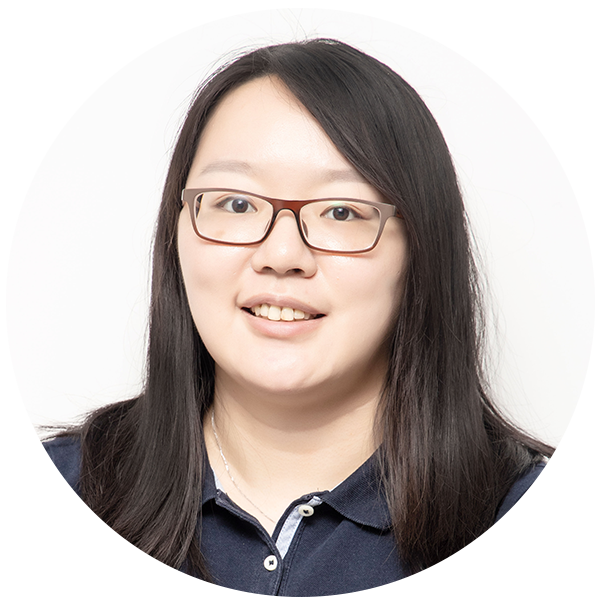
Heidi Kuhn Photo: Courtesy of Beijing People's Association for Friendship with Foreign Countries
On Earth Day which falls on April 22, with spring in full bloom in Beijing, Heidi Kuhn set out for a walk through the city with a clear goal in mind: to find white roses.
The next day, she brought the roses to the Temple of Heaven. For Kuhn, the symbolism was unmistakable: the roses spoke of peace, the temple of agricultural abundance - both themes she cares deeply about and has devoted herself to.
This was the third time that Kuhn, founder of the US-based NGOs Roots of Peace and PAX AGRICULTURA and a World Food Prize laureate, had come to China. She told the Global Times that each time she returns, China seems "more beautiful."
For Kuhn, this trip felt like an arrival layered with multiple meanings. She was not only continuing to speak in China about her belief in "peace through agriculture," but also extending a family bond with China that stretches back more than 150 years.
According to Kuhn, at a time when "anti-Chinese sentiment" was running high in the US, members of her family offered land and refuge to Chinese laborers facing discrimination. More than 150 years later, Kuhn has chosen to carry that intergenerational goodwill forward in her own way - from family stories along the California coast, to land restoration and agricultural rebuilding in war-torn places such as Afghanistan, to her efforts today in China to speak about the enduring links between peace, agriculture and China-US friendship.
Kuhn stands at the intersection of these histories. She is both a witness to a long chapter of China-US people-to-people friendship and someone still working, in very practical ways, to plant and nurture that friendship today.
Friendship spanning 150 years
A shovel goes into the ground, and the soil turns over. Kuhn bends down beside her son Tucker to pack earth around the root of a young pine tree.
The scene unfolded at the 2026 Beijing International Friendship Forest Tree Planting Event, held in Beijing's Changping district on April 24. That day, nearly 200 international guests, including diplomats, foreign experts and students from more than 40 countries, took part in the event and planted a new grove of friendship, according to the Beijing News.
On the tree, Kuhn and her son hung a small sign that read: "The Tree of Friendship between the McNear Family and China." It became a quiet but vivid marker of a bond that has lasted more than 150 years.
That bond, according to Kuhn, goes back to the 19th century.
The day before the planting activity, in a hotel in Beijing, Kuhn recounted to the Global Times her family's long connection with China and the Chinese people.
By the early 1870s, Kuhn said, her family owned extensive land in Northern California, where her ancestor witnessed the discrimination faced by Chinese laborers who had helped build America's transcontinental railroad and risked their lives during the Gold Rush in the US.
Archival photo of China Camp in California showing boats and piers Photo: Courtesy of Heidi Kuhn
So he took action. He offered the Chinese workers refuge on his private property. In the interview, Kuhn said: in a time of hostility and exclusion, her ancestor chose not to stand by, but to open up his land and offer Chinese workers a place of refuge.
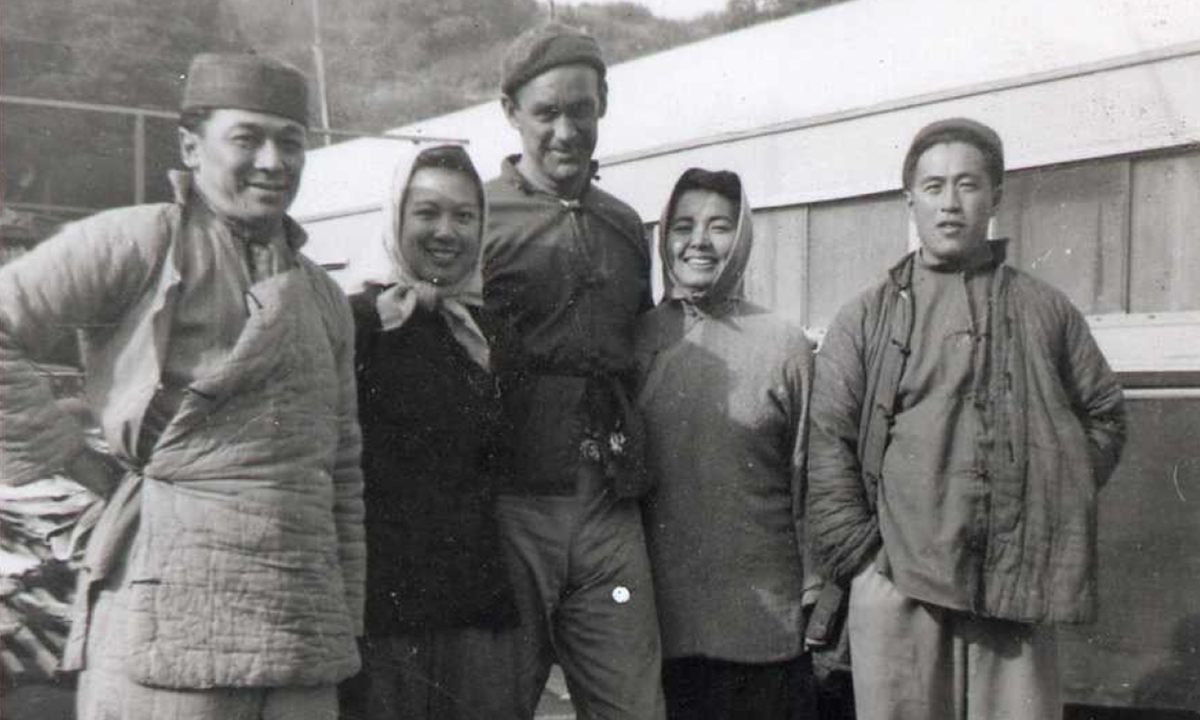
More than 500 men accepted the invitation. Later, they started families and built a thriving community, including a successful shrimping business that exported millions of pounds of dried shrimp to China each year at that time, according to Kuhn.
Kuhn told the Global Times that her great-great-grandfather later even learned Chinese so that he could better help Chinese residents with doctors and lawyers. She described him as "a true friend to the Chinese people."
But the story was not without violence. Kuhn recalled that the Chinese village was once burned down at night. The next morning, her ancestor told the devastated residents, "Don't worry. I have another cove. Let's rebuild together."
Looking back, Kuhn summed up that family legacy in one line: "Lessons of respecting the land and its people were passed down through generations." Those lessons, she said, later deeply shaped her own vision in founding Roots of Peace.
The legacy did not end there. Even now, she told the Global Times, she still takes her grandchildren to China Camp, now a state park in California, for picnics and tells them these stories.
Before the planting activity in Beijing, Kuhn asked the Global Times what the pine tree symbolized in China. When told that it stands for endurance, remembrance and continuity, she was visibly moved.
"They'll stay long," she repeated, describing that kind of longevity as something that helps people remember "the long way, the beauty of memory and our connection to the earth."
In pursuit of Yuan Longping, father of hybrid rice
Kuhn told the Global Times that this trip to China was also, in a sense, a journey in pursuit of the footsteps of Yuan Longping, China's "father of hybrid rice."
Born in 1930, Yuan succeeded in cultivating the world's first high-yield hybrid rice strain in 1973, which was later grown on a large scale in China and other countries to substantially raise output. He passed away at the age of 91, according to the Xinhua News Agency.
Thanks to this technology of hybrid rice, China has managed to feed nearly 20 percent of the world's population with less than 9 percent of the world's arable land, and become the largest food producer and the third largest food exporter in the world. From 1979, hybrid rice began to be introduced to the world, benefiting nearly 70 countries across five continents, Xinhua reported.
What impressed Kuhn most, she said, was not only that Yuan dramatically increased grain yields and helped feed an enormous population, but also that he shared his knowledge with other countries rather than keeping it to one nation. To Kuhn, that spirit itself carries a significance that goes beyond national borders.
She also connected that admiration to her own World Food Prize experience. Kuhn told the Global Times that one of the most humbling moments for her, upon receiving the 2023 World Food Prize for her own work, was realizing that she was standing on the same stage where Yuan Longping had stood in 2004.
"Lessons of respecting the land and its people were passed down through generations, and deeply inspired the vision of planting the Roots of Peace on Earth, cultivating peace through agriculture," she said.
Today, Kuhn is best known as the founder of the US-based humanitarian NGO Roots of Peace. In 1997, she put forward the idea of "from mines to vines," hoping to turn war-scarred land buried with land mines back into vineyards and orchards around the world.
In her view, demining has never been simply about removing danger. As she put it, she could not accept a world in which children could not walk the land safely, or kick a soccer ball out of bounds, without risking the loss of "a life or a limb" to a hidden explosive buried in the soil.
Roots of Peace partners with professional organizations that carry out the demining, and then helps local communities replant the land. Together with her husband Gary, she has traveled to Afghanistan many times - "not with a gun, but with a shovel" - working with local farmers to revive agriculture and introduce planting techniques. Over the years, the organization has helped plant millions of fruit trees there.
That way of thinking has led her to see agriculture as a form of peacebuilding.
Around the time of this China trip, Kuhn was also advancing a new initiative, PAX AGRICULTURA - Latin for "Peace Through Agriculture." She described it as a new organization and platform created alongside Roots of Peace, expanding her long-held belief that agriculture can help restore not only land and livelihoods, but also peace.
She said the new initiative aims to link food production, land restoration and peacebuilding at a time when conflict, climate pressures and supply-chain disruptions are putting the global food system under growing strain.
Shortly before coming to China, Kuhn and Kenneth Quinn, former US diplomat and President Emeritus of the World Food Prize Foundation, jointly issued a public appeal urging world leaders to recognize the role agriculture can play in peace.
During the interview, she telephoned Quinn, and on the other end of the line, Quinn recalled that it was he who had presented the World Food Prize to Yuan Longping in 2004, in Des Moines, Iowa. In Quinn's view, agriculture has long been one of the most important bonds in China-US relations, and one of the foundations that helped sustain decades of peace between the two countries.
'Roses in her hand, flavor in mine'
This was Kuhn's third trip to China. She told the Global Times that each time she returns, the country seems "more beautiful."
What struck her this time was not only the symbolism of Earth Day events, white roses and the Temple of Heaven, but also the feel of daily life in Beijing. She walked through the city on her own to buy white roses from a flower shop, feeling very safe, she told the Global Times.
That sense of confidence in today's China also extended to what she saw as broader changes in the country.
Kuhn said she deeply admired China's efforts to tackle poverty, describing that mission as one she found "really so admirable." In many ways, she added, that aspiration was not far from her own work, trying to alleviate poverty by making land safe again and restoring agriculture.
Archival photo of China Camp in California showing local residents posing for a group photo Photo: Courtesy of Heidi Kuhn
Kuhn is not a diplomat, and she does not speak about China-US ties in the language of strategy. In the interview, she described herself instead as a mother and grandmother. Yet that may also explain why her understanding of the relationship remains grounded in something more basic: that friendship between peoples still matters, and that it can still be nurtured in practical ways by telling stories, planting trees, sharing flowers, restoring land and feeding children.
During her time in China, Kuhn also learned a new Chinese phrase: "The roses in her hand, the flavor in mine."
She was immediately taken with the expression. In a way, it echoed the spirit of what she has spent years trying to do: whether handing a white rose to a stranger, helping transform war-torn land into orchards and fields, or bringing the idea of peace through agriculture to more places. What remains, in each case, is not only practical benefit, but also a kind of goodwill that does not easily fade.
After the tree-planting event, Kuhn visited the Great Wall and said she still hoped to see giant pandas before leaving China. She told the Global Times that she hoped to return soon, visit more places and, in her own way, carry forward the bond with China that has run through her family for generations.
RELATED ARTICLES