Deep-seated friendship between Cuba, China rooted in poets’ contribution: Ambassador
Fidel Castro and Guillén remembered in new books
Editor's Note:
Although China and the Latin America and the Caribbean (LAC) region are geographically distant, the bond of our friendship stretches back through centuries. As the official or dominant language in most of the LAC region, Spanish serves as the primary language for more than 450 million people in the world. Recently, a slew of translated works - spanning both Chinese and Spanish literature - has emerged. Experts, diplomats, and government officials talked with Global Times reporter Dong Feng to share their observations focusing on this new wave of literary exchange.
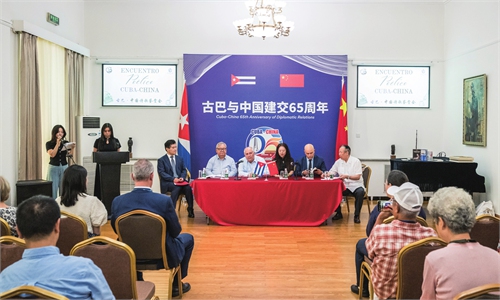
The Embassy of the Republic of Cuba in China hosted Chinese-language edition of the book All the Flowers of April (Todas las flores de Abril), a compilation of poems by Guillén, "whose rich life and precious works transcend the era and region in which he lived," and remained relevant today.
In his remarks, Blanco said that the event is also a promotion event of the book Cantar de Alejandro, a collection of works to pay tribute to Castro as 2026 marks the centenary of Castro's birth.
Published in February, All the Flowers of April (Todas las flores de Abril) was newly translated by Zhao Zhenjiang, a veteran Spanish language professor at Peking University.
In 2025, during a Cuban-Chinese poetry appreciation event at the embassy, Jidi Majia, an indigenous poet of the Nuosu (in the Yi ethnic group) people of mountainous southwestern China, encouraged Zhao to go ahead and finish the translation.
Talking about the significance of the new books launch, Jidi Majia told the Global Times that Guillén's works have combined both Cuban national characteristics and black music. "His works embody both a national character and a universal human consciousness," Jidi Majia stressed.
The publication of the collection of the poems strengthens the cultural connection between China and Cuba. "It serves as a specific vehicle for mutual learning among civilizations," said Jidi Majia.
In the international landscape, the event underscores the importance of dialogue between different civilizations. "It stands against cultural barriers," Jidi Majia affirmed.
"He [Guillén] is as important as Chilean poet Pablo Neruda. They are the people's poets," said Zhao, elaborating that Guillén's works combine the rhythm from melodies of African songs and dances with the tradition of Spanish poems.
Yet Zhao has been reluctant to translate Guillén poems for years because he was concerned that the translated work might not convey the inherent rhythm of the poetry itself.
"It was Jidi Majia who paid much attention to the poetry by the voices of minorities and encouraged me time and again. So I finally got the collection completed," Zhao recalled.
The Cuban poet Alex Pausides, winner of the 2025 National Publishing Award, told the Global Times that with universal values and ideal of justice, Guillén's works will meet the demand of Chinese readers.
Sharing his observation to the mutual learning of civilizations among China and countries in LAC region, Pausides said that cultural exchanges between China and Latin America can foster mutual understanding. "Cultural exchanges between China and Cuba are benefitial to promoting cultural exchanges between China and the entire LAC region," he said.
As a reader, Pausides said Chinese poetry has its uniqueness in aesthetics and enduring values.
Geober Guibert Pardo, director of International Relations at Cuba's Ministry of Culture, told the Global Times that through translation works, Chinese young readers can learn more about classical works from Cuba. "The book will light up our way to the future with the wisdom from history," he said.
Geober Guibert Pardo added that ushering the 66th year of bilateral relations, China and Cuba are witnessing more frequent exchanges among artists and scholars. "Such exchanges will set an example for other countries in the LAC region. China is a good friend we can rely on and trust," he said.
Noting the new books are gifts to Chinese young readers, the director also recommended works including Paradiso by Jose Lezama Lima, and Roberto Fernández Retamar.
Although China and the Latin America and the Caribbean (LAC) region are geographically distant, the bond of our friendship stretches back through centuries. As the official or dominant language in most of the LAC region, Spanish serves as the primary language for more than 450 million people in the world. Recently, a slew of translated works - spanning both Chinese and Spanish literature - has emerged. Experts, diplomats, and government officials talked with Global Times reporter Dong Feng to share their observations focusing on this new wave of literary exchange.
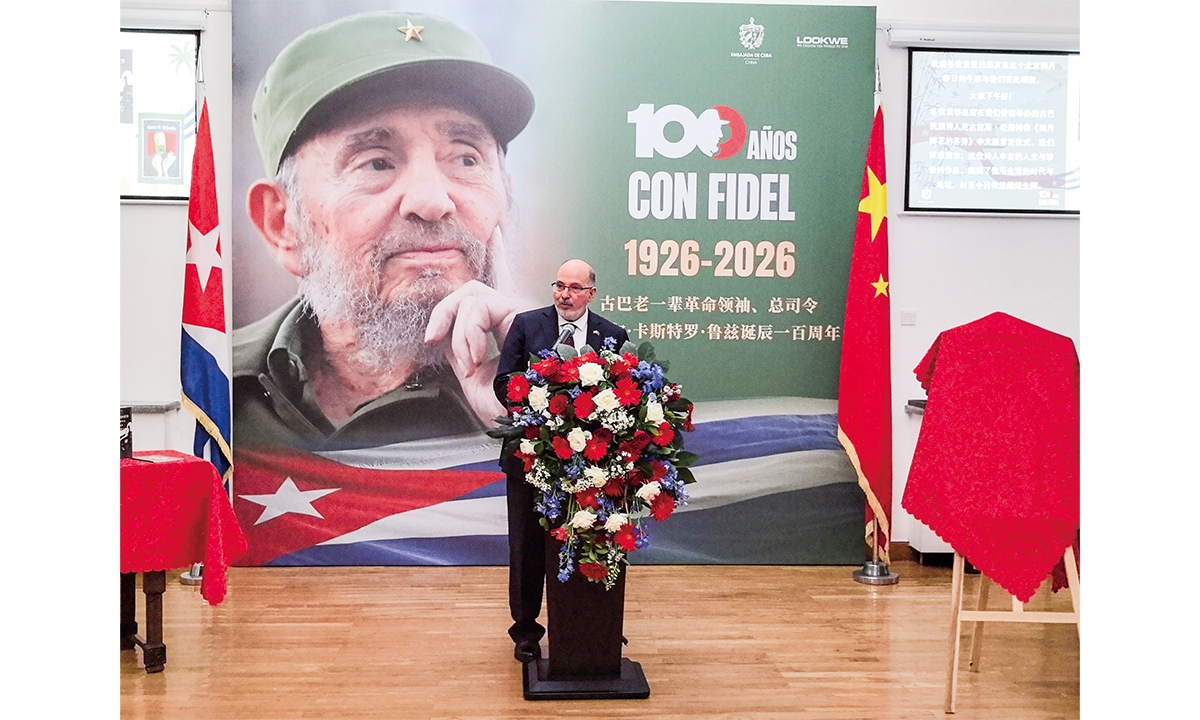
Alberto Blanco Silva, Cuban Ambassador to China, gives a speech at the new book launch event at the Embassy of the Republic of Cuba in China on April 28, 2026. Photos: Dong Feng/GT
Alberto Blanco Silva, Cuban Ambassador to China, at a recent new book launch event, said that one cannot speak of the deep-seated friendship between Cuba and China without mentioning the contributions made by its architects, such as the Cuban revolutionary leader and former president Fidel Castro and Cuba's national poet Nicolás Guillén.The Embassy of the Republic of Cuba in China hosted Chinese-language edition of the book All the Flowers of April (Todas las flores de Abril), a compilation of poems by Guillén, "whose rich life and precious works transcend the era and region in which he lived," and remained relevant today.
In his remarks, Blanco said that the event is also a promotion event of the book Cantar de Alejandro, a collection of works to pay tribute to Castro as 2026 marks the centenary of Castro's birth.
Published in February, All the Flowers of April (Todas las flores de Abril) was newly translated by Zhao Zhenjiang, a veteran Spanish language professor at Peking University.
In 2025, during a Cuban-Chinese poetry appreciation event at the embassy, Jidi Majia, an indigenous poet of the Nuosu (in the Yi ethnic group) people of mountainous southwestern China, encouraged Zhao to go ahead and finish the translation.
Talking about the significance of the new books launch, Jidi Majia told the Global Times that Guillén's works have combined both Cuban national characteristics and black music. "His works embody both a national character and a universal human consciousness," Jidi Majia stressed.
The publication of the collection of the poems strengthens the cultural connection between China and Cuba. "It serves as a specific vehicle for mutual learning among civilizations," said Jidi Majia.
In the international landscape, the event underscores the importance of dialogue between different civilizations. "It stands against cultural barriers," Jidi Majia affirmed.
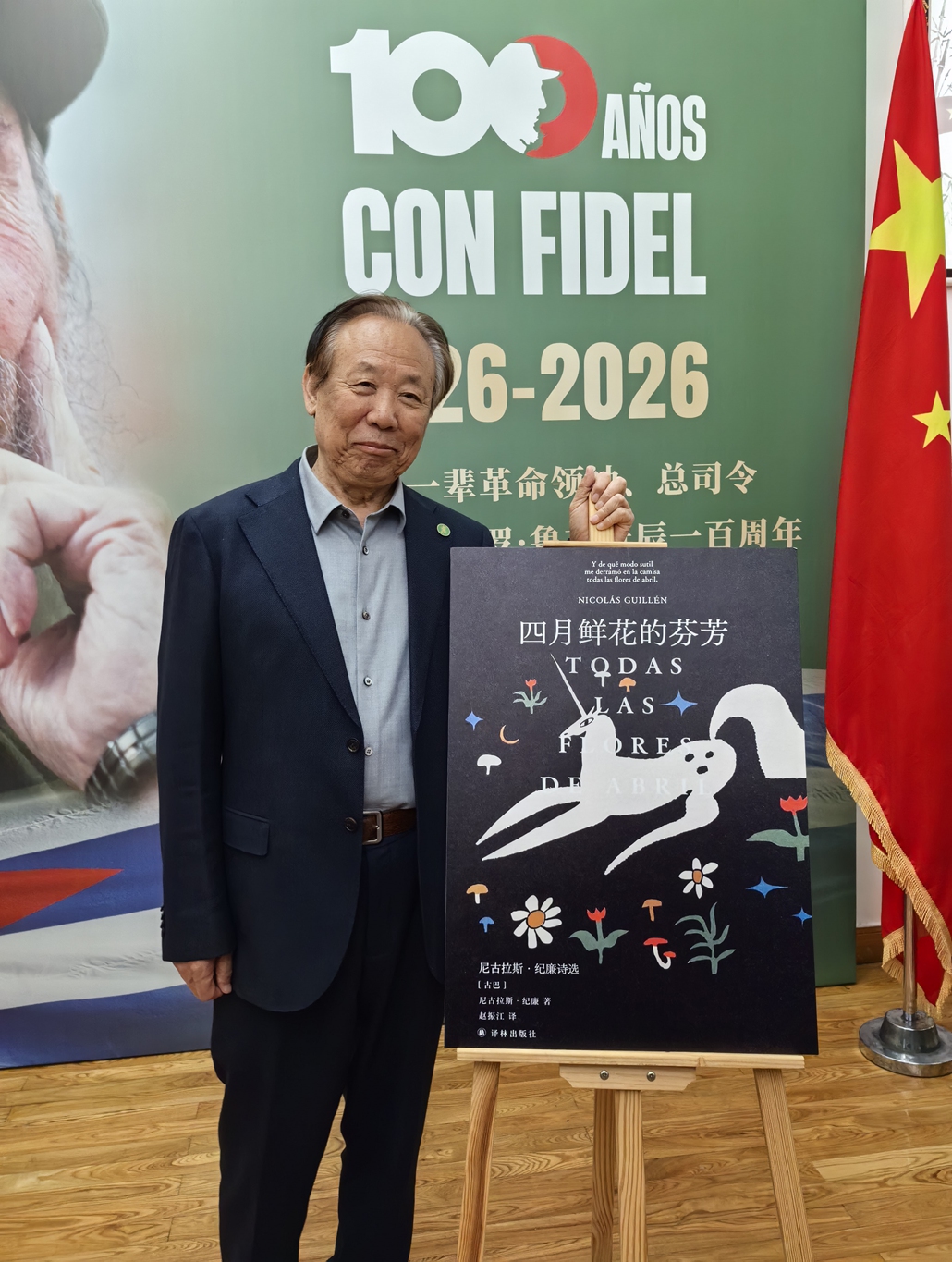
Translator Zhao Zhenjiang at the book launch event at the Embassy of the Republic of Cuba in China on April 28, 2026.
Sharing more of his efforts in translation, Zhao told the Global Times that from his point of view, Guillén is outstanding in both poem writing and as a role model."He [Guillén] is as important as Chilean poet Pablo Neruda. They are the people's poets," said Zhao, elaborating that Guillén's works combine the rhythm from melodies of African songs and dances with the tradition of Spanish poems.
Yet Zhao has been reluctant to translate Guillén poems for years because he was concerned that the translated work might not convey the inherent rhythm of the poetry itself.
"It was Jidi Majia who paid much attention to the poetry by the voices of minorities and encouraged me time and again. So I finally got the collection completed," Zhao recalled.
The Cuban poet Alex Pausides, winner of the 2025 National Publishing Award, told the Global Times that with universal values and ideal of justice, Guillén's works will meet the demand of Chinese readers.
Sharing his observation to the mutual learning of civilizations among China and countries in LAC region, Pausides said that cultural exchanges between China and Latin America can foster mutual understanding. "Cultural exchanges between China and Cuba are benefitial to promoting cultural exchanges between China and the entire LAC region," he said.
As a reader, Pausides said Chinese poetry has its uniqueness in aesthetics and enduring values.
Geober Guibert Pardo, director of International Relations at Cuba's Ministry of Culture, told the Global Times that through translation works, Chinese young readers can learn more about classical works from Cuba. "The book will light up our way to the future with the wisdom from history," he said.
Geober Guibert Pardo added that ushering the 66th year of bilateral relations, China and Cuba are witnessing more frequent exchanges among artists and scholars. "Such exchanges will set an example for other countries in the LAC region. China is a good friend we can rely on and trust," he said.
Noting the new books are gifts to Chinese young readers, the director also recommended works including Paradiso by Jose Lezama Lima, and Roberto Fernández Retamar.
RELATED ARTICLES