UK reportedly sends warship to Middle East with eye on potential Hormuz escort mission; neutral posture to reduce reliance on US-led frameworks: Chinese expert
By Published: May 10, 2026 09:46 PM

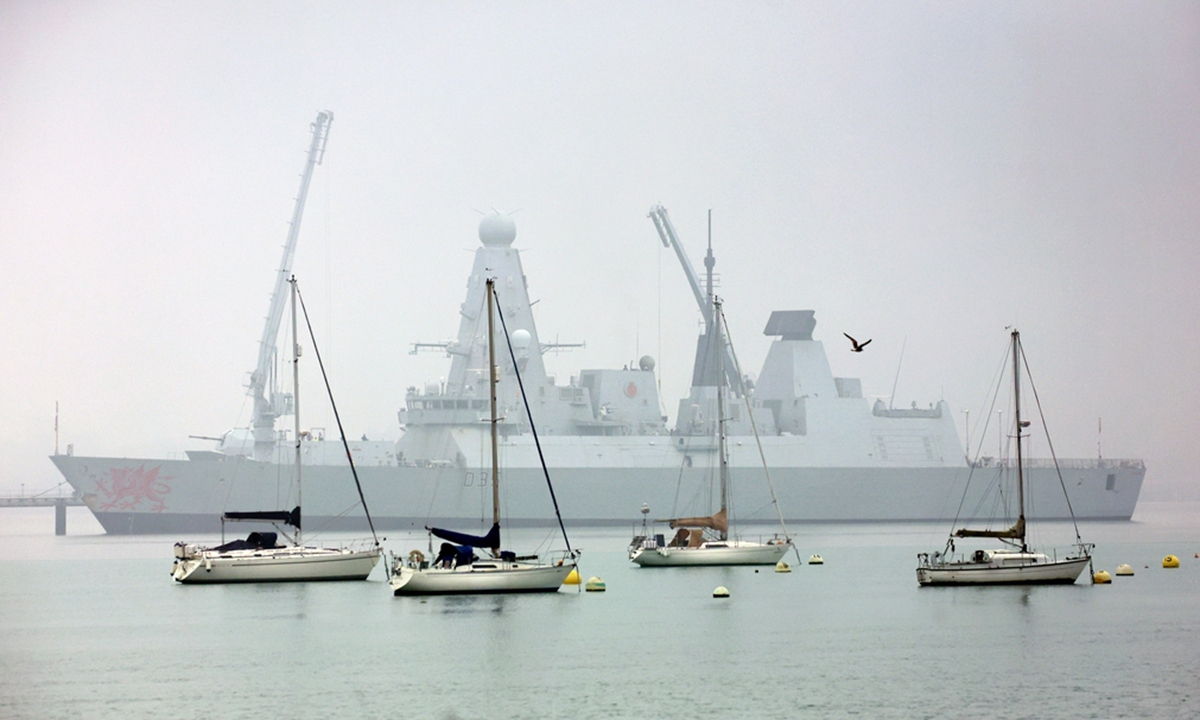
The UK's warship HMS Dragon moors in the Port of Portsmouth, UK, on March 9, 2026. Photo: IC
As part of a multinational escort mission jointly led by the UK and France, the UK said on Saturday it was deploying its warship HMS Dragon to the Middle East in preparation for a potential multinational effort to protect shipping in the Strait of Hormuz once conditions allow, Reuters reported.HMS Dragon, an air defense destroyer, was sent to the Eastern Mediterranean in March, shortly after the start of the Iran conflict, to help defend Cyprus, according to Reuters.
"The pre-positioning of HMS Dragon is part of prudent planning that will ensure that the UK is ready, as part of a multinational coalition jointly led by the UK and France, to secure the Strait, when conditions allow," a spokesperson for Britain's Ministry of Defense was quoted by Reuters as saying.
The relocation of HMS Dragon to the Middle East follows a move by France to deploy its carrier strike group to the southern Red Sea, as the two countries work together on a defensive plan aimed at restoring confidence in the trade route, per the report.
However, Reuters also pointed out that Britain's ability to participate in any protective mission will be limited by the stretched Royal Navy, which is much smaller now than in the past and which has had to retire some ships before replacements have become available.
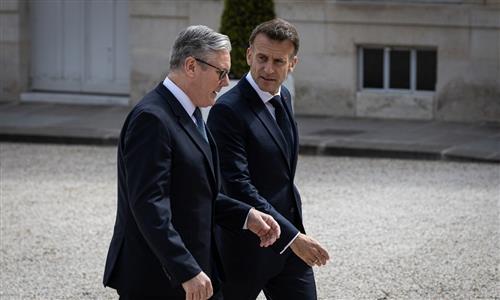
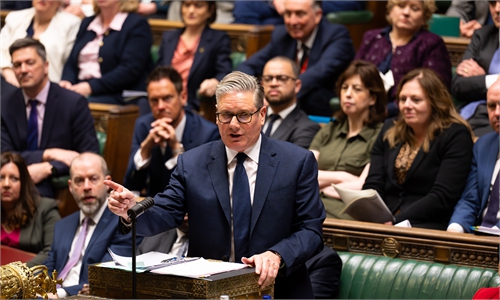
In April, UK Prime Minister Keir Starmer announced that the UK and France would lead a multinational mission to protect commercial shipping routes in the Strait of Hormuz, according to the BBC.
After a meeting of 51 countries, Starmer underlined the work would be "strictly peaceful and defensive" and would only be put in place once fighting in the region ends.
On Wednesday, French President Emmanuel Macron said he had invited Iran's president to "take hold of the opportunity" presented by a proposed French- and British-backed multinational mission for the Strait of Hormuz, according to Iran International.
Macron's remarks come as France and the UK continue efforts to build a "strictly defensive" multinational initiative aimed at securing freedom of navigation through the strategically vital waterway while avoiding direct participation in the conflict.
Macron also said he plans to speak with US President Donald Trump about Iran's peace proposal. He said the "pre-positioning of the aircraft carrier Charles de Gaulle," which is working to escort vessels safely through the strait as part of a multinational mission, will "help restore confidence among shipowners and insurers," according to The Hill.
The primary objective of the joint UK-France escort mission is to ensure the continued openness and safe passage of the Strait of Hormuz. At the same time, it reflects an effort by Europe to reduce reliance on US-led frameworks and to act under its own initiative, thereby projecting a more neutral posture that neither explicitly aligns with the US nor directly confronts Iran, Li Haidong, a professor at the China Foreign Affairs University, told the Global Times.
However, Li said that since the UK and France remain US allies within the NATO framework, this attempt at "neutral escorting" faces inherent credibility constraints, and from the perspective of Iran and some regional actors, such operations may still be interpreted as an extension of US strategic influence.
As the US and Iran tread a bumpy road toward a potential deal to end hostilities, both sides have traded fire over the Strait of Hormuz in recent days, turning the strategic waterway into a tinderbox, according to the Xinhua News Agency.
The Xinhua report noted that the escalation may be a calculated strategy by both sides to strengthen their positions at the negotiating table. Yet the rising confrontations are increasing the risk of renewed conflict, further clouding the prospects for peace in the Middle East.
In a latest move, Iran has sent its response to the latest US proposal for ending the conflict that began at the end of February, CNN reported on Sunday citing the state media.
The state news agency IRNA gave no details of the Iranian response beyond saying that: "according to the proposed framework, negotiations at this stage will focus on the issue of ending the war in the region," per CNN.
During a press conference on Friday, Chinese Foreign Ministry spokesperson Lin Jian said that "we believe it is in the common interest of regional countries and the international community to resume unimpeded passage through the strait as soon as possible and ensure the safety of civilian vessels and crew members. We call for concrete steps from relevant parties to prevent deterioration of the situation."
The spokesperson added that China stands ready to work together with the international community and make sustained efforts to promote peace talks and de-escalation.
RELATED ARTICLES