SPORT / MISCELLANY
‘Qingchao’ kicks off with football, culture and tourism in spotlight
By Lu Wenao and Published: May 10, 2026 11:01 PM
Qingchao
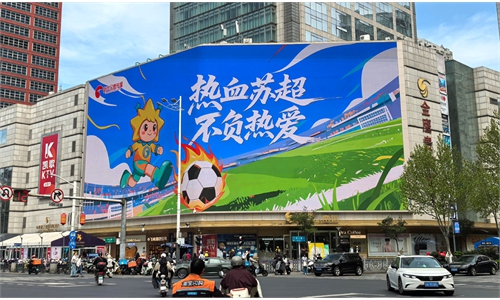
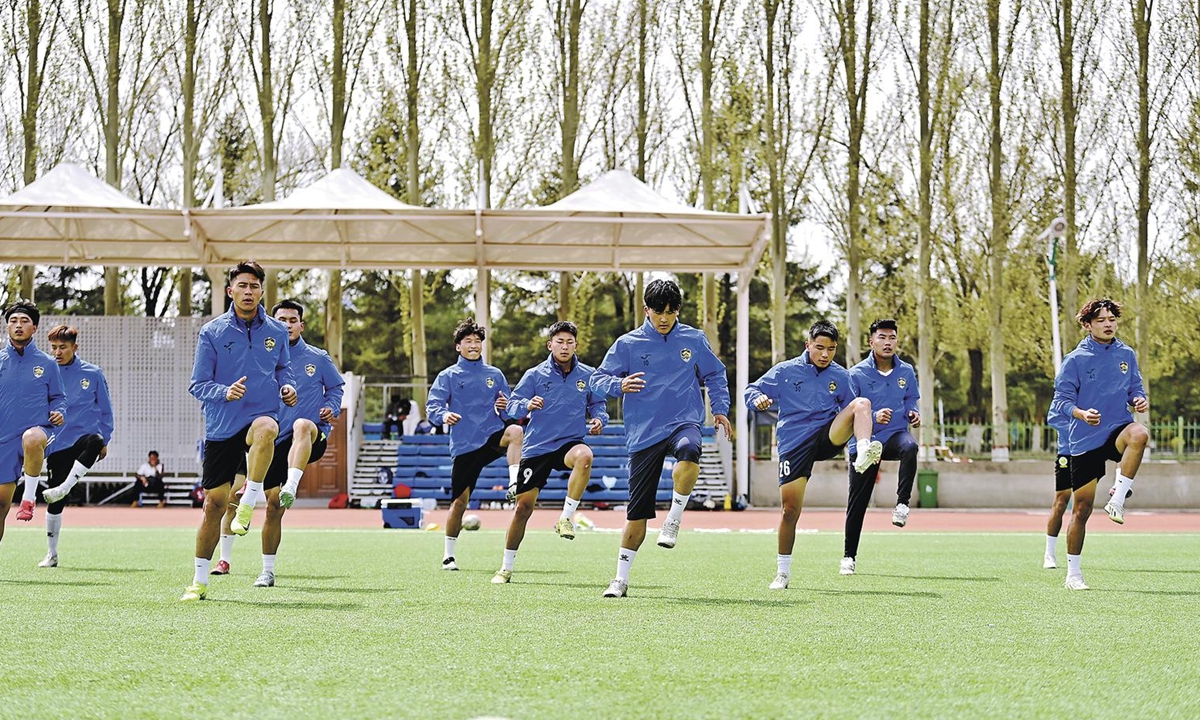
The third edition of the grassroots football competition in Northwest China's Qinghai Province, often referred to as the Qinghai Super League, or simply "Qingchao," kicked off on Sunday in Xining, marking the start of a five-month grassroots football festival that organizers hope will further boost sports, tourism and regional economic development.
The opening match saw host Xining Snow Leopards edge Guoluo Gesar 1-0. Ahead of the match, an opening ceremony of the tournament was held at the Qinghai Sports Center.
The ceremony featured a cultural performance that blended ecological, ethnic, and sports elements. Folk dance troupes from various regions took to the stage one after another, fully showcasing the local culture of the plateau.
At the same time, from Saturday to Monday, cultural performances and intangible cultural heritage exhibitions are being held around the event venues, gathering outstanding programs from different areas and special heritage display zones, and creating an immersive cultural experience for citizens, according to the Qinghai Daily.
This year's tournament retains a home-and-away double round-robin format, with eight teams representing prefecture-level cities and autonomous prefectures across Qinghai Province, organizers said.
A total of 56 matches will be played over 14 rounds, with the closing ceremony scheduled for September in Haidong.
Organizers said several regions, including Haidong, are exploring the introduction of evening matches to avoid daytime heat and make it easier for office workers and students to attend games after work and school.
In a move aimed at maintaining the football momentum, the organizers said this year's league has eliminated the traditional mid-season break, ensuring uninterrupted competition while reserving more time for inter-provincial exchange matches after the season.
Following the conclusion of the Qingchao league in September, Qinghai plans to send outstanding teams to play friendly matches against teams from some of China's popular grassroots competitions, including provinces such as East China's Jiangsu, Central China's Hunan and Southwest China's Guizhou as well as Qinghai's neighboring Ningxia and Gansu.
The local teams from Qinghai will also be encouraged to host clubs from partner provinces and neighboring regions to strengthen sporting exchanges and improve Qinghai's football standards, organizers said.
The "Qingchao" squads are primarily composed of local farmers and herders, employees of agriculture-related enterprises, students, and staff from government agencies. Eligible players must be between 16 and 35 years old, the organizers noted.
A Qinghai Provincial Sports Bureau official said the league is intended to be more than a football tournament.
"This year's Qingchao is not only a sporting event, but also an important platform to showcase Qinghai's unique regional characteristics, unite people of all ethnic groups, and promote the integration of sports with tourism, wellness, rural revitalization and product exhibitions," a Qinghai province sports bureau official was quoted as saying.
Immersive, live heritage activities will be held in connection with each division of the league, such as Hua'er singing, Regong thangka art displays, and embroidery skill experiences.
Inheritors of intangible cultural heritage will conduct live shows, interactive exchanges, and demonstrations of their skills.
Regong thangka art is one of Qinghai's most representative national-level intangible cultural heritage items. In the league, a team has even been named after it - the "Huangnan Regong Art Team."
Fan Qingji, a Regong thangka painter based in Qinghai, told the Global Times on Sunday that he once created a painting for the league using Regong thangka techniques.
In the painting, a football player in a blue jersey kicks a ball high into the air from the grass. Behind the player are the mountains and blue sky in the Kanbula UNESCO Global Geopark in Qinghai.
The techniques of hand-painted thangka are predominantly meticulous and richly colored, though some pieces may be more expressive or rendered purely in line art.
The process is highly intricate, involving the selection of canvas, preparation of the mounting, sizing, polishing, correcting linework, sketching, drawing facial features, and finally mounting the finished work. Creating a superior thangka may take several months, or even years, to complete.
"Every step tests skill and patience," Niangben, a thangka painter as well as a national inheritor of Regong art, told the Global Times.
During the event, another representative intangible heritage of Qinghai, the folk song genre Hua'er, will also be performed outside the stadiums.
Hua'er, an ancient type of folk song, was inscribed by UNESCO on the Representative List of the Intangible Cultural Heritage of Humanity in 2009.
Now, Hua'er performances in Qinghai have taken new forms, such as musicals, while retaining the high-pitched, natural vocal style of traditional performances.
At the same time, performances now skillfully incorporate modern symphonic and popular music elements, achieving an organic blend of traditional and contemporary aesthetics, according to the Xining Evening News.
RELATED ARTICLES