SPORT / MISCELLANY
Table tennis title defense signals need to strengthen talent pipeline, accelerate innovation
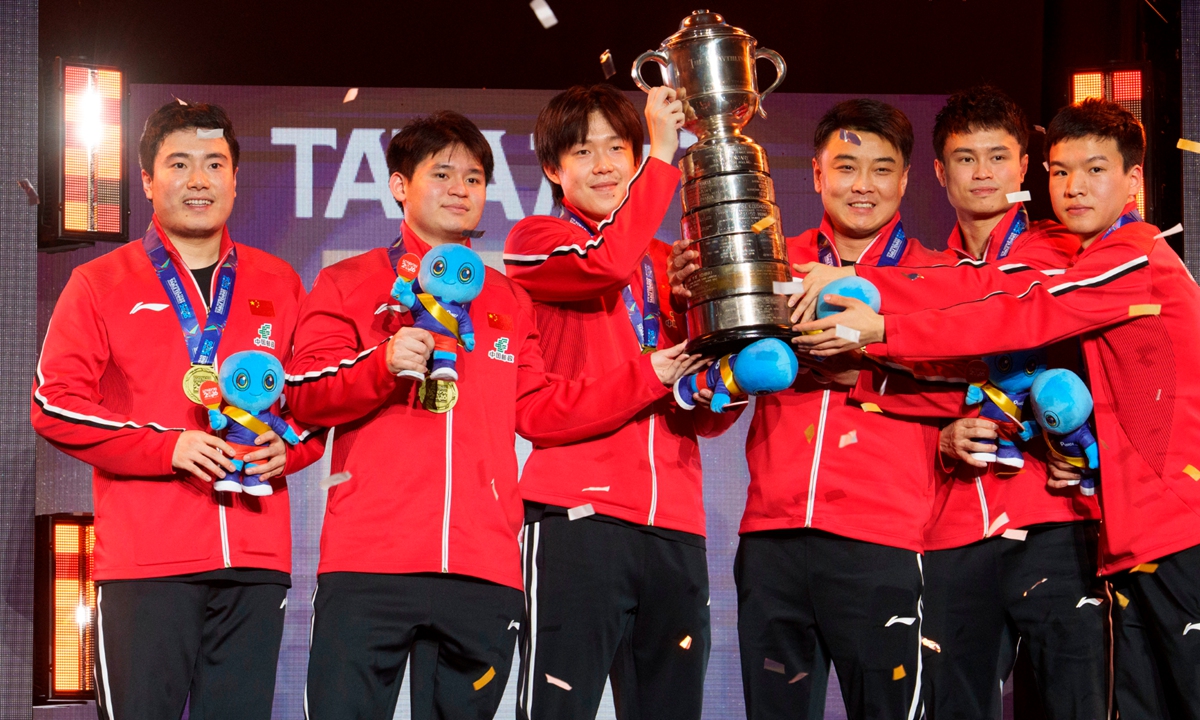
China celebrates winning the Men's Final and securing gold medal at the World Team Table Tennis Championships in London, Sunday, May 10, 2026. Photo: VCG
The successful title defense by the Chinese men's team at the 2026 World Table Tennis Championships Finals in London on Sunday was a triumph of teamwork and the squad's fighting spirit in the face of adversity. However, the victory sounded the alarm bell for China to strengthen its talent pipeline and accelerate tactical and technical innovation, a sports analyst told the Global Times on Monday.China secured a record-extending 12th consecutive men's team title at the world championships with a 3-0 victory over Japan after a thrilling comeback win in the first game.
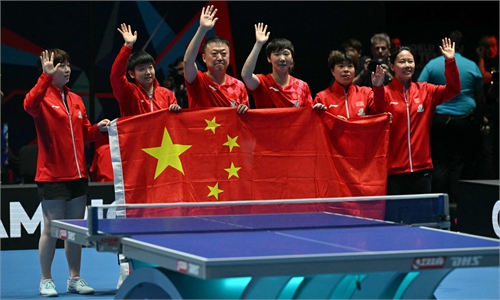
Meanwhile, China clinched its seventh straight women's team title with a hard-fought 3-2 victory over Japan earlier on Sunday.
After suffering rare group-stage defeats to South Korea and Sweden, doubts began to surround the defending champions.
However, as the pressure intensified in the knockout stages, the Chinese men's table tennis team responded in champion fashion, delivering their best performance when it mattered most in the final against the Japanese team.
This tournament can be regarded as the toughest title defense campaign for China's men's team in nearly two decades.
Looking back on this tournament, the gap in strength between the Chinese men's team and its international rivals has narrowed significantly. China is no longer untouchable, and that is ultimately a positive development for the growth of world table tennis, Wang Dazhao, a Beijing-based sports commentator, told the Global Times.
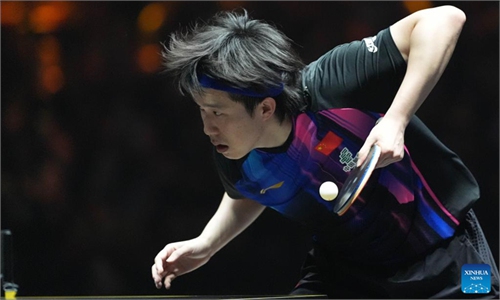
Although China ultimately won the title this time, it is undeniable that table tennis has entered an era of intense competition, where no single player can step forward with absolute certainty and declare themselves guaranteed champions. Every team and player now has a chance, and all are constantly improving and pushing themselves to achieve the best possible results, said men's team member and world No.1 Wang Chuqin, The Paper reported.
The commentator also noted that winning a title in such a fiercely competitive era is far more meaningful than during a time when China stood alone at the top of the sport.
"Rather than dwelling too much on the gains and losses of a single tournament, the greater priority should be continuously strengthening the team's overall capabilities and long-term competitiveness," said Wang Dazhao.
What deserves attention is that many of China's key rivals gave their young players valuable exposure in this tournament, such as France's 18-year-old Flavien Coton and Japan's 19-year-old Sora Matsushima.
China's strength has always rested on a deep and resilient table tennis culture. There is no need to fear others catching up, but there is a clear need to respond strategically to the steady progress of competitors. The real challenge is ensuring that China's own system evolves at the same pace, Wang said.
This means accelerating the growth of domestic reserve talent, increasing their exposure to high-intensity international competition, and allowing younger players to mature faster under real pressure.
Only by continuously refining the talent pipeline and adapting to the changing global landscape can China maintain its long-term competitiveness in an increasingly open and competitive era of table tennis, he added.
In the absence of Olympic champion Fan Zhendong, this tournament may as well be remembered as the moment Wang Chuqin completed his transformation from elite player to true team leader.
As the only world champion and the squad's singles player, Wang not only carried the burden of expectations but also became the emotional anchor of the team. His praise for teammates Liang Jingkun and Lin Shidong after the final reflects something deeper than simple sportsmanship: an understanding that championships are never won alone.
For decades, China's dominance in table tennis has been associated with technical excellence. However, the deeper foundation of that success lies in a "champion's DNA" passed down through generations. It is the ability to respond to adversity with composure, to trust teammates unconditionally under pressure, and to fight back when the outside begins to doubt.
The author is a reporter with the Global Times. life@globaltimes.com.cn
RELATED ARTICLES