Photo: CFP
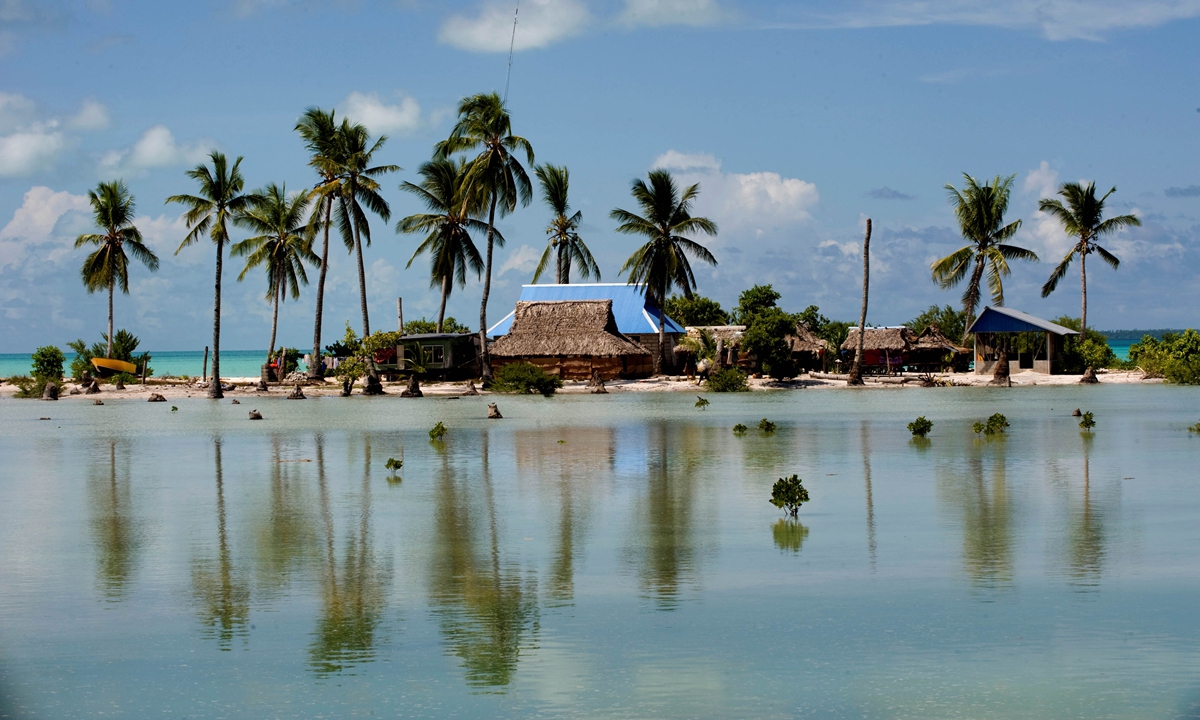
The ongoing Middle East conflict has led to soaring energy prices and supply chain disruptions, impacting nearly every part of the world - especially small island nations, which are the most at risk. This situation is sending shockwaves through the global economy, exposing the acute vulnerability of small island states.One of the authors of this article, Liang Guojie, previously served as the first Chinese director of the Confucius Institute at the National University of Samoa, a country located in the South Pacific. Long-term frontline observations indicate that small island states, such as Samoa, which rely on imported energy, international shipping and tourism revenues, have extremely limited capacity for resilience to risks. Small island states across the globe account for more than one-third of the Global South countries. Therefore, it is of growing practical urgency and long-term strategic significance for China to strengthen research on and cooperation with small island states.
From the perspective of global governance, these states are the most vulnerable victims of climate change and marine pollution, while also serving as the moral backbone of international climate negotiations. In the realm of global security, small island states occupy pivotal positions along strategic maritime passages, acting as critical nodes for international shipping security.
In terms of global development, they are important participants in South-South cooperation and the United Nations' Agenda for Sustainable Development, offering compelling case studies for measuring the efficacy of China's Global Development Initiative. Regarding global civilization, they serve as guardians of humanity's maritime heritage and as living laboratories of cross-cultural engagement. Consequently, small island states are increasingly asserting their collective "rights of the powerless" on major international issues, transforming into indispensable "key nodes" in 21st-century global governance and emerging as significant partners in the China-proposed Belt and Road Initiative.
Taking the cooperation between China and Samoa as an example, several "small and beautiful" cooperation projects have been implemented between China and this small island country, including agricultural technology cooperation, medical and health assistance, sports stadium construction, and cultural and educational exchanges. These initiatives have precisely met local needs. China's cooperation with small island states consistently aims to promote national development and improve people's well-being, a goal that has been widely recognized by various sectors in these island countries.
To further advance exchanges and cooperation between China and small island states, it is imperative to strengthen research on the Global South island countries. This requires in-depth studies to understand aspects of small island states, including the major problems and challenges they face, urgent needs for socioeconomic development, and the primary concerns of the islanders.
Research on small island states remains challenging for Chinese scholars due to high barriers to entry, modest research yields and limited institutional support. Applying research findings to real-world contexts is equally challenging. What matters most is delivering tangible value to the cause of Global South development cooperation.
Looking ahead, studies on small island states with Chinese characteristics should respond to the development aspirations of island nations such as Antigua and Barbuda, prioritizing the deepening of all-around cooperation between China and Global South island states while providing intellectual underpinnings for the formulation of China's holistic policy toward these states. At the same time, collaborations with research institutions in overseas island states should be institutionalized to jointly tackle pressing challenges facing small island states: climate change, maritime governance, the blue economy and sustainable development. Furthermore, efforts should be made to advance the establishment of platforms, such as a cooperation forum on economic development and political party dialogue, thereby effectively bolstering self-strengthening through unity within the Global South.
Liang Guojie is executive director of the Center for Indian Ocean Island Countries Studies at Dalian University. Zhai Kun is a professor at the School of International Studies and vice dean of the Institute of Area Studies at Peking University. opinion@globaltimes.com.cn
RELATED ARTICLES