Chinese social media account reveals details of China-US anti-drug cooperation, citing progress in joint fentanyl case

Latest news
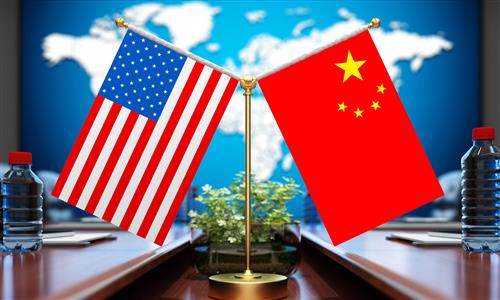
Chinese and US anti-drug authorities have worked together to crack a cross-border drug trafficking and smuggling case, according to a post on Tuesday by Yuyuantantian, a Chinese social media account affiliated with Chinese state television. The account revealed details of the case, saying that the US side provided some of the key intelligence leads, while Chinese authorities carried out arrests and investigative operations.
The disclosure followed an announcement by China's Ministry of Public Security (MPS) on Monday that anti-drug agencies of China and the US jointly crack a drug trafficking and smuggling case, arresting five suspects, the Xinhua News Agency reported.
The MPS said that the five suspects, two Chinese nationals and three US nationals, were arrested in coordinated operations launched simultaneously in both countries in early April by the MPS's narcotics control bureau and the US Drug Enforcement Administration (DEA).
The US Attorney's Office for the Southern District of Florida also released information on the case on Monday. According to Yuyuantantian, this marked the first time in recent years that the two sides publicly released information on such a joint anti-drug operation simultaneously.
In its release, the US Attorney's Office detailed a case involving a Chinese national and a Las Vegas man charged in scheme to import a deadly synthetic opioid into the US, and cited Special Agent in Charge David L. King of the DEA Asia Pacific Division as saying, "We commend the Chinese Ministry of Public Security for their thorough and swift investigative work on this case, which was initially presented at the February 2026 Bilateral Drug Enforcement Intelligence Working Group, hosted by DEA Asia Pacific Division in Colorado."
As part of the investigation, China's MPS took law enforcement action in China against Guo, one of the suspects, according to the office, which added that "The Justice Department thanks the Ministry of Public Security for its assistance and coordinated efforts."
According to Yuyuantantian, although China-US anti-drug cooperation mechanisms had been affected in past years due to what it described as actions taken by the US side, cooperation at the practical law enforcement level had never been completely suspended.
Citing professionals familiar with the issue, the account said exchanges in intelligence sharing, evidence transfers and joint investigative assistance had continued throughout the period.
The account added that US law enforcement agencies including the DEA and the FBI had consistently shown strong willingness to cooperate at the working level. When smuggling clues emerged, both sides exchanged information and coordinate investigations.
Professionals who had participated in China-US anti-drug cooperation consultations told Yuyuantantian that the DEA maintains an office in China and even subscribes to the China Anti-Drug News newspaper.
According to the account, such details reflect the "high degree of willingness for cooperation and friendly attitude" maintained by both sides at the operational level.
Yuyuantantian also cited previous examples of cooperation in transnational cases. When US authorities discovered abnormal flows of precursor chemicals or identified drug trafficking chains linked to China, they notified Chinese authorities and provided information on suspects involved. Chinese authorities would then launch investigations, surveillance operations and arrests, while also sharing clues with the US side.
The account noted that in 2017 alone, the Office of China National Narcotics Control Commission provided the US side with more than 400 clues related to fentanyl procurement and over 500 intelligence reports involving US customers purchasing new psychoactive substances.
The report also traced another recent case in which the US repatriated a drug-related fugitive surnamed Han to China in April this year. According to the account, Han was the first drug-related fugitive repatriated to China by the US in recent years.
Compared with ordinary intelligence exchanges, transnational repatriation involves far more complicated procedures, including identity verification, evidence confirmation, coordination of judicial procedures and coordination between immigration and law enforcement authorities, Yuyuantantian said. It added that customs authorities, immigration agencies and even financial regulators may all become involved in such cases.
The account noted that today's transnational drug crimes have evolved into highly cross-border "gray industry chains," with many cases involving overlapping jurisdiction across multiple countries. For example, precursor chemicals may be produced in China while drugs are distributed in the US, with the entire chain spanning different legal systems and jurisdictions.
Under such circumstances, issues including where suspects are tried and which side conducts prosecutions all require coordination, according to Yuyuantantian, which added that the completion of such cooperation itself reflects "a considerable degree of mutual trust" between the two law enforcement systems.
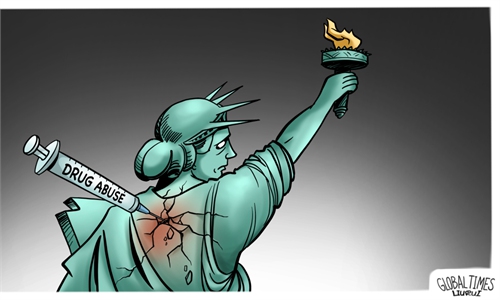
The account also noted that in recent years, the US had attempted to shift responsibility for its domestic drug governance problems outward, but that approach had failed to fundamentally solve the issue. By contrast, it said, returning to pragmatic approaches such as law enforcement cooperation, intelligence sharing and joint investigations has produced tangible results.
Global Times
RELATED ARTICLES