ARTS / CULTURE & LEISURE
China’s diverse city cultures brew unique coffee flavors
Atlas of the beans
Once called "cough syrup" when it was first introduced to China, coffee has now swelled into a compound industry in China exceeding 350 billion yuan ($51.5 billion) a year, as of 2025, showing it has long become a daily commodity for countless Chinese.
Smelling roasted and tasting slightly bitter and tangy yet leaving a lingering sweetness, coffee has evolved from its roots in Ethiopia to become one of the most globalized beverages today. Be it a single-shot bitter espresso or a venti-sized sweet vanilla latte, the taste of a cup of coffee is always closely tied to the local customs and ways of life of a place. Yet, when its global spread made it to China, apart from the capital-nurtured coffee giants, the diverse regional cultures here gave it a newfound "one city, one taste" twist.
From this has evolved the concept of COFFEE - a City's Original Flavor and Fusion of lifestyles that shape its urban Experience and Exchange - leading to deeper cultural meaning in China beyond the drink itself.
Original flavor
On a weekday morning, while Zhang Fan, the owner of a coffee shop in Zhengdong Town, Pu'er City, Southwest China's Yunnan Province, was writing the name of a specialty coffee called "Zhengdong Sunset" on a blackboard menu, over in Yanji, Northeast China's Jilin Province, another coffee shop owner, Cui Fenghua, was preparing ingredients for her two signature drinks: the "Ginseng Americano" and "Frozen Pear Latte."
Zooming out, Zhang's and Cui's coffee shops are located along an almost diagonal line across the map of China. One is in a small town in the southwest, deeply rooted in Dai and Hani ethnic cultures; the other is a small city within the Yanbian Korean autonomous prefecture, rich in Korean ethnic traditions. Despite being over 4,000 kilometers apart, coffee has taken root in each place, blossoming with locally born flavors.
The Catimor bean originally came from Portugal and was introduced to Yunnan Province in the late 1980s. One of its core growing areas is Zhengdong Town. By adapting to the region's unique climate, local producers have gradually refined the Catimor bean's cultivation techniques and processing methods over the years. The bean's taste has also begun to mirror Yunnan's natural conditions itself - shedding its heavy muddy notes for warm floral and fruity tones, rounded out with a hint of sour-sweetness.
"Inside a single bean lies the information of a place's environment, climate, cultural characteristics and more," local Yunnan coffee expert Liu Haifeng told the Global Times. "Coffee," she added, "can present a regional culture through taste."
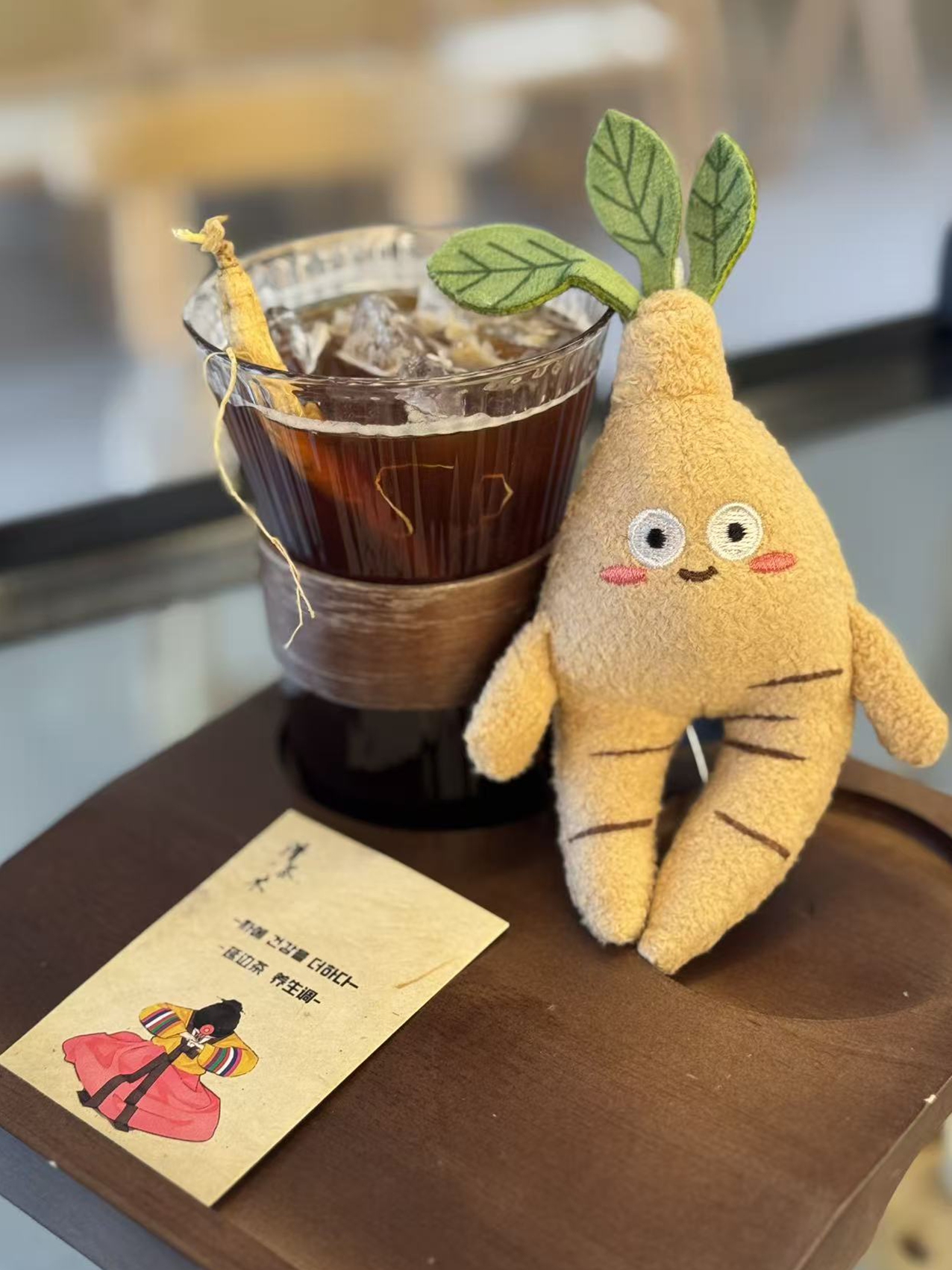
Unlike the bright fruit and floral palate of China's Southwest, Northeast-located barista Cui fuses local ginseng into her brew to create a deeper and richer taste. When the ground ginseng granules mix into the dark coffee, the earthy bitterness of both herb and bean are amplified. Sip slowly and a returning sweetness rises beneath it.
Such a unique recipe is more than just an exploration of ingredients' flavors. It is also rooted in the local Korean ethnic people's long praised tradition of using medicinal and edible herbs. In 2025, the Yanbian Korean autonomous prefecture officially released and implemented local dietary care guidelines, listing 56 Korean ethnic medicinal ingredients, including ginseng, as "homologous food and medicine" materials.
"At least they can still get a taste of Yanji and savor our culture," Cui noted.
Fusion of lifestyles
You would think the frigid climate of Yanji would surely rule out coffee, a crop from the tropics. However, this small city's coffee scene is booming with more than 1,000 coffee shops. Such a surprising contrast is actually rooted in a local hybrid lifestyle.
As a border city, Yanji has long served as a window connecting trade between China and Russia. By the end of the last century, instant coffee made in Russia gradually made its way into ordinary Yanji households. "That was my first cup of coffee," Cui told the Global Times. "To be honest, it smelled good, tasted strange and was very interesting."
Lively cross-boarder exchanges brought population mobility. Following China's reform and opening-up, a part of Yanji's local Korean ethnic population left for work in South Korea. When they later returned home, they brought back South Korean-style coffee culture with them.
Nowadays, while Yanji's coffee culture has stopped chasing foreign flavors, the cultural fusion ingrained in the local lifestyle is still inspiring the local coffee industry to embrace diverse influences.
The border city is not the only one that reveals the inclusive nature of Chinese coffee culture.
Located in South China's Guangdong Province, Taishan city has been a major node on the Maritime Silk Road. Unlike the "delicateness" of Yunnan coffee and the "richness" of Yanji coffee, the coffee here is characterized by a sweet, milky flavor - a trait deeply influenced by the region's strong "Huaqiao" culture, the culture of overseas Chinese who have returned home.
Overseas treats like "egg tarts" and "canned coffee with fresh milk" were already popular in the city's unique "ice rooms," a type of traditional Cantonese diner. Later, large numbers of overseas Chinese from Malaysia, Indonesia, and other countries returned to their hometowns, bringing back the Southeast Asian taste for sweet coffee. This flavor has since become a testament to the inclusiveness of Lingnan culture in southern China.
Yet a deeper dive into Lingnan's coffee scene reveals not just inclusiveness, but also an innovative twist on local tradition. Recently, a coffee creation called the "Bai Qie Ji Latte" has gone viral on social media as a "Guangdong exclusive." Bai qie ji (white cut chicken) is a poached chicken dish popular in the region since the Qing Dynasty (1644-1911).
Meanwhile, shaped by the "morning tea" lifestyle that has endured for generations in Guangdong Province, more and more young people like Cheng Liangyue are accompanying essential dishes like "shrimp dumplings" and "rice noodle rolls" with coffee.
Noting that her foreign friends, at her introduction, have become "even more dedicated fans" of the coffee-and-morning-tea combo, Cheng, a 28-year-old in Shenzhen, told the Global Times that this new eating trend is like a microcosm of Guangzhou's lifestyle.
"It is capable of embracing both the international lifestyle and the down-to-earth hustle and bustle of the city," Cheng said.
Urban experience
Threading modern and classic lifestyles into the same urban web, the coffee scene's evolution in China is no longer just about a daily pick-me-up; it has accelerated the metabolism of urban renewal. Sometimes, when a city's old and new facets are both equally prominent, the cohesive power brought by coffee becomes all the more evident. The metropolises of Shanghai and Beijing are prime examples.
However, "internationalization" alone cannot capture the pioneering nature of Shanghai's coffee scene. What truly sets it apart is how coffee has breathed new life into the city's historic nongtang, lane-house neighborhoods.
In Putuo district, an old wool mill saw its water tower turned into a landmark by a tiny café, sparking the mill's rebirth as a creative park. Meanwhile, in Jinshan district, Zhaojia Lane was once a nongtang "dead end" that even locals rarely bothered to walk through. Local resident Huihui, however, saw the potential in this neglected yet peaceful pocket of the city, and converted an old house there into a café. That single café later became the fulcrum that turned the lane into an online sensation. "We now offer not just coffee, but also homestays and dining. This once obscure little lane sees 1,000 to 2,000 visitors a day," Huihui told the Global Times.
Through coffee, Huihui has shown how to turn the city's "leftovers" into fresh urban experiences. Her vision, once personal, is now quietly becoming a shared mind-set for a new generation of coffee entrepreneurs in China. As the main creative engine of China's coffee scene, they are redefining what the "localization" of Chinese coffee really means.

From bean to cup, China's current complete and highly localized coffee industry chain have given coffee professionals like Tian the very basis and confidence to pursue exchanges and introduce Chinese coffee to the world.
When Yunnan's coffee cherries ripen, a Chinese coffee bean's journey begins. Over 500 factories process it at home, then Kunshan, which was named the "Capital of the International Coffee Industry" by the International Institute of Coffee Tasters in 2024, takes over, roasting nearly 60 percent of the nation's beans. From Kunshan and Shanghai, the beans travel far - across streets, across oceans. Coffee from Yunnan alone reaches 43 countries worldwide.
Of course this is not a one-way street. Aiming for shared development and preserving the character of coffee as a global beverage, China has itself become the fourth-largest export market for Ethiopia - the birthplace of coffee.
"China's approach to coffee exchange is one of openness and reciprocity, not monopoly. This two-way flow gives coffee a cultural exchange value that transcends its identity as a mere cash crop," coffee expert Liu Haifeng told the Global Times.
Touring around the world, no matter if coffee beans make their way to cafés and homes, they will finally meet their final partner: the coffee machine. Nearly 80 percent of the world's coffee machines are made in China, mostly in Shunde, Guangdong.
"Beyond products, we are also promoting exchanges with countries in talent and skills," Liu told the Global Times. He added that the goal of Chinese coffee's global journey is eventually to enable "China's coffee standards to participate in international standard-setting and to have a say in global coffee culture."
Smelling roasted and tasting slightly bitter and tangy yet leaving a lingering sweetness, coffee has evolved from its roots in Ethiopia to become one of the most globalized beverages today. Be it a single-shot bitter espresso or a venti-sized sweet vanilla latte, the taste of a cup of coffee is always closely tied to the local customs and ways of life of a place. Yet, when its global spread made it to China, apart from the capital-nurtured coffee giants, the diverse regional cultures here gave it a newfound "one city, one taste" twist.
From this has evolved the concept of COFFEE - a City's Original Flavor and Fusion of lifestyles that shape its urban Experience and Exchange - leading to deeper cultural meaning in China beyond the drink itself.
Original flavor
On a weekday morning, while Zhang Fan, the owner of a coffee shop in Zhengdong Town, Pu'er City, Southwest China's Yunnan Province, was writing the name of a specialty coffee called "Zhengdong Sunset" on a blackboard menu, over in Yanji, Northeast China's Jilin Province, another coffee shop owner, Cui Fenghua, was preparing ingredients for her two signature drinks: the "Ginseng Americano" and "Frozen Pear Latte."
Zooming out, Zhang's and Cui's coffee shops are located along an almost diagonal line across the map of China. One is in a small town in the southwest, deeply rooted in Dai and Hani ethnic cultures; the other is a small city within the Yanbian Korean autonomous prefecture, rich in Korean ethnic traditions. Despite being over 4,000 kilometers apart, coffee has taken root in each place, blossoming with locally born flavors.
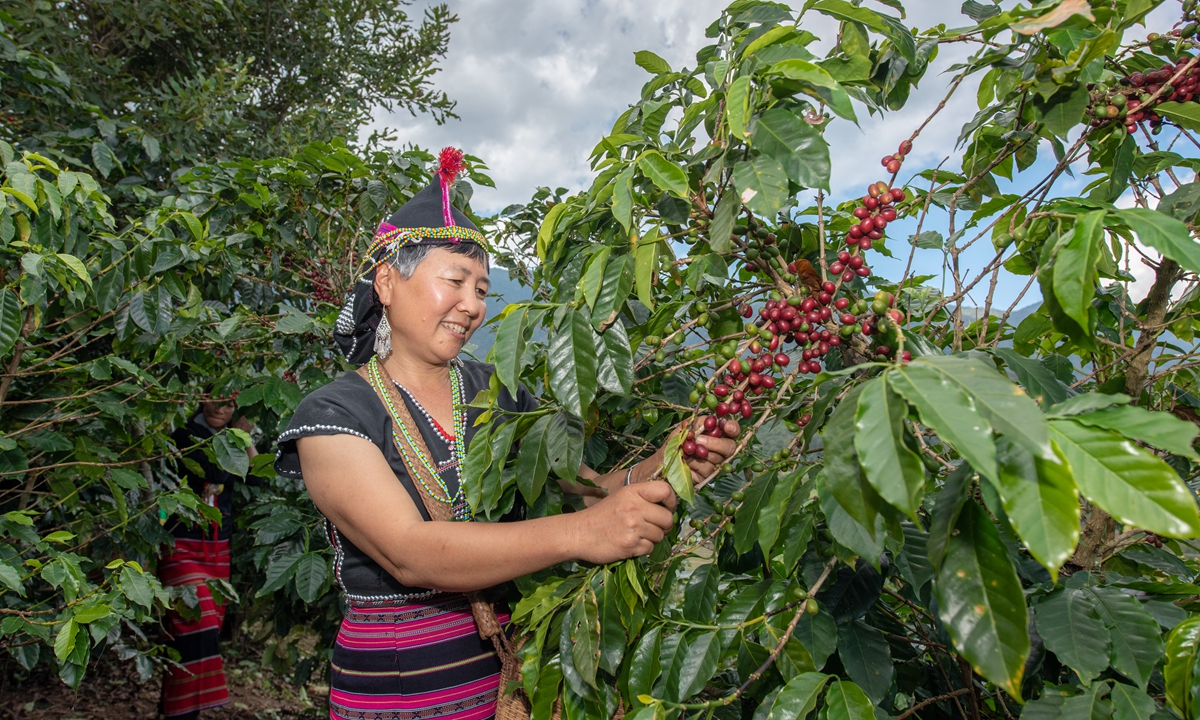
A coffee farmer picks coffee beans at a coffee plantation in Lancang Lahu autonomous county, Pu'er, Yunnan Province. Photo: VCG
Described as a "coffee cocktail," Zhang's Zhengdong Sunset blends proportioned grapefruit juice, blood orange juice, and coffee essence. Adding fruit juice to coffee drinks is nothing new - many chain coffee brands have similar offerings. What truly sets Zhang's specialty apart is the coffee bean behind it - a bean called "Zhengdong Catimor."The Catimor bean originally came from Portugal and was introduced to Yunnan Province in the late 1980s. One of its core growing areas is Zhengdong Town. By adapting to the region's unique climate, local producers have gradually refined the Catimor bean's cultivation techniques and processing methods over the years. The bean's taste has also begun to mirror Yunnan's natural conditions itself - shedding its heavy muddy notes for warm floral and fruity tones, rounded out with a hint of sour-sweetness.
"Inside a single bean lies the information of a place's environment, climate, cultural characteristics and more," local Yunnan coffee expert Liu Haifeng told the Global Times. "Coffee," she added, "can present a regional culture through taste."
Unlike the bright fruit and floral palate of China's Southwest, Northeast-located barista Cui fuses local ginseng into her brew to create a deeper and richer taste. When the ground ginseng granules mix into the dark coffee, the earthy bitterness of both herb and bean are amplified. Sip slowly and a returning sweetness rises beneath it.
Such a unique recipe is more than just an exploration of ingredients' flavors. It is also rooted in the local Korean ethnic people's long praised tradition of using medicinal and edible herbs. In 2025, the Yanbian Korean autonomous prefecture officially released and implemented local dietary care guidelines, listing 56 Korean ethnic medicinal ingredients, including ginseng, as "homologous food and medicine" materials.
A cup of ginseng coffee Photo: Courtesy of Cui Fenghua
"Ginseng coffee is like a symbol of our ethnic culture," Cui told the Global Times. "Outsiders might find it 'odd,' but for us, it's as indispensable as water." Other than ginseng coffee, Cui has also developed another drink using frozen pears, a fruit specialty of Northeast China, as a "Plan B" for tourists who "really can't stomach ginseng coffee.""At least they can still get a taste of Yanji and savor our culture," Cui noted.
Fusion of lifestyles
You would think the frigid climate of Yanji would surely rule out coffee, a crop from the tropics. However, this small city's coffee scene is booming with more than 1,000 coffee shops. Such a surprising contrast is actually rooted in a local hybrid lifestyle.
As a border city, Yanji has long served as a window connecting trade between China and Russia. By the end of the last century, instant coffee made in Russia gradually made its way into ordinary Yanji households. "That was my first cup of coffee," Cui told the Global Times. "To be honest, it smelled good, tasted strange and was very interesting."
Lively cross-boarder exchanges brought population mobility. Following China's reform and opening-up, a part of Yanji's local Korean ethnic population left for work in South Korea. When they later returned home, they brought back South Korean-style coffee culture with them.
Nowadays, while Yanji's coffee culture has stopped chasing foreign flavors, the cultural fusion ingrained in the local lifestyle is still inspiring the local coffee industry to embrace diverse influences.
The border city is not the only one that reveals the inclusive nature of Chinese coffee culture.
Located in South China's Guangdong Province, Taishan city has been a major node on the Maritime Silk Road. Unlike the "delicateness" of Yunnan coffee and the "richness" of Yanji coffee, the coffee here is characterized by a sweet, milky flavor - a trait deeply influenced by the region's strong "Huaqiao" culture, the culture of overseas Chinese who have returned home.
Overseas treats like "egg tarts" and "canned coffee with fresh milk" were already popular in the city's unique "ice rooms," a type of traditional Cantonese diner. Later, large numbers of overseas Chinese from Malaysia, Indonesia, and other countries returned to their hometowns, bringing back the Southeast Asian taste for sweet coffee. This flavor has since become a testament to the inclusiveness of Lingnan culture in southern China.
Yet a deeper dive into Lingnan's coffee scene reveals not just inclusiveness, but also an innovative twist on local tradition. Recently, a coffee creation called the "Bai Qie Ji Latte" has gone viral on social media as a "Guangdong exclusive." Bai qie ji (white cut chicken) is a poached chicken dish popular in the region since the Qing Dynasty (1644-1911).
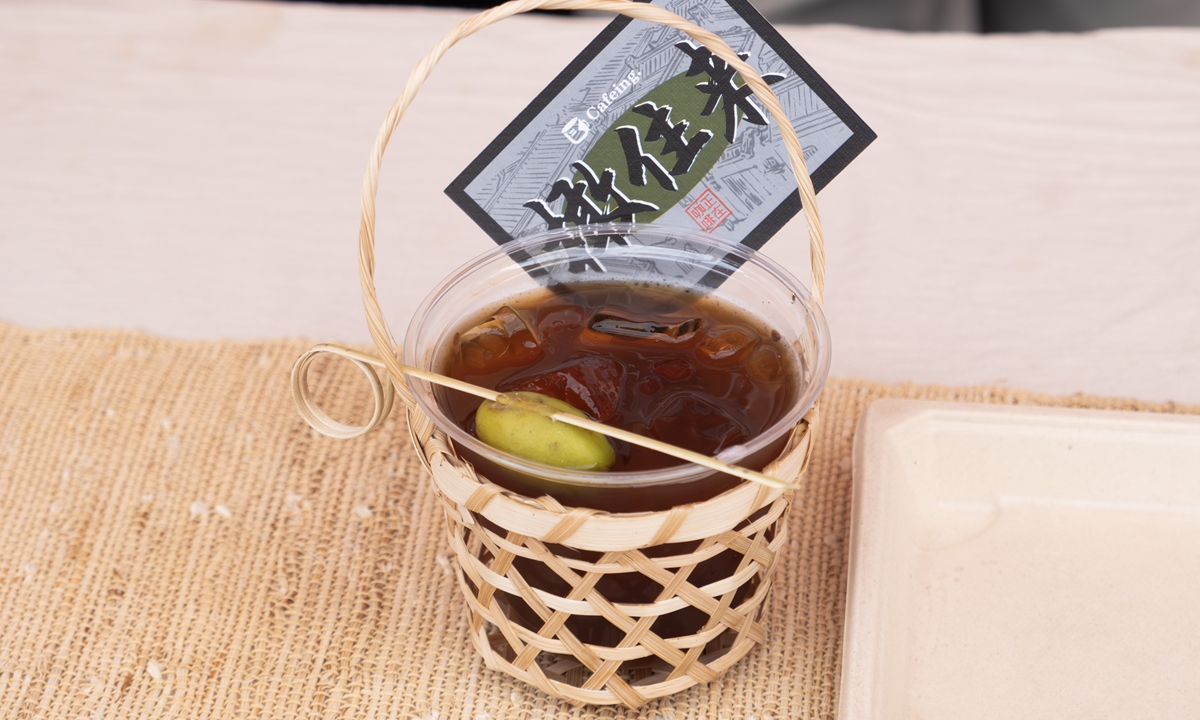
A cup of olive coffee Photo: VCG
Instead of using actual chicken, local coffee shops craft chicken shapes out of jelly or chocolate, showcasing, in every delicate detail, the Guangdong people's pride in their local culinary heritage. Meanwhile, derived from the local unique "liangcha" (Cantonese herbal tea) wellness culture, the iconic olive has also been integrated into Lingnan coffee. Both slightly bitter in taste, coffee with olives reflects the local spirit of "bitterness first, sweetness comes after" when facing life.Meanwhile, shaped by the "morning tea" lifestyle that has endured for generations in Guangdong Province, more and more young people like Cheng Liangyue are accompanying essential dishes like "shrimp dumplings" and "rice noodle rolls" with coffee.
Noting that her foreign friends, at her introduction, have become "even more dedicated fans" of the coffee-and-morning-tea combo, Cheng, a 28-year-old in Shenzhen, told the Global Times that this new eating trend is like a microcosm of Guangzhou's lifestyle.
"It is capable of embracing both the international lifestyle and the down-to-earth hustle and bustle of the city," Cheng said.
Urban experience
Threading modern and classic lifestyles into the same urban web, the coffee scene's evolution in China is no longer just about a daily pick-me-up; it has accelerated the metabolism of urban renewal. Sometimes, when a city's old and new facets are both equally prominent, the cohesive power brought by coffee becomes all the more evident. The metropolises of Shanghai and Beijing are prime examples.
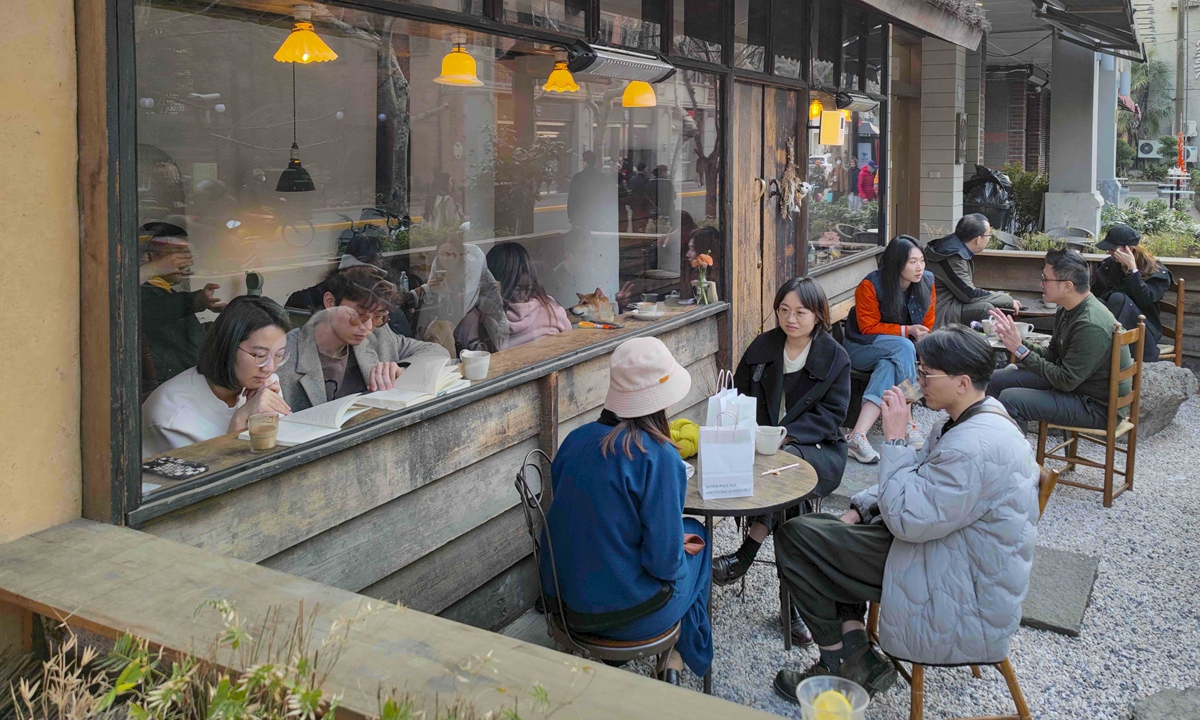
People drink coffee at a coffee shop in Shanghai. Photo: VCG
Shanghai leads the international coffee culture with more than 10,000 coffee shops, the most in a single city worldwide. "It is undoubtedly synonymous with 'China's coffee pioneer scene,'" Pu'er barista Zhang Rongmao told the Global Times. "Trends that start there often go nationwide within a year or two."However, "internationalization" alone cannot capture the pioneering nature of Shanghai's coffee scene. What truly sets it apart is how coffee has breathed new life into the city's historic nongtang, lane-house neighborhoods.
In Putuo district, an old wool mill saw its water tower turned into a landmark by a tiny café, sparking the mill's rebirth as a creative park. Meanwhile, in Jinshan district, Zhaojia Lane was once a nongtang "dead end" that even locals rarely bothered to walk through. Local resident Huihui, however, saw the potential in this neglected yet peaceful pocket of the city, and converted an old house there into a café. That single café later became the fulcrum that turned the lane into an online sensation. "We now offer not just coffee, but also homestays and dining. This once obscure little lane sees 1,000 to 2,000 visitors a day," Huihui told the Global Times.
Through coffee, Huihui has shown how to turn the city's "leftovers" into fresh urban experiences. Her vision, once personal, is now quietly becoming a shared mind-set for a new generation of coffee entrepreneurs in China. As the main creative engine of China's coffee scene, they are redefining what the "localization" of Chinese coffee really means.
A cup of sugar-coated hawthorn flavored coffee Photo: VCG
"Combining local flavors with coffee is just version 1.0. What we're doing now is binding coffee with the spirit of cities and communities, using local creation to drive exchanges, in business models, production and more," Tian Zichuan, a coffee entrepreneur who runs several cafés in Beijing, told the Global Times.From bean to cup, China's current complete and highly localized coffee industry chain have given coffee professionals like Tian the very basis and confidence to pursue exchanges and introduce Chinese coffee to the world.
When Yunnan's coffee cherries ripen, a Chinese coffee bean's journey begins. Over 500 factories process it at home, then Kunshan, which was named the "Capital of the International Coffee Industry" by the International Institute of Coffee Tasters in 2024, takes over, roasting nearly 60 percent of the nation's beans. From Kunshan and Shanghai, the beans travel far - across streets, across oceans. Coffee from Yunnan alone reaches 43 countries worldwide.
Of course this is not a one-way street. Aiming for shared development and preserving the character of coffee as a global beverage, China has itself become the fourth-largest export market for Ethiopia - the birthplace of coffee.
"China's approach to coffee exchange is one of openness and reciprocity, not monopoly. This two-way flow gives coffee a cultural exchange value that transcends its identity as a mere cash crop," coffee expert Liu Haifeng told the Global Times.
Touring around the world, no matter if coffee beans make their way to cafés and homes, they will finally meet their final partner: the coffee machine. Nearly 80 percent of the world's coffee machines are made in China, mostly in Shunde, Guangdong.
"Beyond products, we are also promoting exchanges with countries in talent and skills," Liu told the Global Times. He added that the goal of Chinese coffee's global journey is eventually to enable "China's coffee standards to participate in international standard-setting and to have a say in global coffee culture."
RELATED ARTICLES