China’s trade-facilitating technologies in Yiwu offer insights for overseas sellers
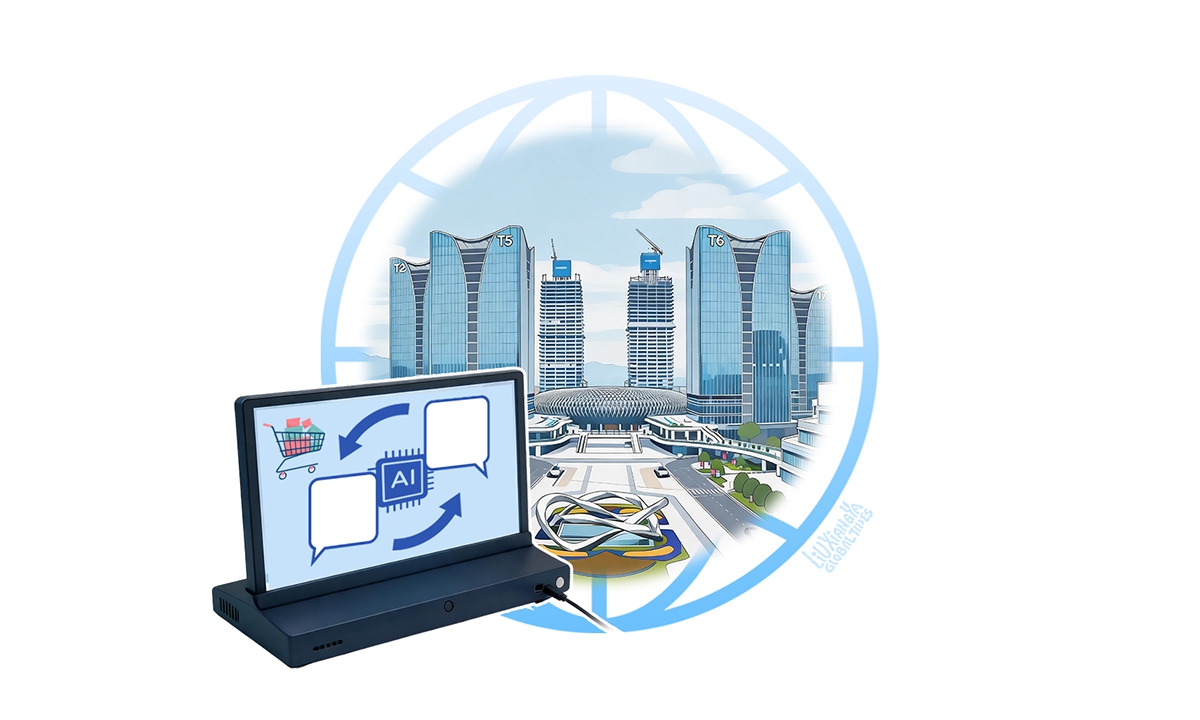
Illustration: Liu Xiangya/GT
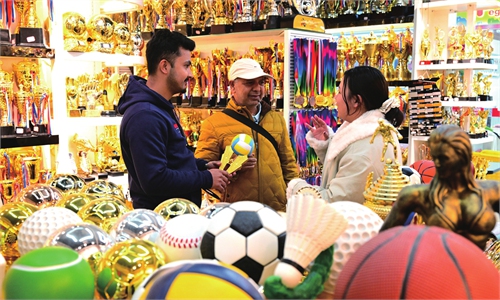
In a shop in Yiwu, a merchant negotiates with an Italian buyer using a translation app - a scene increasingly common in the city, long seen as a bellwether for China's foreign trade. The Yiwu Shangbao newspaper reported on Thursday that the market, once reliant on calculator-based bargaining, has now widely adopted real-time translation devices powered by artificial intelligence (AI). The change is subtle but telling: technology is smoothing communication between small traders and international clients, with the potential to facilitate cross-border trade.Before the introduction of translation technology, some Yiwu merchants had limited foreign language skills and relied on a rudimentary method of negotiating prices. They would type a number into a calculator for a foreign client, who would then respond with a number of their own choosing. With few shared words to bridge the gap, these exchanges were slow and inefficient. Today, that process has largely been replaced by advanced real-time translation tools, capable of translating multiple languages, effectively addressing the challenge faced by Yiwu merchants of communicating across a wide range of languages.
Looking at the broader picture, the Yiwu Global Digital Trade Center, the city's sixth-generation market that opened in October 2025, has been continuously advancing the iteration of its AI infrastructure and digital capabilities. From real-time multilingual translation to AI-supported product design and promotion, these tools are steadily enhancing the efficiency and scope of Yiwu's foreign trade. Together, they point to a broader transformation: the city is moving toward becoming an AI-driven trade hub, a shift evident in a growing range of practical, technology-enabled business scenarios.
For instance, a merchant can record a short video in Chinese and, using AI translation tools, generate versions in as many as 36 languages including English, Spanish, and Russian within seconds, attracting overseas buyers to inquire about product details, according to the Yiwu Shangbao. Media reports suggest that an increasing number of Yiwu merchants are using AI-translated multilingual videos on social media platforms, which has generated both traffic and orders, contributing to higher overall revenue.
Beyond enhancing communication through AI translation, digital technologies are increasingly applied across product design, sales, and logistics. According to CCTV News, once customer orders are received, technicians can use AI to process specifications for fabrics, decorations, and other design elements, generate sample prototypes, and even produce model images - all within 10 minutes - substantially reducing design and sampling costs. Moreover, e-commerce platforms, livestreaming, and digital avatars are also becoming routine parts of daily sales operations in Yiwu, further streamlining trade and extending the reach of local merchants.
The role of new technologies in trade, including AI, extends beyond exports of Chinese goods. Yiwu, as a hub for small commodities, is also seeing a rise in imports, reflecting broader trends in foreign trade. According to Yiwu Customs, the city's imports reached 30.76 billion yuan ($4.53 billion) in the first quarter, up 52.2 percent year-on-year, with consumer goods imports growing 41.5 percent over the same period.
Technological development is moving swiftly in China, giving rise to a variety of new applications, from AI-powered translation to digital avatars and livestreaming. These innovations are not limited to facilitating exports; they also offer potential to support imports and help firms better leverage opportunities in the Chinese market.
China's market offers considerable opportunities. As incomes rise, consumers are increasingly able to purchase foreign goods. When effectively applied, new technologies can serve as a bridge, connecting overseas sellers with a wider range of Chinese consumers and helping to promote imports.
China has been steadily expanding its high-level opening to the world, fostering increasing trade interactions between domestic and foreign firms. Import expos, for example, provide opportunities for direct engagement between overseas suppliers and Chinese buyers. When supported by technology - through seamless real-time translation, livestreaming, or other digital tools - these channels can enhance the visibility of imported products.
The practices emerging in Yiwu provide useful insights for overseas manufacturers and sales teams. Even simple devices, such as translation headsets and portable translators that have become common in the Chinese market, can have an outsized impact when integrated thoughtfully into trade operations.
Yiwu remains one of China's most active centers of foreign trade. The city's journey from calculator-based bargaining to AI-powered real-time translation offers more than a snapshot of technological adoption; it illustrates how digital tools are reshaping everyday trade practices, with implications that extend beyond China's borders.
The author is a reporter with the Global Times. bizopinion@globaltimes.com.cn
RELATED ARTICLES