Charting a new future for China-US relations through a 'new positioning': Global Times editorial
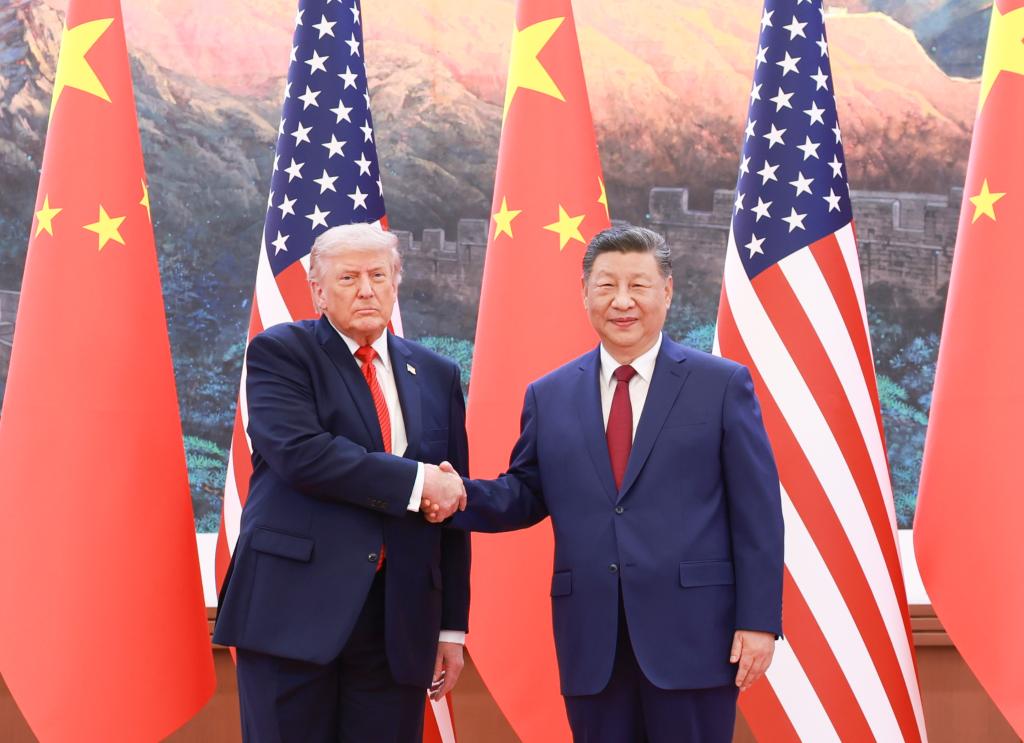
Chinese President Xi Jinping holds talks with US President Donald Trump, who is on a state visit to China, at the Great Hall of the People in Beijing, capital of China, May 14, 2026. (Xinhua/Ding Lin)
Chinese President Xi Jinping on Thursday held talks with US President Donald Trump, who is on a state visit in China, at the Great Hall of the People in Beijing. The two heads of state agreed on a new vision of building a constructive China-US relationship of strategic stability as a "new positioning" in bilateral relations, providing strategic guidance for the bilateral ties over the next three years and beyond. This "new positioning" charts a new course for the giant ship of China-US relations to navigate through storms and sail smoothly, while also injecting greater stability and certainty into the future of global development.President Xi clearly pointed out that "constructive strategic stability" means positive stability with cooperation as the mainstay, healthy stability with competition within proper limits, constant stability with manageable differences, and lasting stability with expectable peace. These "four stabilities" paint a clear and feasible blueprint for China-US relations. It is not a stopgap measure, but a long-term approach. It is not a zero-sum game, but a mutual benefit and win-win cooperation. The "four stabilities" lead strategic stability with a constructive attitude and safeguard long-term development through strategic stability, fully demonstrating that China-US relations are a relationship between major powers fully capable of helping each other succeed and prospering together.
The proposal for a "new positioning" of China-US relations is rooted in a profound insight into the trends of history and a precise grasp of the two countries' shared interests. At the Great Hall of the People, President Xi raised three fundamental questions regarding China-US relations: Can China and the US overcome the Thucydides Trap and create a new paradigm of major-country relations? Can we meet global challenges together and provide greater stability for the world? Can we build a bright future together for our bilateral relations in the interest of the well-being of the two peoples and the future of humanity? Xi emphasized that these are the questions vital to history, to the world, and to the people, as well as the questions of our times that the leaders of major countries need to answer together.
The building of "a constructive China-US relationship of strategic stability" marks another crucial step toward creating a new paradigm for major-power relations. Fifty-five years ago, the Ping-Pong Diplomacy between China and the US broke the ice that had frozen relations for more than two decades, becoming a major event in the history of contemporary international relations. Since then, the two countries have continuously written remarkable chapters of friendship through numerous stories of openness and cooperation. History has repeatedly proven that turning our back on each other is not an option, trying to remodel the other is unrealistic, and that any conflict or confrontation would have unbearable consequences for both sides.
The meeting between the Chinese and US presidents lasted more than two hours. President Trump called President Xi a great leader and China a great country, saying that the US and China are the most important and most powerful countries in the world, and the two presidents can "do a lot of big and good things for the two countries and the world." The US side's more objective and equal approach toward China reflects the underlying logic behind the "new positioning" of China-US relations.
The building of a "constructive China-US relationship of strategic stability" demonstrates the willingness of both countries to jointly provide greater stability and more public goods for the world as major powers. Looking globally, whether it is easing regional flashpoints, addressing new challenges in global governance, or exploring new frontiers for human progress, all depend on a stable, healthy, and sustainable China-US relationship. The two presidents exchanged views on major international and regional issues, such as the Middle East situation, the Ukraine crisis, and the Korean Peninsula, and agreed to support each other in hosting a successful APEC Economic Leaders' Meeting and G20 Summit this year, outlining a new path of "win-win cooperation for China, the US, and the world."
The building of "a constructive China-US relationship of strategic stability" also responds to the expectations of people in both countries and around the world for mutually beneficial development. Compared to nine years ago, the business delegation accompanying President Trump on his visit to China has shifted from being dominated by representatives from the energy, aviation, and agriculture sectors to being led by technology leaders and Wall Street elites. This clearly shows that the list of China-US cooperation areas continues to expand and deepen. The seventh round of China-US economic and trade consultations held in South Korea produced "generally balanced and positive outcomes." These practical measures vividly demonstrate how the "new positioning" is being translated into concrete actions.
At the welcoming banquet for President Trump that evening, President Xi again pointed out that whether or not we could have mutual respect, peaceful coexistence, and win-win cooperation is the key to whether the relationship can advance steadily. A "constructive China-US relationship of strategic stability" should not be merely a slogan, but a commitment reflected in actions from both sides toward the same direction. Only by strengthening the foundation can the building of China-US relations stand firm; if the foundation is shaken, there can be no meaningful constructive or strategic stability.
On Thursday, President Xi and President Trump visited the Temple of Heaven. The two leaders took photos together on the spacious square of the Hall of Prayer for Good Harvests. Reuters commented that the Temple of Heaven is a place where emperors once prayed for good harvests, and that the two sides were seeking "a good harvest" there. The "new positioning" of "a constructive China-US relationship of strategic stability" offers people a vision where China and the US move beyond a zero-sum game, work together to address challenges, and share development opportunities from a new starting point. The strategic guidance of the two heads of state not only points the direction for bilateral relations, but also injects valuable confidence and positive energy into world peace and development.
RELATED ARTICLES