IN-DEPTH / IN-DEPTH
Deadly shadows at sea
How a luxury expedition cruise became the site of a rare hantavirus outbreak
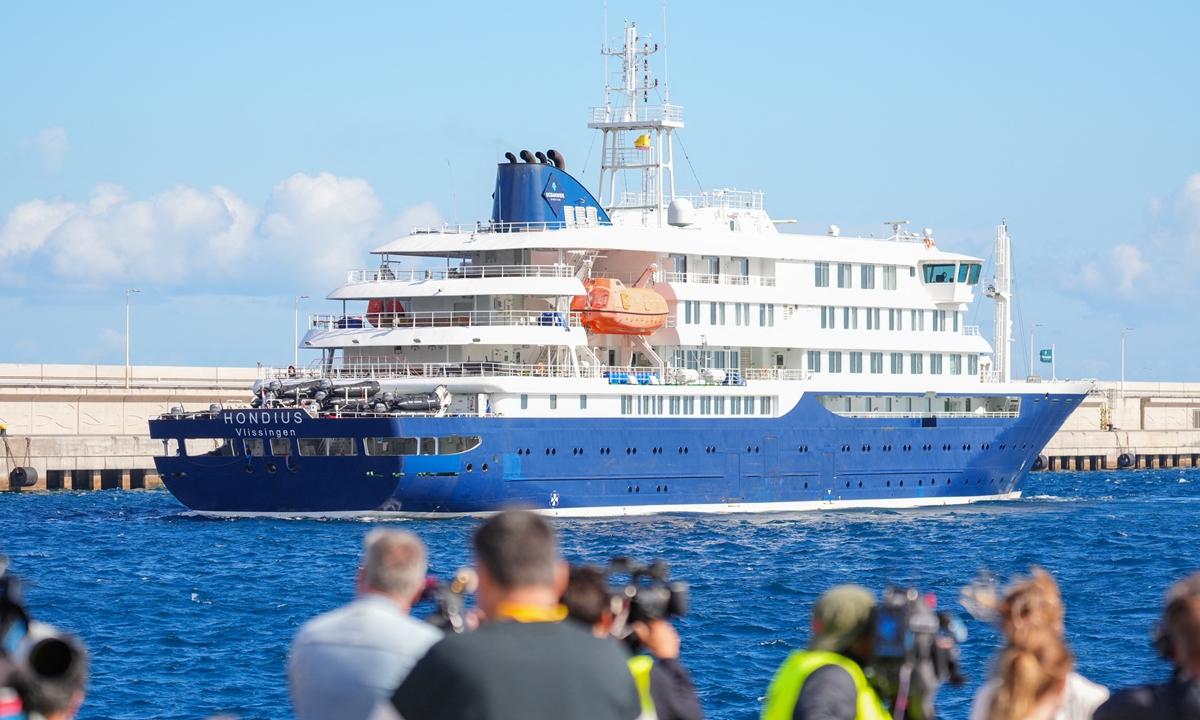
The cruise ship MV Hondius is docked in the Granadilla Port before setting course for the Netherlands on May 11, 2026, in Tenerife, Spain. Photo: VCG
"All we want right now is to feel safe," travel vlogger Jake Rosmarin said in a tearful message from the MV Hondius cruise ship - one of the first public videos from a passenger as the ship became mired in anxiety over a hantavirus outbreak that led to three deaths this month.
"What's happening right now is very real for all of us here. We're not just a story. We're not just headlines. We're people," Rosmarin said in the video he posted online on May 4.
While not everyone aboard shared the same sentiment, the journey proved far more difficult than the 147 passengers and crew from 23 countries had imagined when they boarded the sleek Dutch-flagged expedition vessel MV Hondius, operated by Oceanwide Expeditions, for what was supposed to be a premium bird-watching and Antarctic expedition.
Passengers paid top dollar for a dream voyage but instead found themselves stranded in the vast, windswept expanse of the South Atlantic before the ship was eventually rerouted and allowed to dock in Tenerife in Spain's Canary Islands. Health officials from several countries involved have said the ship's passengers, who started evacuating the vessel on Sunday, will be closely monitored upon returning to their home countries.
The World Health Organization said on Wednesday that 11 confirmed cases of hantavirus infection linked to the MV Hondius have been identified, including three deaths (case fatality ration 27 percent).
Health experts contacted by the Global Times responded to public concerns, pointing out that the possibility of large-scale transmission of the virus remains low.
Yet many people following the unfolding crisis continue to worry about the potential for further spread and what practical steps passengers can take to safeguard their health, especially on long-haul journeys.
'Patient Zero'
Seventy-year-old Dutch ornithologist Leo Schilperoord has been identified as the likely "Patient Zero" behind the hantavirus outbreak on the MV Hondius.
He developed symptoms around April 6 and died on board on April 11. His 69-year-old wife, Mirjam Schilperoord, also Dutch, disembarked later and died in South Africa after her condition worsened during a flight to Johannesburg, International Business Times (IBT) reported.
Three deaths have been linked to the outbreak so far. In addition to the Dutch couple, a German national died on May 2 aboard the ship.
The tragedy is likely to be traced to a municipal landfill near the southern Argentine city of Ushuaia. The landfill, about four miles outside of the Argentina city, is a site which local residents often avoid due to the sprawling waste facility, but the place remains popular among global birdwatchers for the opportunities to photograph the rare white-throated caracara, a species first documented by Charles Darwin.
On March 27, the Schilperoord couple visited the municipal landfill. Four days later, they boarded the vessel.
It started out as an idyllic trip. Aboard the MV Hondius, 59 crew members looked after 88 passengers - most of them amateur birdwatchers aged 60 and older. Turkish travel vlogger Ruhi Cenet, who boarded the ship on April 1, described the voyage in an interview with AFP.
Things turned strange on the morning of April 12, when the captain announced over the microphone that a passenger had died. The captain initially described the death as due to natural causes, according to Cenet.
Argentine health authorities suspect the couple was exposed while navigating the rubbish mounds. Investigators believe they inhaled aerosolised particles from the feces of long-tailed pygmy rice rats dwelling in the trash. These rodents carry the Andes strain of hantavirus, as per the IBT.
As to why the Andes virus was suspected as the target, Wang Xinyu, deputy director of the Infectious Disease Department of the Shanghai-based Huashan Hospital of Fudan University, analyzed in an article published on WeChat public account that unlike the viruses carried by the common house rats found almost everywhere across the Eurasian continent, the Andes virus has a highly "picky" host - the long-tailed pygmy rice rat. This small rodent is mainly distributed in the Patagonia region of southern South America, and Ushuaia lies at the very heart of this area.
The first records of human-to-human transmission of the virus date back to 1996 in Argentina, where doctors discovered that several family members who had never visited the wilderness were infected. Human-to-human transmission was ultimately confirmed through viral genome sequencing, Wang wrote in the article.
For a Chinese traveler surnamed Chen, the outcome was far more fortunate.
"Chen has shown no related symptoms for 39 days since disembarking. All hantavirus nucleic acid test results have been negative. After expert assessment, Chen poses no infection risk and no risk of community transmission," read an announcement by the Yibin Center for Disease Control and Prevention on May 9.
On March 31, this Chinese citizen was fortunate to leave the MV Hondius cruise ship in time. The very next day, the ship's first hantavirus case boarded. The two had no overlap in time or space.
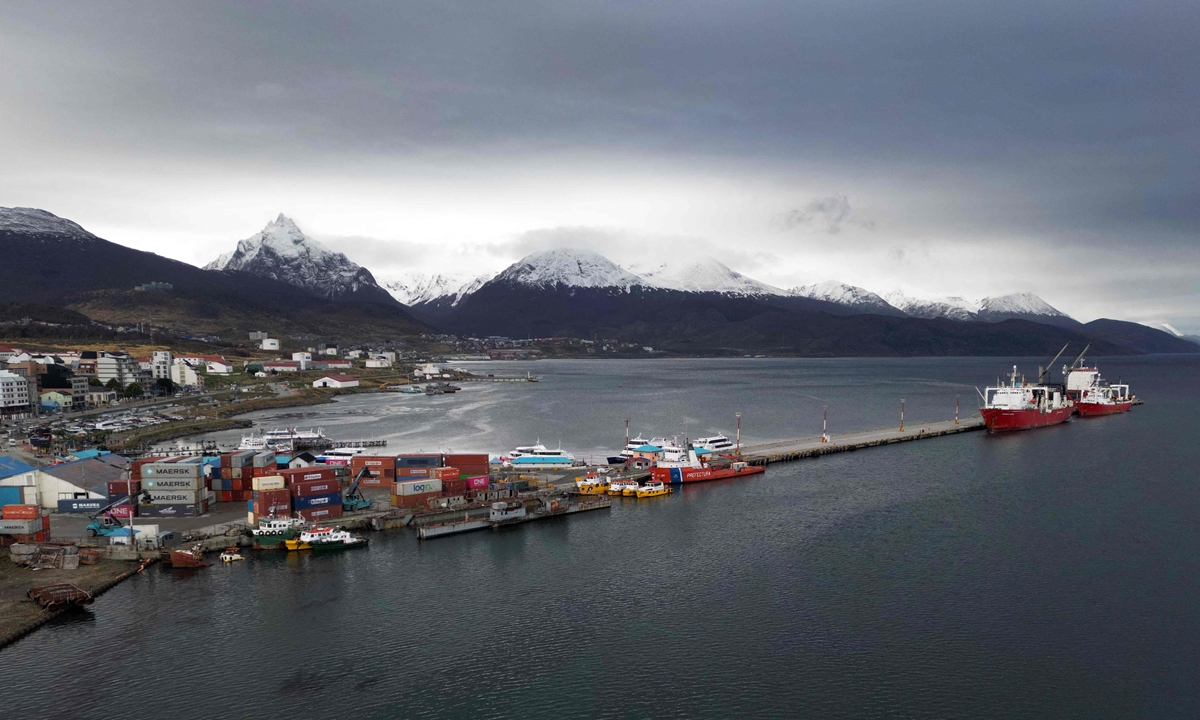
Aerial view of Ushuaia harbor in Tierra del Fuego, Argentina, on May 13, 2026. The MV Hondius cruise ship departed from there on April 1, 2026. Photo: VCG
Origin of a name
Lu Hongzhou, president of Shenzhen Third People's Hospital and director of the Training and Research Cooperation Center for Newly Emerging Infectious Diseases Clinical Diagnosis and Treatment at the WHO, told the Global Times that hantavirus was first isolated in 1978. By 2018, the International Committee on the Taxonomy of Viruses had recognized 36 species of hantavirus capable of infecting mammals.
According to a report from The Korea Herald, the hantavirus was first isolated by South Korean virologist Lee Ho-wang from a rodent captured near the Hantan River. Thus, it was named after the river as the Hantaan virus at the beginning and became known more broadly as hantavirus later.
The natural hosts of hantaviruses are predominantly rodents such as rats and mice. Large amounts of the virus may be present in the feces, urine and saliva of rodents like rats. These excreta can form aerosols. In relatively enclosed spaces or with close contact, people may inhale the aerosols through the respiratory tract and become infected, Li Tongzeng, chief physician with the Infectious Diseases Department of Beijing You'an Hospital, told the Global Times.
According to Li, infection can also occur when rodents contaminate human food with their feces, urine or saliva, and people then consume the contaminated food. Another route of infection is direct scratches or bites from rodents, as well as direct contact with their excreta.
According to the WHO, symptoms typically occur from 1-6 weeks after initial exposure to the virus. However, symptoms may appear as early as one week and as late as eight weeks following exposure.
Cenet, who disembarked from the ship on April 24 along with about 20 other passengers, told AFP that he was startled to see that, at the beginning, "everyday life continued" on the ship following the captain's announcement." To be safe, he and his cameraman chose to self-isolate.
Hantavirus infections are associated with a case fatality rate of between 1 and 15 percent in Asia and Europe and up to 50 percent in the Americas, according to the WHO. In specific, fatality rate of the Andes variant could reach about 30-50 percent, Li said.
"The disease progresses rapidly once entering the cardiopulmonary phase, and cardiopulmonary failure and life-threatening conditions may occur within 24 to 48 hours," he said.
Lu said that it usually requires the infected individual to shed the virus during the acute phase to transmit the Andes virus to another person. But the Andes virus is generally not shed in large quantities in the respiratory tract, making human-to-human transmission often unlikely.
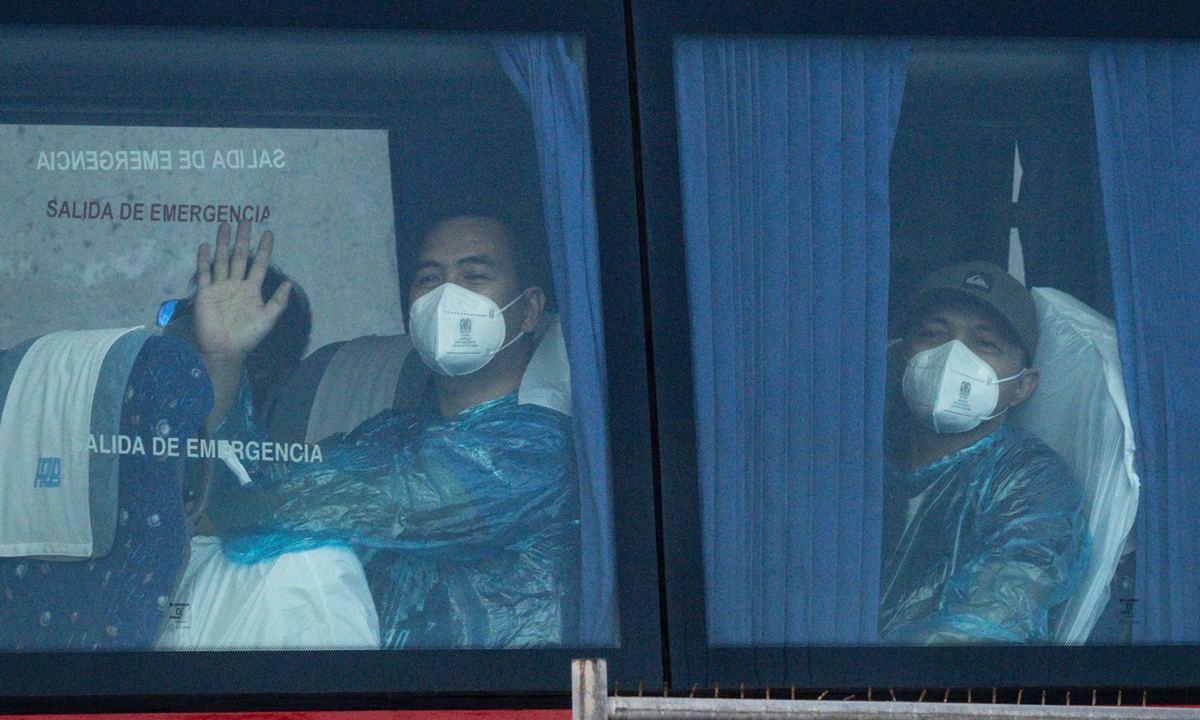
A passenger from the final group to be evacuated from the MV Hondius waves from a bus on the way to the airport in the Granadilla Port on May 11, 2026, in Tenerife, Spain. Photo: VCG
Further observation required
Based on current evidence, this incident is a spillover event involving an ancient virus from its natural habitat. It is not the first time this virus has spilled over - it has simply occurred in a different setting, health experts pointed out.
"Whether the event will end in the near term depends on whether returning cruise passengers develop symptoms during their subsequent six-week home isolation period and whether any second-generation cases appear. So far, no cases have emerged outside of controlled monitoring," Zhang Wenhong, a leading infectious disease expert and professor at Huashan Hospital affiliated with Fudan University, wrote in the article published on the hospital's WeChat account on Sunday.
In an interview with Yicai, Zhang stressed that climate change is reshaping infectious disease risks in more subtle and systematic ways. "Throughout history, many major infectious disease crises have occurred because pathogens in nature have persistently tried to breach species barriers and enter human society," he said.
Zhang noted that the root causes of these outbreaks are often closely linked to human activities, environmental changes, and the process of globalization.
This outbreak also highlighted vulnerabilities at the intersection of tourism, the wilderness, and emerging infectious diseases.
On Tuesday, the vessel Ambition arrived in Bordeaux carrying 1,233 passengers, most of them British or Irish nationals. About 50 people were showing symptoms of norovirus, French health officials said, according to a report from the Guardian.
The cruise industry has previously faced scrutiny over COVID outbreaks. In February 2020, the Diamond Princess remained at anchor outside the port of Yokohama for over a month due to more than 700 cases of COVID-19 infection.
"The Andes virus is fundamentally different from COVID-19. The coronavirus was indeed a completely new virus at that time, whereas there is already a wealth of research data on the Andes virus," Li said.
He suggested that whether traveling domestically or abroad, people should proactively learn about local endemic infectious diseases. If any symptoms develop within two months after returning from travel, people must not take it lightly.
Medical institutions in various countries have also been taking action. In China, many institutions like Beijing You'an Hospital have launched travel medicine clinics, providing travelers with consultations, physical examinations and other services before and after trips.
In an interview with the US morning TV program Today on Tuesday, Rosmarin, who is still in quarantine, appeared to have moved past his initial anxiety. "I feel good right now," he told the co-hosts.
RELATED ARTICLES