‘China-US relations are moving toward a more stable new phase’: Chinese scholar who attended the China-US state banquet
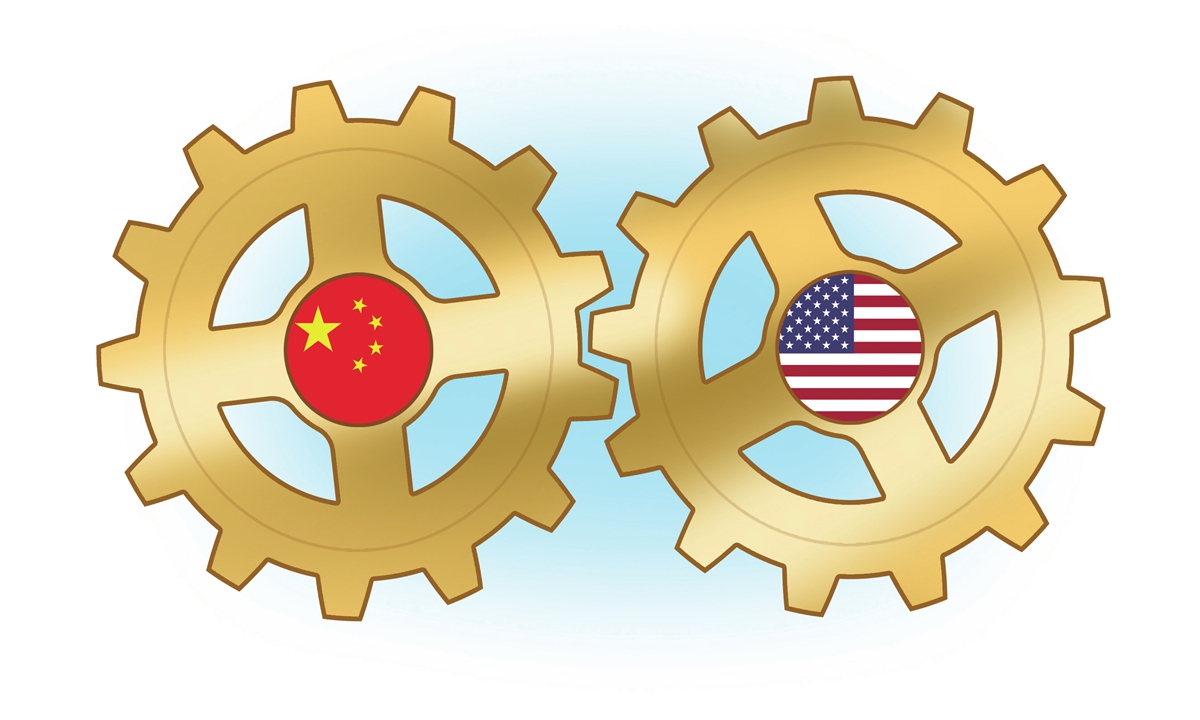
Illustration: Liu Rui/GT
On the evening of May 14, a welcoming banquet for US President Donald Trump, who was on a state visit to China, was held in the Great Hall of the People in Beijing. Wu Xinbo (Wu), dean of the Institute of International Studies of Fudan University, was invited to attend the important event. Taking advantage of this rare opportunity, the Global Times (GT) had an in-depth conversation with Wu, covering a range of key topics, including the new positioning of China-US relations, the major outcomes of the latest China-US summit, the Taiwan question and the future trajectory of bilateral ties.
GT: What was your impression of the banquet?
Wu: The two heads of state delivered warm and enthusiastic speeches on bilateral relations, while guests from various sectors of both countries engaged in friendly exchanges in a relaxed and pleasant atmosphere.
One interesting detail was that when the song "Y.M.C.A." was played, the American guests immediately lit up upon hearing what many called "Trump's campaign anthem." There was an instant sense of relaxation in the room, and some even mimicked President Trump's signature dance moves.
In terms of seating arrangements, apart from the main dining table, guests from China and the US were seated alternately at every other table. The event created opportunities for dialogue and exchange, which is exactly what China-US relations need today.
Such a positive atmosphere made me realize the historical significance of this summit: After a period of twists and turns, the bilateral relationship is moving toward a more stable new phase.
GT: How do you understand the "constructive China-US relationship of strategic stability"? How is it different from the past bilateral relations?
Wu: The agreement between China and the US on a new vision of building a constructive China-US relationship of strategic stability is the most important political consensus reached during this summit.
First is "strategic stability." Since the Busan meeting in October last year, China-US relations have entered a relatively stable period. The main reason for this was that the US had to call a temporary truce to catch its breath after wielding the "big sticks" of tariffs and sanctions against China and facing strong countermeasures from the Chinese side. That kind of stability was neither sustainable nor solid.
"Strategic stability," however, means both sides intend to effectively manage competition and differences by reaching major consensus on important issues or carrying out positive cooperation in key areas, thereby providing substantial support for the stability of bilateral relations. Strategic stability has richer connotations, can last even longer and rests on a more solid foundation.
Second is "constructive." The strategic stability China and the US seek mainly relies on constructive means: expanding the "cake" of common interests through stronger cooperation and effectively managing competition and differences. This is a positive-oriented form of strategic stability.
The new positioning of "a constructive relationship of strategic stability" helps dilute the narrative of China-US competition and improve expectations surrounding bilateral ties. If both sides continue working toward this goal, it would mean the two countries have found a new paradigm of major-country relations for the 21st century and can avoid the "Thucydides Trap."
GT: Could you elaborate on the important outcomes of this summit?
Wu: First, in the economic and trade field. The experience of the previous turbulent period showed that economic and trade ties remain the ballast stone of China-US relations. While they cannot guarantee that the giant ship of China-US relations enjoys smooth sailing at all times, they can prevent it from being capsized by huge waves.
Second, on the Taiwan question. Taiwan was one of the key topics taken up at the summit. When I was interviewed by American journalists, some of them told me they were surprised by the boldness and strong tone with which the Chinese side addressed the Taiwan question. I told them the message from China was very clear: The Taiwan question concerns China's core interests and occupies a top priority in China's national security agenda. US arms sales to the Taiwan region send the wrong signal to separatist forces aimed at "Taiwan independence," which China firmly opposes. If the US wants stable China-US relations, it should firmly oppose "Taiwan independence."
Through in-depth and effective communication, the US side can gain a more comprehensive understanding of China's position, and neither support nor accept "Taiwan independence." These exchanges on the Taiwan question during the summit will help encourage Washington to handle arms sales to the Taiwan region more cautiously, thereby contributing to strategic stability in China-US relations.
Third, broad dialogue, exchanges and cooperation across many fields, including more exchanges on foreign policy, military-to-military relations, law enforcement and people-to-people ties. The US' China policy used to be largely problem-oriented, focusing narrowly on trade and fentanyl while showing little interest in establishing multi-level communication mechanisms with China. At this summit, the US agreed to engage with China in many areas, reflecting the practical needs of bilateral relations and helping expand the positive dimensions of the relationship.
Fourth, coordination and cooperation on international and regional issues. China and the US bear important responsibilities for world peace, security and economic prosperity. During the summit, the two leaders discussed a series of international and regional hot spots, expressing their respective positions and concerns while exploring possible avenues for coordination and cooperation. This not only benefits global peace and stability but also provides important momentum for bilateral relations.
GT: Some people worry that China-US relations may experience new turbulences following this visit. Are such worries warranted?
Wu: We should have full confidence in the future development of China-US relations. First, China is stronger, more confident, more experienced in dealing with the US, and more skillful in strategic and tactical planning. Frankly speaking, the current stability and improvement in bilateral ties are achieved through China's arduous efforts and struggles. As China's strength and strategic resolve continue to grow, its ability to shape China-US relations will only become stronger.
Second, it should be recognized that the Trump administration has undergone a process of reassessing China and the bilateral relations. It came to appreciate China's growing strength and strategic determination, and realized that the bilateral relationship is not a zero-sum game. The US' China policy is therefore paying greater attention to maintaining stable relations and emphasizing reciprocity.
Third, the summit produced many important agreements and consensuses, which both sides need to actively implement in accordance with the guidance of the two presidents. The exchanges between the two countries will increase significantly in the coming period, more cooperative benefits will emerge, and the atmosphere of bilateral relations will continue to improve, creating important opportunities for future development.
Of course, setbacks and twists in China-US relations remain inevitable. The US' hegemonic mindset and domestic politics are the two main factors shaping its China policy. The outcome of this year's US midterm elections may also bring new challenges. Even so, China has both the sincerity to work with the US to open a new stage in bilateral ties and sufficient policy preparation to properly respond to possible turbulence in the relationship.
RELATED ARTICLES