SPORT / MISCELLANY
Chengdu Rongcheng’s breakthrough season inspires new hope for Chinese football
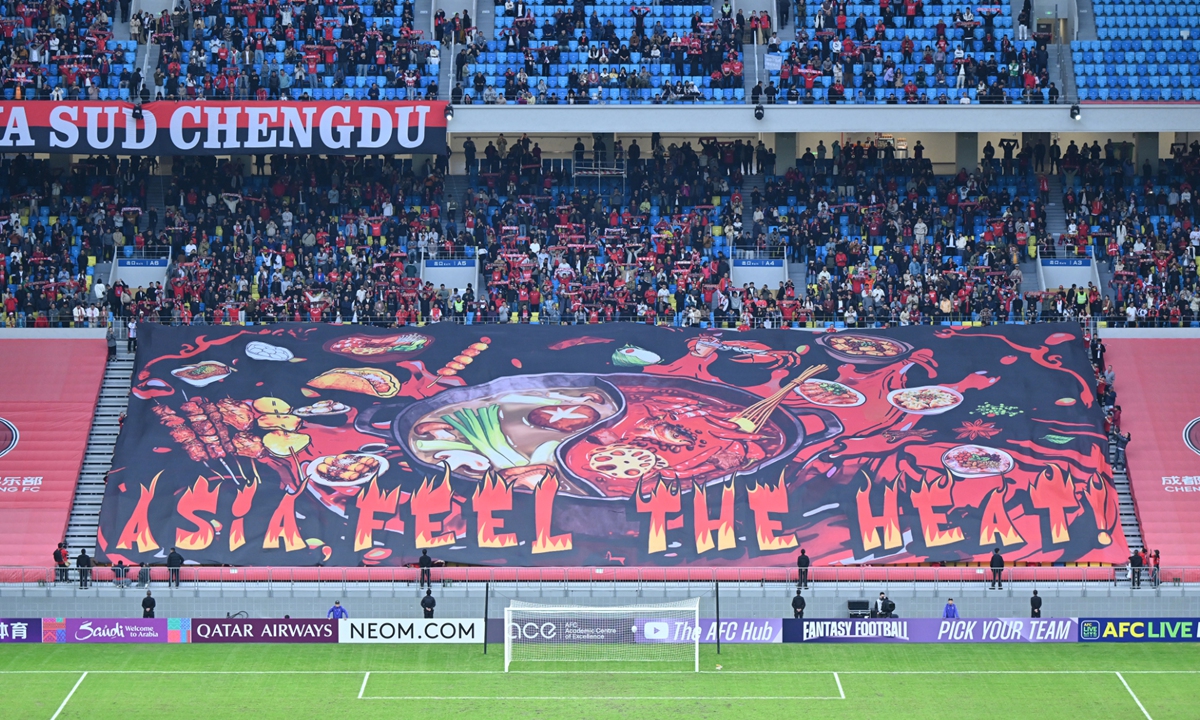
Chengdu Rongcheng Photo: VCG
Few would have predicted that Chengdu Rongcheng, playing only their fourth season in the Chinese Super League, would establish such a commanding lead early in the campaign when the season kicked off. After 12 rounds, the club from Southwest China has emerged as the undisputed pace-setter, collecting 11 wins and one draw for 34 points and sealing the league's unofficial "half-season title" with three rounds of the first half still to play.While the half-season crown carries no trophy, it is often a strong indicator of championship potential. According to current league standings, Chengdu sits 14 points clear of newly promoted Chongqing Tonglianglong, an astonishing margin at this stage of the season. If Rongcheng maintains its form and lifts the trophy in November, it will secure the first top-flight title in its history and break the longstanding dominance of traditional powers.
What makes the league story even more compelling is the geographical shift taking place in the standings. Chengdu, Chongqing and Yunnan Yukun, all based in Southwest China, have all occupied places in the top three, highlighting the growing football strength of the region.
For decades, the center of gravity in Chinese football has tended to be concentrated in megacities such as Beijing, Shanghai and Guangzhou. The emergence of Chengdu, Chongqing and Yunnan suggests a more diverse and competitive league structure. These clubs are backed by deeply engaged supporters and regional identities that have injected fresh energy into the competition.
At the heart of Chengdu's title push is forward and captain Wei Shihao, one of Chinese football's gifted but also controversial attacking players. Long known for his flair and intensity, Wei has rediscovered his best form this season. Recent decisive goals against Beijing Guoan and Tianjin Jinmen Tiger have reminded fans why he remains one of the country's dangerous domestic forwards.
At the same time, younger players such as Hu Hetao of Rongcheng and Liu Zhurun of Shanghai Port are becoming increasingly important for their clubs. Their consistent performances are encouraging signs for China's national teams, which continue to seek a stronger generation of homegrown talent.
The league's revival is not limited to what happens on the pitch.
Attendance figures tell an equally encouraging story. The Phoenix Hill Sports Park Stadium, home to Rongcheng, has become one of the most electrifying venues in Asian football, regularly attracting crowds of around 40,000 or more. Workers' Stadium in Beijing, Suoyuwan Football Stadium in Dalian and Shenhua's home Shanghai Stadium have also enjoyed exceptional support with attendance surpassing 61,000.
The atmosphere at these venues evokes memories of some of the league's most celebrated eras. The league's all-time single-match attendance record remains 65,769, set when Jiangsu FC hosted Guangzhou FC in Nanjing in October 2012.
That number, once thought untouchable, now appears within reach this season.
With stadium capacities expanding and fan enthusiasm surging, the prospect of a new attendance record this summer is increasingly realistic. Beijing's Workers' Stadium can accommodate approximately 68,000 spectators, while the Shanghai Stadium holds more than 70,000. If a title-defining match involving high-profile clubs captures the imagination of supporters, the long-standing benchmark from 2012 could finally be surpassed.
Not everything, however, is moving in the right direction.
Recent rounds have reignited debate over the implementation of the Video Assistant Referee (VAR) system. Several contentious decisions, including the disallowing of a spectacular strike by Zhang Yuning of Beijing Guoan, have drawn criticism from supporters and pundits alike. While VAR is designed to reduce major mistakes, excessive interruptions and inconsistent interpretations have at times undermined the rhythm and emotional flow of matches.
Chinese football has spent years trying to rebuild trust after financial instability, club dissolutions and disappointing national-team performances. The current upswing in interest offers an invaluable opportunity, but sustaining that momentum will require more than packed stadiums. The league must continue improving refereeing standards, youth development and club governance.
Still, for the first time in many seasons, optimism feels justified.
The 2026 FIFA World Cup in North America is set to intensify football fever globally, and unlike some past years, the Chinese domestic season will continue through much of the tournament period. That means fans inspired by the world's biggest sporting event will have immediate opportunities to channel their enthusiasm into supporting their local clubs.
If current trends continue, the summer of 2026 may be remembered not only for Chengdu's remarkable campaign, but also as the season when Chinese football rediscovered its confidence and perhaps filled a stadium with more fans than ever before.
The author is a reporter with the Global Times. life@globaltimes.com.cn
RELATED ARTICLES