Successful launch of SMILE Satellite marks first China-ESA mission-level cooperation
By and Fan Wei Published: May 19, 2026 01:09 PM

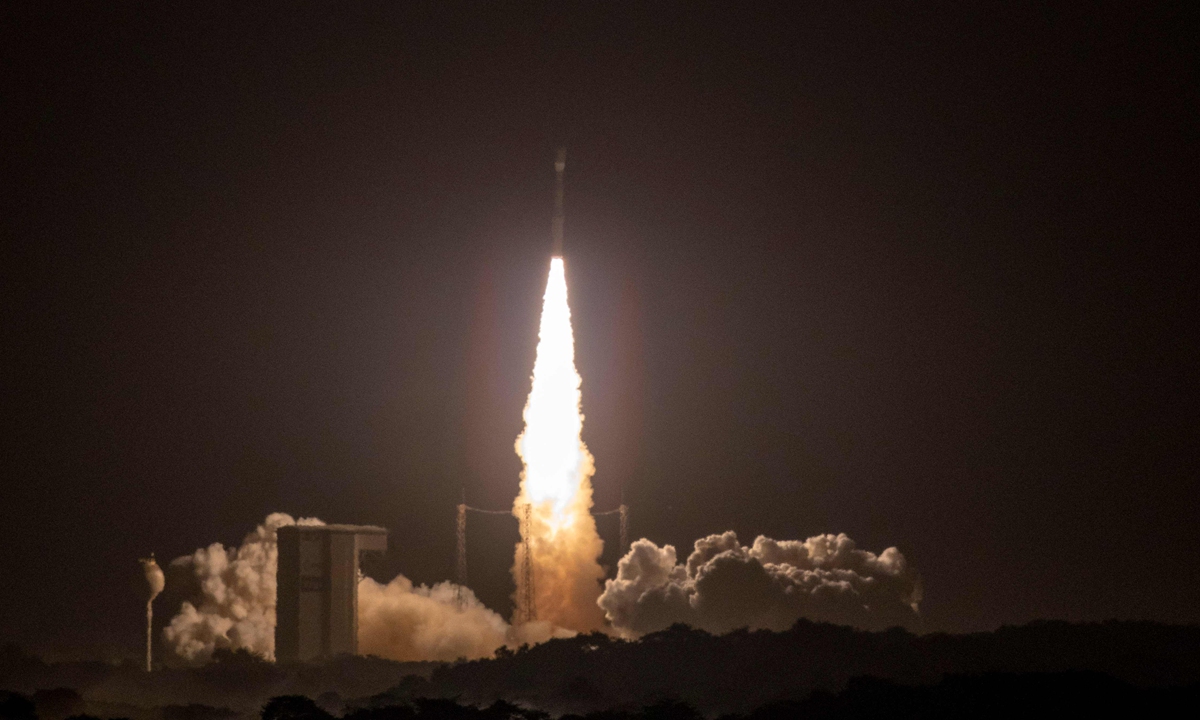
The European Vega-C launch vehicle carrying the SMILE satellite on its first flight, launches as part of a mission developed in collaboration between the European Space Agency and the Chinese Academy of Sciences at the Guiana Space Center in Kourou, French Guiana, on May 19, 2026. Photo: VCG
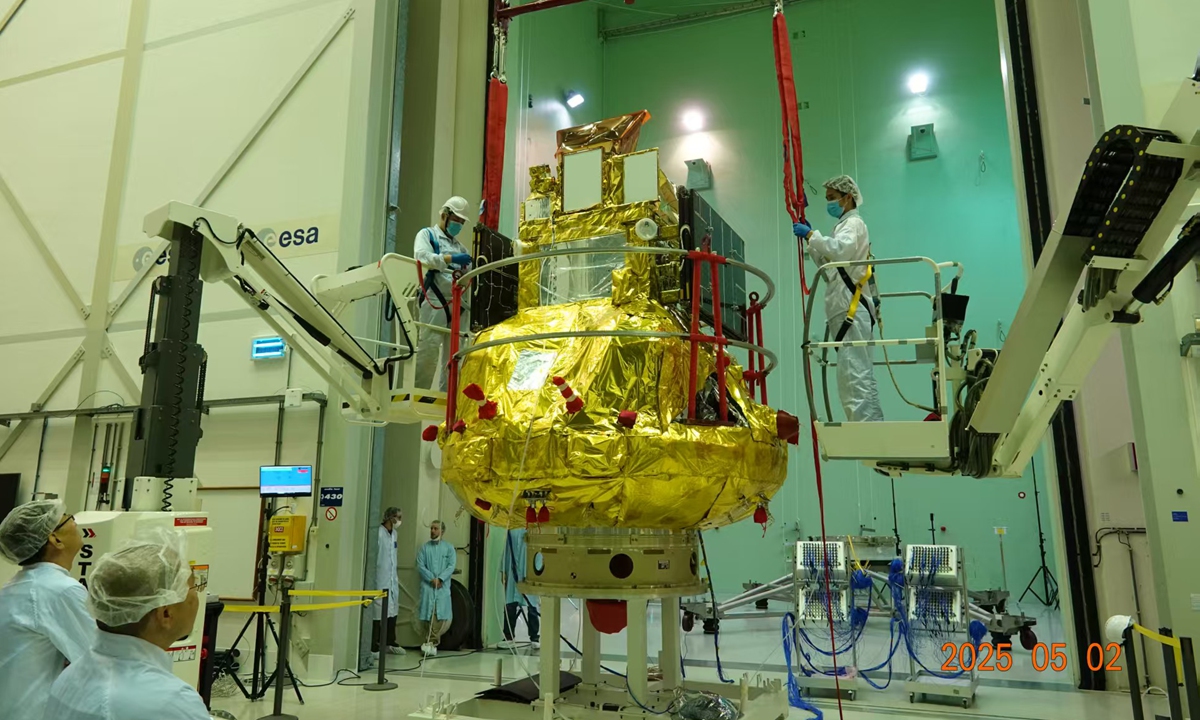
Photos: courtesy of Innovation Academy for Microsatellites of the Chinese Academy of Sciences
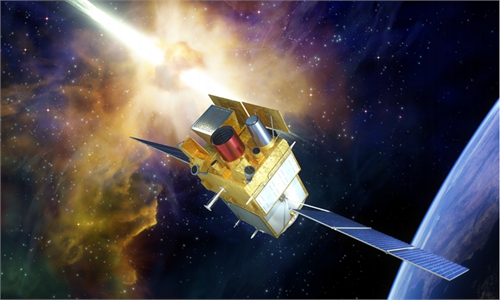
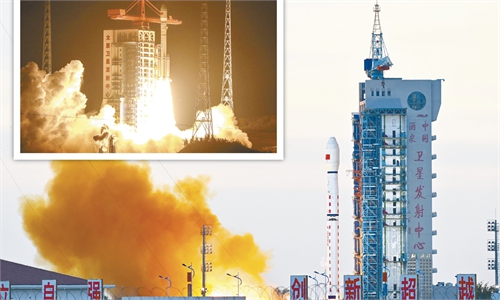
High above our planet, a "cosmic smile" has taken shape. Riding aboard the Vega-C launch vehicle, the Solar Wind Magnetosphere Ionosphere Link Explorer (SMILE) satellite, jointly developed by the Chinese Academy of Sciences (CAS) and the European Space Agency (ESA), took off from the space launch site in Kourou, French Guiana, at 11:52 am on Tuesday.
As the satellite entered its predesignated orbit and extended its solar panels, the launch of the SMILE - China's first mission-level, all-around and in-depth cooperation with the ESA in space science exploration -- has been a complete success, marking a new breakthrough in China-Europe aerospace cooperation, the Global Times learned from the CAS.
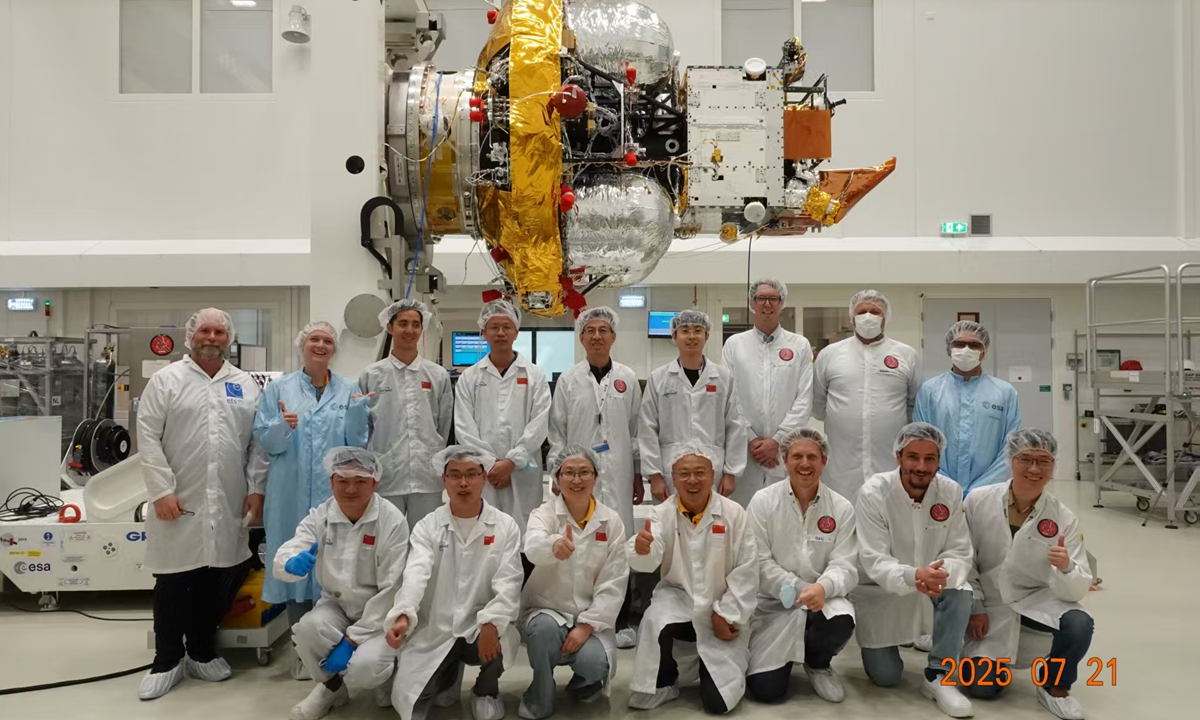
Photos: courtesy of Innovation Academy for Microsatellites of the Chinese Academy of Sciences
The satellite mission will employ a brand-new X-ray imaging technology to achieve, for the first time, panoramic observations of interactions between the solar wind and Earth's magnetosphere. This capability is expected to play a crucial role in understanding and quantitatively analyzing the global characteristics of the sun-Earth coupled system, Zhang Xiaofeng, a researcher at the Shanghai-based Innovation Academy for Microsatellites of the Chinese Academy of Sciences and deputy chief designer of the SMILE satellite system, told the Global Times in a recent interview.
The SMILE mission explores a model of Chinese-European space science cooperation and sets a precedent for future international collaboration in space science, mission insiders said.
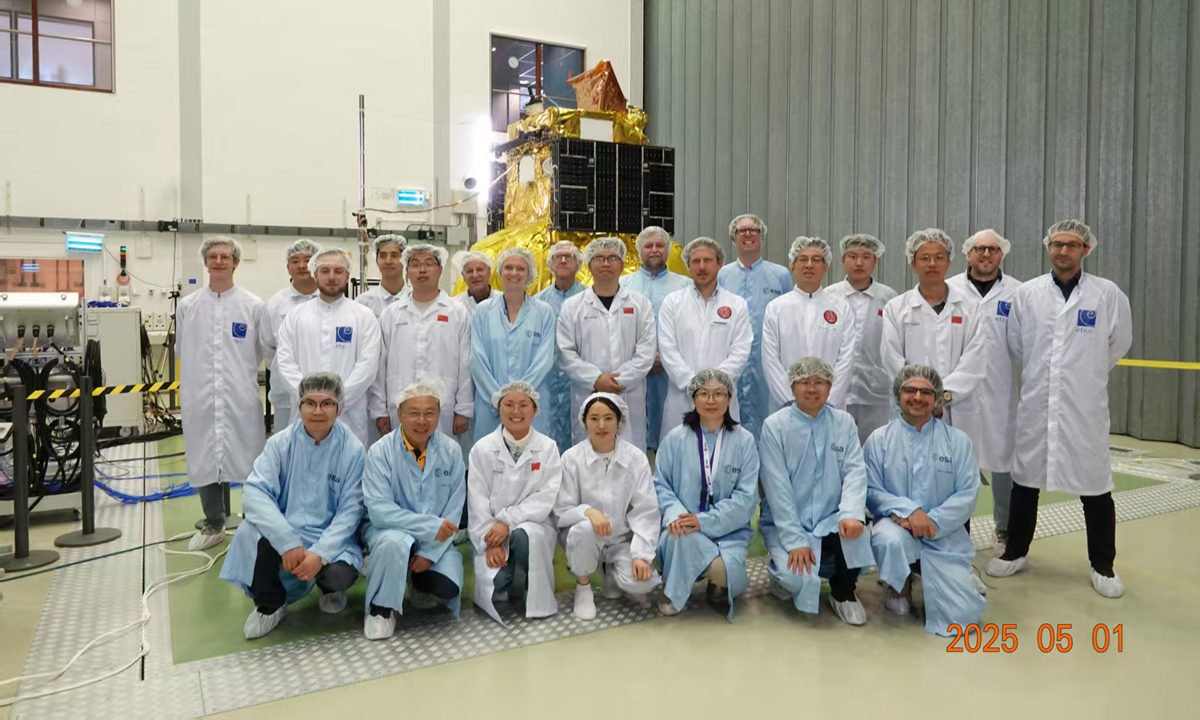
Photos: courtesy of Innovation Academy for Microsatellites of the Chinese Academy of Sciences
Amid the cooperation, the Innovation Academy for Microsatellites of CAS serves as the lead institution for the satellite system, responsible for system design, platform development, and full satellite testing. The satellite's payload module is led by ESA, with the Soft X-ray Imager developed by the University of Leicester in the UK with participation from China's National Space Science Center (NSSC); the Ultraviolet Imager (UVI) is developed by NSSC with ESA's involvement; and the Magnetometer and Low-Energy Ion Analyzer are fully developed by NSSC.
Zhang Yonghe, a deputy director of the academy, told the Global Times that "in the early Sino-French astronomy satellite projects, China cooperated with Europe to learn from French satellite platforms. By the time of the SMILE satellite project, however, China had taken the lead in satellite platform development, while payload responsibilities were shared between China and Europe."
China and Europe have previously achieved fruitful collaboration in space science through projects such as the Dark Matter Particle Explorer, TianGuan satellites, and Sino-French astronomy satellites.
During the SMILE project's implementation, China also proactively helped resolve unexpected challenges, demonstrating a strong sense of responsibility, according to the deputy director.
Zhang further explained that in the SMILE project, the UVI payload was originally assigned by ESA to the Canadian Space Agency, but progress stalled and Canada eventually withdrew. The joint steering committee of the SMILE mission then decided that China would take the lead in developing the UVI payload, with ESA providing image intensifiers and coated mirrors. China's NSSC, together with domestic research institutions, ensured the successful completion of the UVI payload.
What's more, China and Europe will jointly conduct flight control operations during the satellite's orbital maneuvers. Zhang noted that SMILE requires more than 13 ignitions of its 490N engine to transfer from the launch orbit to its mission orbit. These maneuvers require strict monitoring of engine ignition and shutdown states, necessitating not only China's ground station network but also ESA's Southern Hemisphere tracking stations.
To support this, the China Satellite Monitoring and Control Center established dedicated data links with the European Satellite Operations Center, enabling Chinese controllers to receive telemetry and send commands via ESA stations. Both sides signed a joint interface control document allowing ESA to temporarily include Kourou and O'Higgins stations in the network during orbit transfer. End-to-end satellite-to-ground tests verified the reliability of the communication link, according to the mission insider.
"One of the major challenges of the SMILE mission was the extensive post-launch orbital maneuvers and adjustments, where the propulsion system played a crucial role. After launch, China also carried out monitoring and orbit adjustments," Zhang said.
The propulsion system and tracking technologies led by China were pivotal in successfully placing the SMILE satellite into a highly elliptical orbit, according to Zhang.
Zhang emphasized that the success of the SMILE mission builds on deep mutual trust. Looking ahead, both sides plan to innovate cooperation models, including the proposed CATCH microsatellite constellation project, which will shift collaboration from single satellites to clustered, low-cost constellations and integrate AI to enhance in-orbit detection capabilities.
Zhang highlighted growing international demand, particularly from Southeast Asia, the Middle East, and Africa, for Earth observation, ocean monitoring, and satellite communications technologies.
"For these civil-oriented space technologies, we are also providing corresponding services, helping Chinese aerospace technology expand globally while building an international platform for space cooperation," he said.
Pang Zhihao, a senior space expert who has been closely following the project, told the Global Times on Tuesday that it is worth noting that the name of the SMILE is not only a coincidence of the English acronym but also carries a vivid scientific metaphor. Using the satellite's Soft X-ray Imager, scientists expect to observe structures at the sunward edge of the magnetosphere that resemble a "smiling arc," while the polar cusps at the north and south poles act like "eyes," together forming a "space smile." Behind this cosmic smile lies the key region where the magnetosphere shields Earth from the solar wind - precisely the main target of the satellite's observations, Pang explained.
From scientific breakthroughs to practical applications, from technological innovation to international cooperation, every achievement of the mission will reshape our understanding of near-Earth space. When SMILE captures that beautiful "space smile" in orbit, it will not only pay tribute to humanity's spirit of exploration but also serve as a guardian of Earth, Pang noted.
RELATED ARTICLES