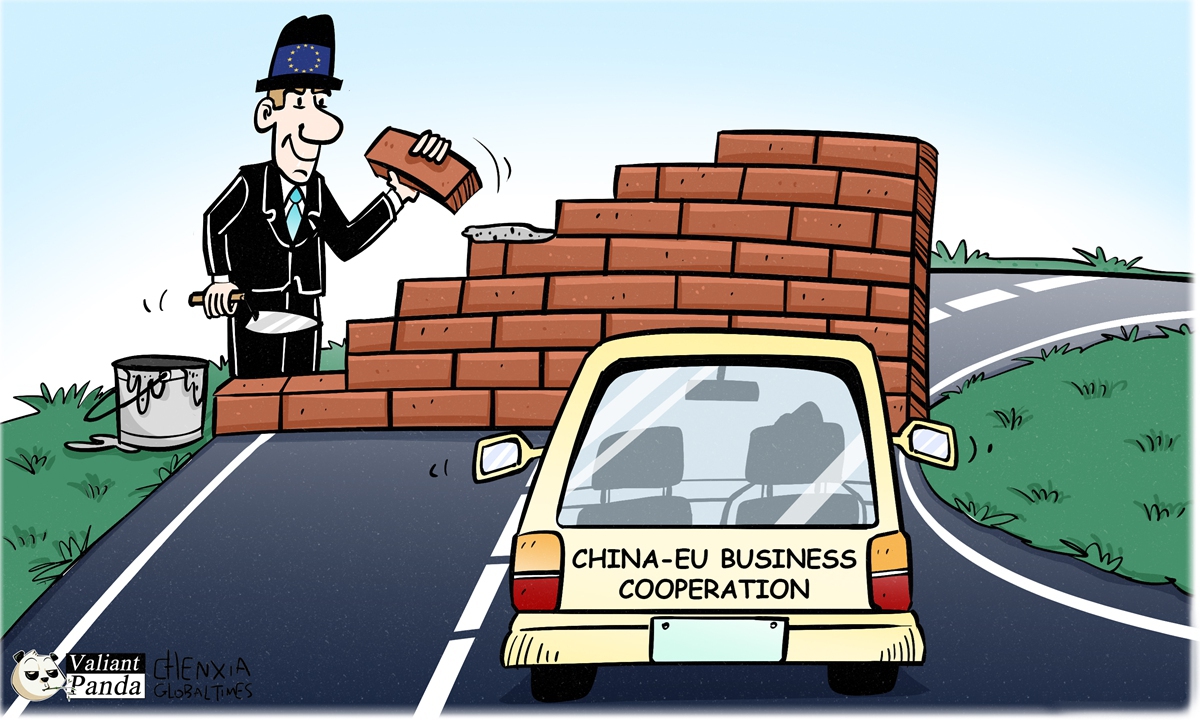
Illustration: Chen Xia/GT
Facing intense competition from China and the US, Europe has grown increasingly anxious about its relative decline - a sentiment reflected in the growing number of European politicians voicing such warnings.In an interview with Politico published on Monday, Juha Martelius, the head of Finland's Security and Intelligence Service, claimed that Europe will likely never be fully independent from foreign technologies because it relies too much on software from the US and hardware from China, likening the situation to "a body infiltrated by two types of cancer."
Another Politico article reported that EU foreign policy chief Kaja Kallas claimed on Sunday that Europe had "a very clear understanding of the diagnosis of the disease" when it came to China, but did not yet have an agreement on the cure.
These remarks reflect anxiety within the EU regarding the current direction of technological development and industrial landscape. Regrettably, however, judging from the EU's current policy trend, their prescriptions are not only headed in the wrong direction but may also worsen the condition.
To be fair, caught in the competition between the US and China, Europe increasingly feels that it is falling behind. This anxiety has given rise to a voice that local industries lack competitiveness and are unable to gain a foothold in external competition, thus requiring policy-level intervention and protection. It is precisely this line of thinking that has driven a flurry of protectionist measures, from the Industrial Accelerator Act to the bloc's relevant cross-border investigative practices targeting Chinese entities under the Foreign Subsidies Regulation. The common thread running through all these initiatives is the construction of trade and investment barriers.
However, mutual dependence does not equal risk. A response strategy built on restriction and exclusion is fundamentally at odds with genuine technological autonomy. The essence of technological self-reliance lies in cultivating innovation capacity and building complete industrial chains, not in simply keeping foreign technology and products out of the market. Trade barriers may temporarily ease external competitive pressure and carve out some market space for domestic firms, but excessive reliance on administrative means to shield the market will strip domestic firms of the incentive to face challenges and upgrade in an open environment, ultimately eroding their long-term competitiveness.
The problem facing the EU today is that political posturing on competition often masks a lack of genuine reform. Rolling out protectionist measures is far easier than cultivating innovation or improving the financing environment for start-ups. Protectionism conveniently blurs the gap between rhetoric and action. When reform is too costly or slow, erecting barriers to delay external shocks and preserve the status quo becomes the path of least resistance.
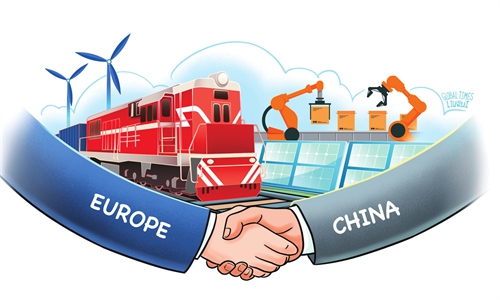
So what is the correct prescription? The answer is hardly a mystery: technological innovation and industrial chain cooperation. If the EU truly wants to enhance its competitiveness, the only sustainable path is to increase research and development investment, foster a local innovation ecosystem, and engage more openly in global industrial chain collaboration and competition.
In emerging fields, Europe is not without foundations. The problem is that its policy environment is overly fragmented and the regulatory burden too heavy, causing a large number of innovative companies to be squeezed out of the market at an early stage. Solving these problems requires internal reform, not external walls.
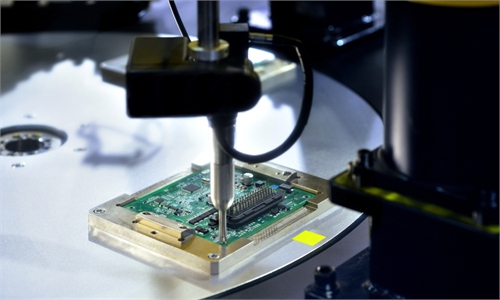
In the manufacturing sector, it is unrealistic for Europe to rebuild a complete supply chain overnight. A more pragmatic approach would be to cultivate irreplaceable technological advantages in key nodes - such as high-end semiconductor equipment and advanced materials - while maintaining cooperative and mutually beneficial industrial chain relationships with manufacturing powerhouses including China.
There is no shortcut to improving industrial competitiveness, nor can it be achieved through political posturing. Europe still has undeniable advantages in basic scientific research, high-end manufacturing processes, green energy technology and other fields - conditions that provide a solid foundation for revitalizing its competitiveness. However, if the EU continues to indulge in creating a comfortable internal environment through trade protection, its industry woes will only spread faster on the hotbed of protectionism.
RELATED ARTICLES