China's May diplomatic blitz: proactive layout demonstrates irreplaceable role as a global stabilizer amid turmoil
By and Li Yu Published: May 22, 2026 12:13 AM

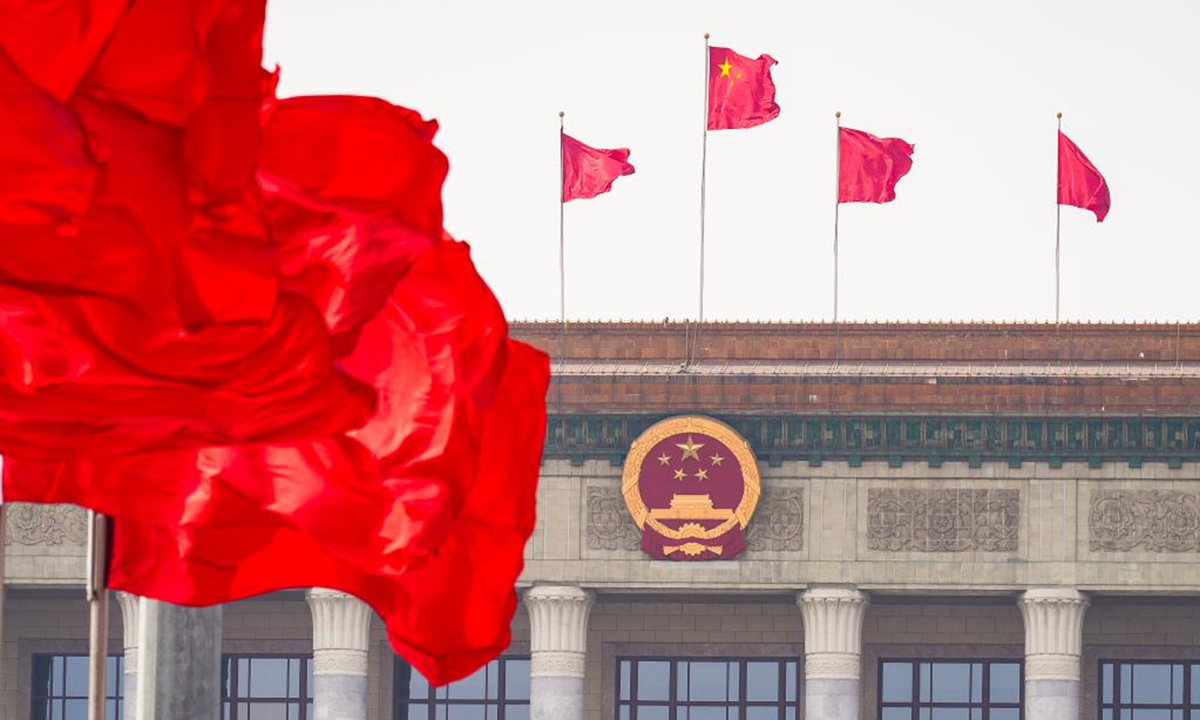
This photo taken on March 12, 2026 shows the Great Hall of the People ahead of the closing meeting of the fourth session of the 14th National People's Congress (NPC) in Beijing, capital of China. (Xinhua)
With the diplomatic red carpet barely rolled up following visits by US President Donald Trump and Russian President Vladimir Putin, Beijing's May diplomatic blitz shows no signs of slowing down. The Chinese Foreign Ministry has announced visits by Pakistani Prime Minister Shehbaz Sharif and Serbian President Aleksandar Vucic in the coming days, keeping the capital in a continuous flurry of diplomatic engagements.
As May unfolds, the global diplomatic spotlight has turned toward China, with a series of high-level bilateral exchanges and home-ground multilateral events unfolding in quick succession.
According to the Chinese Foreign Ministry's official website, at least a dozen foreign dignitaries are scheduled to visit China this month. The visiting delegations come from major powers, neighboring countries, and nations across the Middle East, Europe, and Africa. Analysts noted that these diplomatic engagements are marked by high-level participation, tangible outcomes, and broad geographic coverage.
They added that China's intensive May diplomacy demonstrates its proactive major-power responsibility in a turbulent world. Through high-level bilateral engagements and hosting APEC multilateral events, China has played a constructive role as a stabilizer and promoter of global and regional cooperation. In addition, China is increasingly seen as an indispensable force for stability and shared prosperity.
An inevitable and shared choice
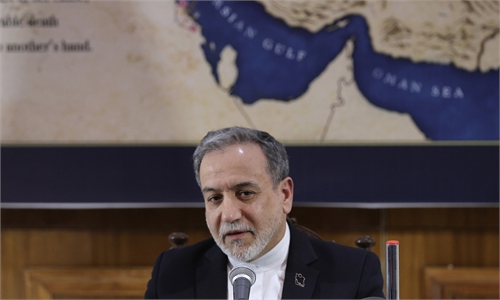
Among the major diplomatic activities hosted in Beijing, the early May talks between Chinese Foreign Minister Wang Yi and Iranian Foreign Minister Seyyed Abbas Araghchi drew widespread international attention. This was the first visit by a senior Iranian diplomat to China amid ongoing conflict, per media reports.
Other early dignitaries to Beijing included Tajik President Emomali Rahmon, Uzbek Prime Minister Abdulla Aripov, Bangladeshi Foreign Minister Khalilur Rahman, and Brunei's Crown Prince and Senior Minister at the Prime Minister's Office, Prince Haji Al-Muhtadee Billah.
In mid-May, summits between heads of state from major powers took center stage.
On May 14 in Beijing, leaders from China and the US agreed on a new vision of building a constructive bilateral relationship of strategic stability. The new vision will provide strategic guidance for China-US relations over the next three years and beyond.
Shortly afterward, Russian President Vladimir Putin paid a state visit to China from May 19 to 20, pushing Beijing's bustling diplomatic agenda to another high.
On Wednesday, the Chinese and Russian leaders hailed a "new stage" in bilateral ties as they agreed to further extend a China-Russia friendship treaty and pledged to work together for a more just and equitable world order, per Xinhua. They also witnessed the signing of 20 cooperation documents in areas including the economy and trade, education, and science and technology.
As the month draws to a close, more high-level visits continue. Pakistani Prime Minister Shehbaz Sharif will visit China from May 23 to 26, Serbian President Aleksandar Vučić from May 24 to 28, and Moldova's Deputy Prime Minister and Foreign Minister Mihai Popșoi from May 21 to 25.
Prior to this, China's capital welcomed foreign dignitaries from two African countries. Barry Faure, Minister of Foreign Affairs and Diaspora of Seychelles (May 18 to 19), and Minister of Foreign Affairs Sara Beysolow Nyanti of Liberia (May 18 to 22).
Li Haidong, a professor at China Foreign Affairs University, believed that the diplomatic blitz in May reflects China's global vision and its status as a responsible major power. It also demonstrates that China's diplomatic philosophy and practices have won growing understanding and support from countries around the world.
Against the backdrop of intensifying geopolitical competition and lingering hegemonism and Cold War mentality, China advocates an equitable and orderly multipolar world, including globalization, mutual respect and sustainable development, Li said, "This has made China an irreplaceable and pivotal driving force for defusing global crises and steering the international order toward a more constructive direction."
Wang Yiwei, a professor at the School of International Studies of Renmin University of China, echoed this view, stating that the world is confronted with overlapping challenges concerning security, development and global governance, while Western countries have largely failed to deliver effective solutions. Against this backdrop, more countries are turning to China for problem-solving ideas and development pathways.
Furthermore, China has demonstrated a proactive, pragmatic and inclusive stance in international affairs. Rather than taking sides or exacerbating confrontation, it maintains communication with all parties.
Citing an analyst, Channel News Asia said in a Thursday report that visits by foreign dignitaries reinforced China's image as a major power whose engagement is sought by rivals, partners and hedging states alike.
"The new era of world affairs is less centered around the West," Samir Puri from Kings College London told the BBC. "For China, these visits are proof that because of its massive economy and new-found diplomatic clout, all roads now lead to Beijing," the BBC remarked on Wednesday.
Openness and win-win pattern
While advancing high-frequency bilateral diplomacy, China also seized the major opportunity of the APEC "China Year" home-ground diplomacy, hosted a series of high-level multilateral meetings in various parts of the country, and sent a clear signal of open cooperation and joint development to economies in the Asia-Pacific region.
The Second Senior Officials' Meeting (SOM2) of APEC China 2026 was held in Shanghai from Monday to Tuesday. More than 1,000 people consisting of representatives from APEC member economies, the APEC Secretariat and the APEC observers participated in these meetings, according to Xinhua.
Addressing the opening ceremony of the meeting on May 19, Chinese Vice Foreign Minister Ma Zhaoxu said that China will focus on the theme of "Building an Asia-Pacific Community to Prosper Together" of this year's APEC meeting and leverage the APEC leaders' Shenzhen Declaration as a platform to envision a roadmap for achieving the goals of Asia-Pacific community.
Following the SOM2, China will host another APEC-related event, the 32nd Asia-Pacific Economic Cooperation (APEC) Ministers Responsible for Trade Meeting, in Suzhou, East China's Jiangsu Province, from May 22 to 23, according to China's Ministry of Commerce.
Li Chenggang, China's international trade representative with the Ministry of Commerce and vice commerce minister, said previously on May 9 that China expects the meeting to send signals supporting high-standard opening up, stronger digital and green cooperation, and a commitment to inclusive growth and shared prosperity.
According to Li Chenggang, in 2025, China became the largest trading partner of 13 APEC economies.
By hosting APEC-related multilateral diplomatic events on home soil, China is not only creating conditions for the improvement of global governance mechanisms, but also fostering consensus on regional development among participating parties, thereby supporting economic recovery and growth across the Asia-Pacific region, said Wang Yiwei.
According to the expert, China possesses not only the willingness to advance regional and international cooperation and promote stable development, but also the tangible capabilities to do so, including superior industrial capacity, world-class infrastructure construction ability, and rich practical experience in long-term development.
As the only country with a fully integrated industrial chain, China is able to offer a wide array of products, technologies, and customized industrial cooperation programs tailored to the diverse development needs of different nations, said Wang Yiwei, "This distinctive feature of having 'both the will and the capability' allows China to play a vital and irreplaceable role in today's world."
"There is no doubt that China serves as the anchor of stability, prosperity, hope and peace in today's world," Li stated.
RELATED ARTICLES